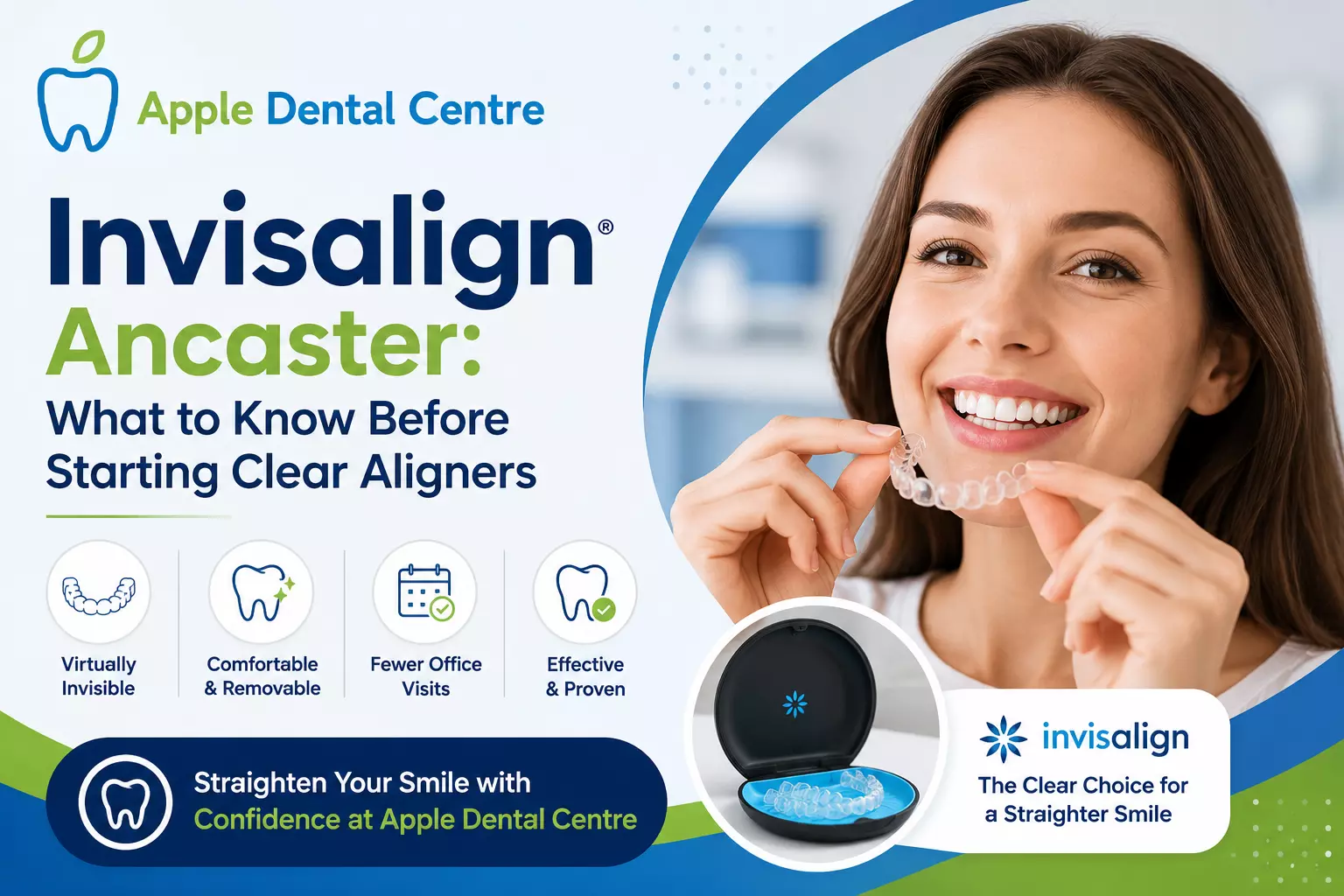
Invisalign Ancaster: What to Know Before Starting Clear Aligners
If you are considering Invisalign in Ancaster, the most important thing to know is that clear aligners can straighten teeth discreetly while fitting into everyday life. Invisalign treatment uses custom-made transparent trays to gradually shift teeth into better alignment without the brackets and wires associated with traditional braces.
As a dental content strategist who has worked with healthcare and dental practices for more than 10 years, I have reviewed hundreds of patient journeys involving orthodontic treatment.
One pattern consistently stands out: patients who understand the full Invisalign process before starting are more likely to stay committed and achieve better long-term results.
At Apple Dental Centre, Invisalign consultations focus on personalized treatment planning, digital imaging, and realistic expectations based on the patient’s bite, tooth movement needs, and lifestyle habits.
Key Benefits of Invisalign Treatment
1. Clear Aligners Are Designed to Be Discreet
- One of the biggest reasons people choose Invisalign is appearance. The aligners are made from transparent medical-grade plastic that is much less noticeable than metal braces.
- Adults working in professional settings often prefer clear aligners because they allow them to maintain confidence during meetings, presentations, and social events.
- Teenagers also appreciate the reduced visibility compared to traditional orthodontics.
2. Invisalign Aligners Are Removable
Unlike braces, Invisalign trays can be removed when eating, brushing, or flossing.
This creates several practical advantages:
- No food restrictions
- Easier oral hygiene
- Reduced plaque buildup around brackets
- More comfortable meal experiences
From my experience reviewing patient case studies, compliance matters more than almost any other factor. Patients who consistently wear aligners for the recommended 20–22 hours daily typically see smoother progress and fewer delays.
3. Digital Treatment Planning Improves Precision
Modern Invisalign treatment relies heavily on digital scanning technology.
Instead of traditional impression molds, many clinics now use 3D digital imaging to map tooth movement and simulate projected smile outcomes.
This helps patients visualize:
- Expected tooth movement
- Approximate treatment length
- Alignment improvements
- Bite correction progress
According to Align Technology, millions of Invisalign cases have been completed globally. [Source: Align Technology]
How Invisalign Works Step by Step
Consultation and Smile Assessment
The process usually begins with a consultation where the dentist evaluates:
- Tooth alignment
- Jaw positioning
- Bite function
- Crowding or spacing
- Oral health condition
Patients with untreated gum disease or severe decay may need restorative treatment before beginning Invisalign.
Digital Scanning and Custom Aligners
- Once approved, digital scans are used to create a customized aligner series.
- Each aligner is slightly different and gradually moves teeth over time.
- Most patients change trays every 1–2 weeks depending on the treatment plan.
Routine Progress Visits
- Follow-up appointments allow the dental team to monitor progress and make adjustments if necessary.
- These visits are generally shorter and less frequent than traditional braces appointments.
What Dental Problems Can Invisalign Correct?
Crowded Teeth
- Crowding occurs when there is insufficient space in the jaw for proper tooth alignment.
- Clear aligners can gradually reposition teeth to improve spacing and reduce overlapping.
Gaps Between Teeth
- Spacing issues may increase the risk of trapped food particles and gum irritation.
- Invisalign helps close unwanted gaps while improving smile appearance.
Overbite and Underbite
- Bite problems can contribute to uneven wear, jaw discomfort, and chewing issues.
- Depending on severity, Invisalign may help improve bite alignment.
Crossbite and Open Bite
- Advanced aligner systems can address several orthodontic concerns traditionally associated with braces.
- However, severe skeletal issues may still require specialist orthodontic intervention.
Invisalign vs Traditional Braces
Appearance
Invisalign is significantly less visible than metal braces.
Comfort
Most patients report less irritation because there are no brackets or wires rubbing against soft tissues.
Maintenance
- Braces require more careful cleaning around hardware.
- Clear aligners simplify brushing and flossing routines.
Discipline Requirement
- One important difference is responsibility.
- Because aligners are removable, treatment success depends heavily on patient consistency.
- Patients who frequently remove trays or forget to wear them may extend treatment duration.
How Long Does Invisalign Treatment Take?
Treatment timelines vary depending on complexity.
Mild cosmetic corrections may take:
- 6–8 months
Moderate alignment cases may require:
- 12–18 months
More advanced orthodontic correction could take longer.
A 2023 orthodontic review found that patient compliance directly affects treatment efficiency and outcome stability. [Source: American Association of Orthodontists]
Expert Insight: The Most Overlooked Invisalign Factor
One issue many patients underestimate is attachment to routine.
From reviewing dental practice feedback and patient behavior patterns, successful Invisalign users often develop consistent habits early:
- Wearing aligners after meals immediately
- Keeping travel cases nearby
- Cleaning trays daily
- Tracking wear time
Patients who treat aligners casually often experience setbacks, refinements, or delayed results.
This behavioral aspect is rarely discussed in competing articles but significantly influences treatment success.
Read: How to Choose the Best Pediatric Dentist in Jaipur for Your
Is Invisalign Painful?
Most patients experience mild pressure rather than pain.
That pressure is typically strongest:
- During the first few days of a new tray
- After significant tooth movement stages
Temporary discomfort usually improves within several days.
Compared to wire tightening associated with braces, many patients describe Invisalign discomfort as more manageable.
Invisalign for Adults in Ancaster
Adult Invisalign treatment has become increasingly common.
Many adults delayed orthodontic treatment earlier in life and now seek:
- Smile improvements
- Better bite function
- Enhanced confidence
- Easier oral hygiene
Clear aligners provide a more discreet option that fits work and social schedules.
According to the Canadian Dental Association, oral health confidence can significantly influence overall well-being and social comfort. [Source: Canadian Dental Association]
Invisalign for Teenagers
Teen Invisalign systems may include compliance indicators that help monitor wear consistency.
Parents often prefer Invisalign because:
- Sports injuries from brackets are reduced
- Oral hygiene may be easier
- Fewer emergency orthodontic visits occur
However, teenagers must still demonstrate responsibility with tray wear.
What Affects Invisalign Cost?
Several factors influence Invisalign pricing:
- Treatment complexity
- Number of aligners required
- Duration of treatment
- Need for refinements
- Combined restorative procedures
Patients should always request a personalized consultation rather than relying on generalized online estimates.
Some dental insurance plans may partially cover orthodontic treatment.
Maintaining Results After Invisalign
Retention is essential after active treatment ends.
Without retainers, teeth naturally attempt to shift back over time.
Most dentists recommend:
- Wearing retainers nightly
- Regular dental checkups
- Monitoring bite stability
Long-term maintenance is one of the most important parts of preserving results.
Why Patients Choose Apple Dental Centre for Invisalign in Ancaster
Patients searching for Invisalign in Ancaster often value:
- Personalized treatment planning
- Modern digital scanning technology
- Flexible appointment scheduling
- Experienced dental guidance
- Ongoing progress monitoring
A patient-centered approach helps improve communication, comfort, and treatment confidence throughout the process.
Conclusion
Invisalign Ancaster has changed the way many people approach orthodontic treatment. Clear aligners offer flexibility, aesthetics, and convenience while addressing a wide range of alignment concerns.
The most successful Invisalign outcomes usually come from a combination of professional planning, realistic expectations, and patient consistency.
For individuals considering Invisalign in Ancaster, scheduling a professional consultation is the best first step toward understanding whether clear aligners are appropriate for their goals and oral health needs.
Frequently Asked Questions
Is Invisalign better than braces?
Invisalign offers aesthetic and comfort advantages, while braces may still be more effective for certain severe orthodontic cases.
How many hours per day should Invisalign be worn?
Most dentists recommend wearing aligners for 20–22 hours daily.
Can Invisalign fix crowded teeth?
Yes, Invisalign is commonly used to treat mild to moderate crowding.
Does Invisalign hurt?
Patients usually feel mild pressure rather than significant pain.
How long does Invisalign treatment take?
Treatment may range from several months to over a year depending on complexity.
Can adults get Invisalign?
Yes, many adults choose Invisalign for discreet orthodontic treatment.
Are Invisalign aligners removable?
Yes, aligners are removed for eating, drinking, brushing, and flossing.
Will insurance cover Invisalign?
Some dental insurance plans may provide partial orthodontic coverage.
What foods should be avoided with Invisalign?
Aligners should be removed while eating, so there are generally fewer food restrictions.
Do I need retainers after Invisalign?
Yes, retainers help maintain alignment after treatment is complete.