How Investment Casting Delivers Unmatched Accuracy for Complex Parts
In the precision manufacturing sector, accuracy does not serve as a mere metric; it is a requirement. Whether it is the fabrication of turbine blades in the aerospace industry, surgical tools in the healthcare sector, or automotive system components, dimensional accuracy, along with surface integrity, is essential. Among the different metal forming methods, investment casting is unparalleled when it comes to accuracy, particularly for intricate features and tight tolerances.
This article discusses the investment casting manufacturer method, the technology that enhances and supports it, and the precision it achieves, as well as the multifarious reasons manufacturers from different industries trust it for essential components.
What is Investment Casting?
Investment casting, colloquially referred to as lost-wax casting, is a centuries-old method that is now evolving into a high-tech industry. The process involves creating a wax model of the desired part, coating the wax with a ceramic shell, and then heating the shell to melt out the wax, leaving a cavity. The cavity is filled with molten metal and, after solidification, the ceramic shell is broken away to reveal the final cast part.
This process is well known for the ease of replication of intricate designs with very minimal post-processing. However, investment casting is distinguished also for its precision in achieving dimensional accuracy, surface finish, and a greater range of materials.
Precision Begins with the Wax Pattern
Your journey toward precision starts with the wax pattern, which serves as a replica of the final piece. Modern investment casting manufacturers utilize the following:
- Injection molding for large volume wax patterns.
- 3D printing for rapid prototyping as well as advanced geometries.
- CNC for exact dies for repeatable precision.
These wax patterns are dimensionally stable and replicable with fine detail such as undercuts, logos, and even internal channels, which, with other casting methods, are either very difficult to achieve or not possible at all.
Key Advantage: Wax patterns are able to be produced to tolerances of ±0.005 inches, which sets the foundation for high-precision metal pieces.
Ceramic Shell: The Mold That Makes the Magic
Once you've got wax just how you want it, dunk ceramic slurry and dust fine sand; it should build a robust shell. Shell's layered and, with drying, it's strong and stable against thermal heat.
Developments in shell building include:
- Colloidal silica binders ensure smooth surfaces.
- Controlled environments for the drying process to mitigate cracks.
- Consistent automated shell dipping machines.
The ceramic shell preserves each contour of the wax pattern so that the final metal part can be as close to the original design with high precision as possible.
Key Advantage: Reduction in machining or polishing work to be done is achieved with surface finishes of 125 RMS or better.
Controlled Metal Pouring for Dimensional Precision
The metal pouring stage of a casting process is undoubtedly the most critical. About sand casting or die casting, investment casting offers:
- Pouring under vacuum or in inert gas to limit oxidation
- Filling by gravity or pressure for better delivery to thin-walled sections
- Constant temperature control for the prevention of excessive shrinkage and distortion
Foundries in Rajkot, for instance, are equipped with AI-based thermal and real-time flow simulation control, which guarantees uniform flow throughout the casting and steady cooling post-casting.
Key Advantage: Even intricate, thin-walled, and variable wall thickness parts are routinely manufactured with ±0.003 inches per inch dimensional precision.
Minimal Machining, Maximum Precision
It is investment casting's reduction in post-process work that is the most cost and time effective, due to the near-net-shape features of the components. Because of this, the following are frequently removed or reduced:
- CNC turning and milling
- Grinding and polishing
- Joining of multiple components by welding or assembly
This is a major advantage for the aerospace and medical industries, which face difficulties in machining exotic alloys such as titanium or cobalt-chrome due to time and cost factors.
Key Advantage: Production costs are lowered alongside lead time due to parts emerging from the mold with final dimensions and surface quality.
Quality Assurance: Proving Its Accuracy
To guarantee that the accuracy achieved in casting results in actual world performance, manufacturers calibrate advanced non-destructive testing (NDT), along with casting metrology tools that include:
Coordinate Measuring Machines (CMMs)
- Digital x-ray and CT scanning
- Ultrasonic and dye penetrant testing
These methods are necessary to validate the claimed precision, internal and external geometric micro-defect accuracy, and the compliance with ISO 8062, AS9100, and ASTM standards.
Key Advantage: Every part is traceable, certifiable, and retrievable for allocation in high-risk areas.
Estimation is Ideal for Sophisticated and Critical Applications
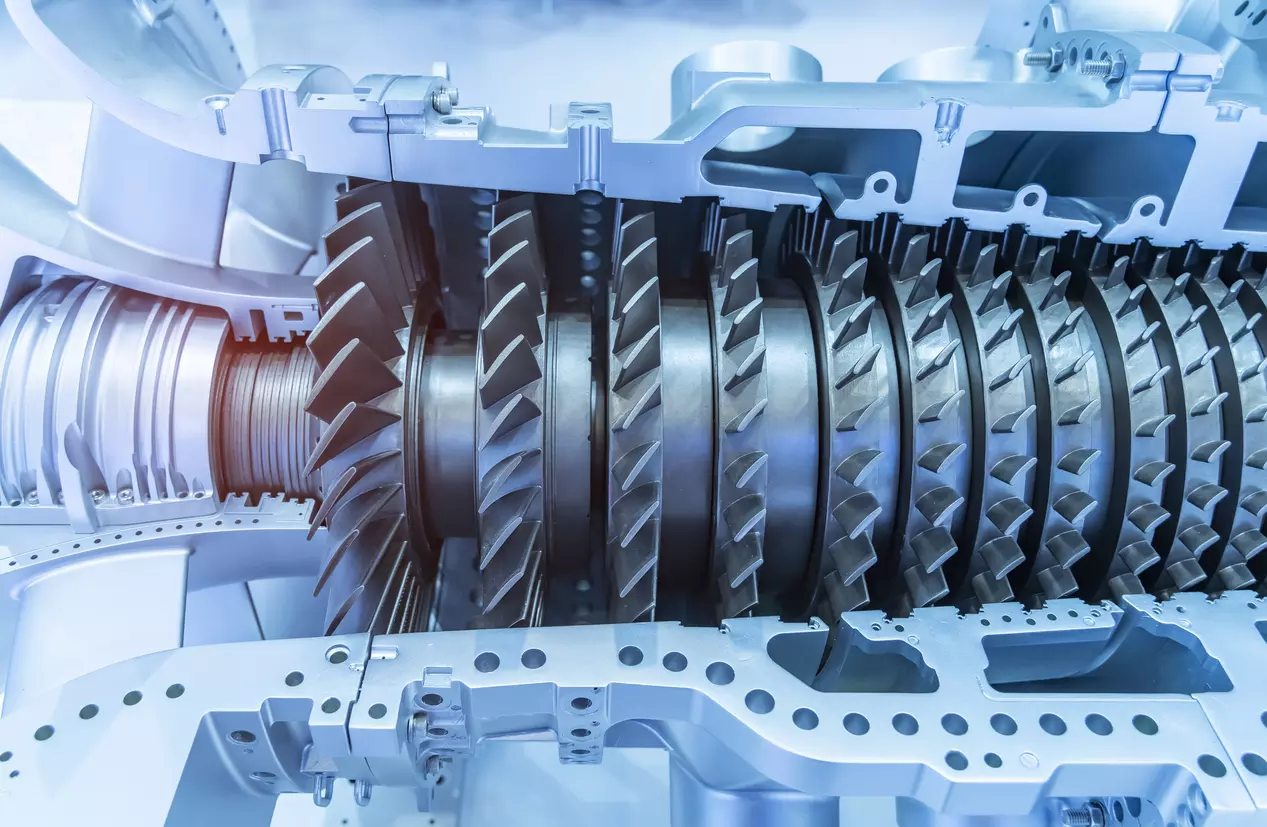
Parts that are described as economically complex (turbine blades and impellers) need a tissue-specific stainless steel, Inconel, or titanium and need to be functionally critical (i.e., orthopedic implants and turbine engine parts) need investment casting.
Right Precision for Investment in Competing Economies
Investment casting manufacturer in India, especially in foundry hubs like Rajkot, Coimbatore, and Pune, are competing globally in precision through investment casting. With ISO-certified facilities, advanced automation, and proper export-ready logistics, Indian foundries currently supply Precision parts to OEMs in Europe, North America, and the Middle East.
Key Advantage: high precision manufacturing without stellar investment in compliance with quality standards.
Last Words
Investment casting, even with challenges and tighter specs, still does critical work across many industries. Investment casting is a key for industries needing precise engineering because it makes reliable and exact parts.
It is a proven path for super accurate pieces and smooth work, whether you're making jet engines or getting parts for factory machines, maybe even true to your style.