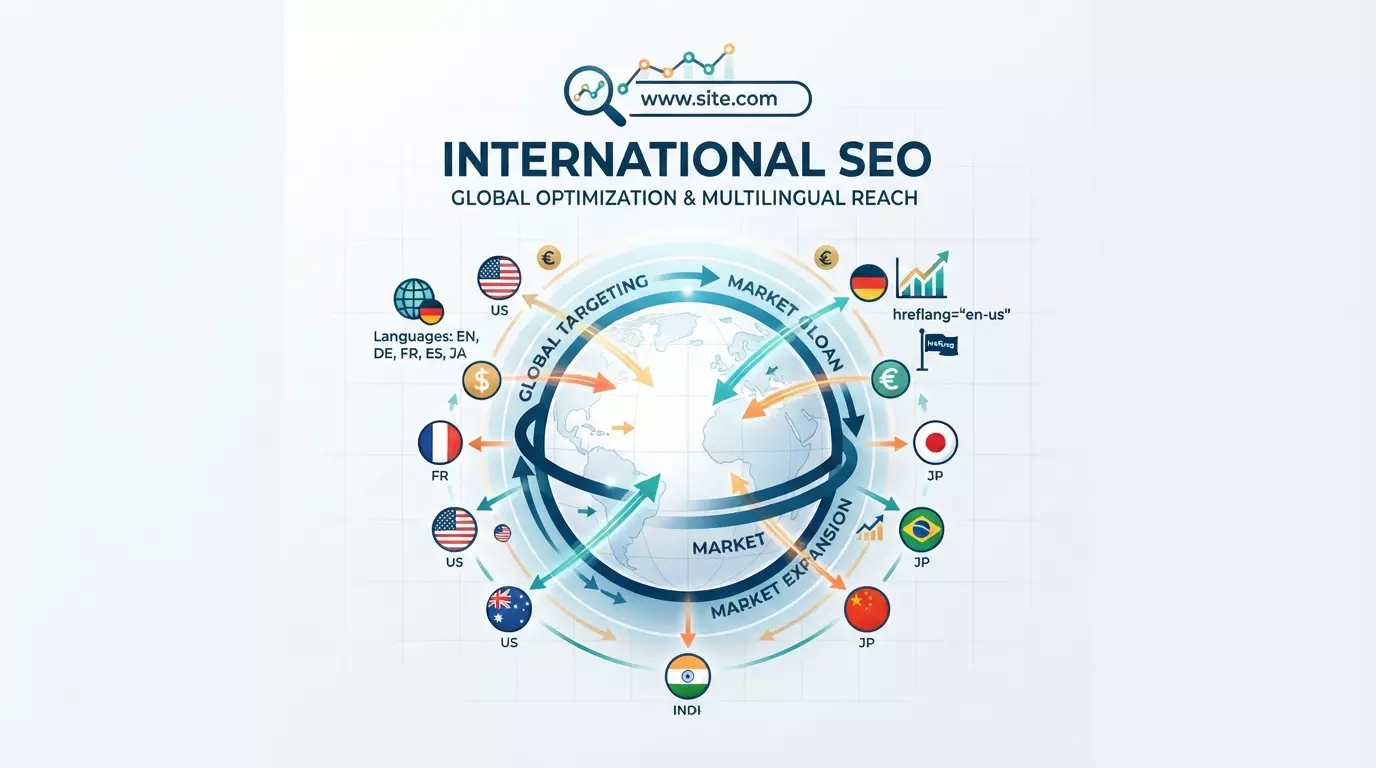
International SEO: Strategies to Improve Global Search Rankings
Expanding into international markets requires more than translating your website. Search behavior, language, culture, and search engine preferences vary across countries. A strong International SEO plan helps your website appear in relevant search results for audiences across multiple regions while delivering the right content to the right users.
Whether you serve customers in one country or operate across several markets, an organized international approach improves visibility, user experience, and organic traffic.
This guide explains the key elements of a successful global optimization strategy, including multilingual content, international keyword research, hreflang implementation, and technical SEO best practices.
What Is International SEO?
International SEO is the process of optimizing a website so search engines identify the countries and languages your content targets. The goal is to present the most relevant version of your website to users based on their location and language preferences.
Unlike traditional SEO, International SEO focuses on serving multiple geographic markets while maintaining consistent search performance across regions.
A successful strategy helps search engines understand:
- Which countries you target
- Which languages your content supports
- Which pages belong to each audience
- Which version users should see in search results
Why International SEO Matters
Global online competition continues to grow. Customers search for products and services in their native language and expect localized experiences.
An effective global SEO strategy helps your business:
- Reach customers in new countries
- Increase qualified organic traffic
- Improve user experience
- Reduce duplicate content issues
- Build international brand visibility
- Generate more conversions from global audiences
Without proper optimization, search engines struggle to identify the correct regional version of your pages.
Build a Strong Global SEO Strategy
Every successful international campaign begins with careful planning.
Define Your Target Markets
Identify the countries and languages where your products or services have demand.
Consider factors such as:
- Market size
- Customer demand
- Local competition
- Currency
- Shipping availability
- Legal requirements
Your target market determines your website structure and content strategy.
Choose the Right URL Structure
Search engines support several international website structures.
Common options include:
- Country code top-level domains (ccTLDs)
- Subdomains
- Subdirectories
Examples include:
- example.fr
- fr.example.com
- example.com/fr/
Each option offers different advantages depending on your business goals, budget, and technical resources.
Conduct International Keyword Research
Direct translation rarely reflects how customers search in another country.
Effective international keyword research focuses on local search behavior instead of word-for-word translation.
Research should include:
- Native-language keywords
- Regional spelling variations
- Local terminology
- Search intent
- Search volume
- Seasonal trends
For example, users searching in the United States, the United Kingdom, and Australia often use different terms for the same product.
Keyword research should reflect local language and customer intent rather than dictionary translations.
Create High-Quality Multilingual SEO Content
Multilingual SEO goes beyond translating existing pages.
Content should match local culture, language, and customer expectations.
Focus on:
- Native writing
- Local currency
- Regional measurements
- Cultural references
- Local contact information
- Country-specific examples
Search engines reward content that feels natural for local audiences.
Professional localization often performs better than automated translation because it reflects regional language patterns and search intent.
Implement Hreflang Correctly
One of the most important technical elements of International SEO is hreflang implementation.
Hreflang tags tell search engines which language and regional version belongs to each page.
Proper implementation helps:
- Display the correct language version
- Reduce duplicate content signals
- Improve international search visibility
- Create a better user experience
Every language version should reference all alternate versions, including itself.
Regular technical audits help identify missing or incorrect hreflang tags before they affect rankings.
Read: The Best Organic SEO Services That Deliver Real Results
Optimize Technical SEO for International Websites
Technical SEO supports every international campaign.
Important areas include:
Improve Site Speed
Fast-loading pages improve user experience across every region.
Optimize:
- Images
- Code
- Caching
- Content delivery networks (CDNs)
Use Structured Data
Schema markup helps search engines understand your content.
Useful schema types include:
- Organization
- Local Business
- Product
- Article
- FAQ
- Breadcrumb
Structured data improves content understanding and enhances search result appearance.
Secure Your Website
HTTPS remains an important trust signal for both users and search engines.
Every international website should use secure connections across all language versions.
Avoid Common International SEO Mistakes
Many businesses lose visibility because of preventable errors.
Common mistakes include:
- Automatic content translation without localization
- Incorrect hreflang implementation
- Duplicate content across regional pages
- Missing language targeting
- Poor internal linking
- Ignoring local keyword research
- Mixing multiple languages on one page
Regular technical reviews help maintain healthy international performance.
Measure International SEO Performance
Track performance separately for each country and language.
Key performance indicators include:
- Organic traffic by country
- Keyword rankings
- Click-through rate
- Conversion rate
- Bounce rate
- Indexed pages
- Search visibility
Monitoring individual markets identifies new opportunities and highlights areas requiring improvement.
International SEO and National SEO
Many businesses expand in stages. They establish strong visibility within one country before entering global markets.
If your company serves customers across an entire country, a well-planned National SEO strategy creates a strong foundation before launching an international campaign. Countrywide seo strengthens domain authority, improves organic visibility, and builds content authority, making future international expansion more efficient.
Combining National SEO with International SEO supports sustainable long-term growth across both domestic and global search markets. Learn more from Inoma Digital national SEO guide.
Frequently Asked Questions
What is International SEO?
International SEO is the process of optimizing a website so search engines deliver the correct language and country version to users in different regions.
What is the difference between International SEO and Multilingual SEO?
Multilingual SEO focuses on optimizing content in multiple languages. International SEO includes language targeting, country targeting, technical optimization, website structure, and localization.
Why is hreflang implementation important?
Hreflang tags help search engines identify the correct language and regional page for each visitor. This improves user experience and reduces duplicate content issues.
How do I perform international keyword research?
Research keywords separately for every target country using native-language search behavior, local terminology, and regional search intent instead of direct translations.
Which website structure is best for International SEO?
The best structure depends on your business goals, technical resources, and target markets. Country code domains, subdomains, and subdirectories all support international optimization when implemented correctly.