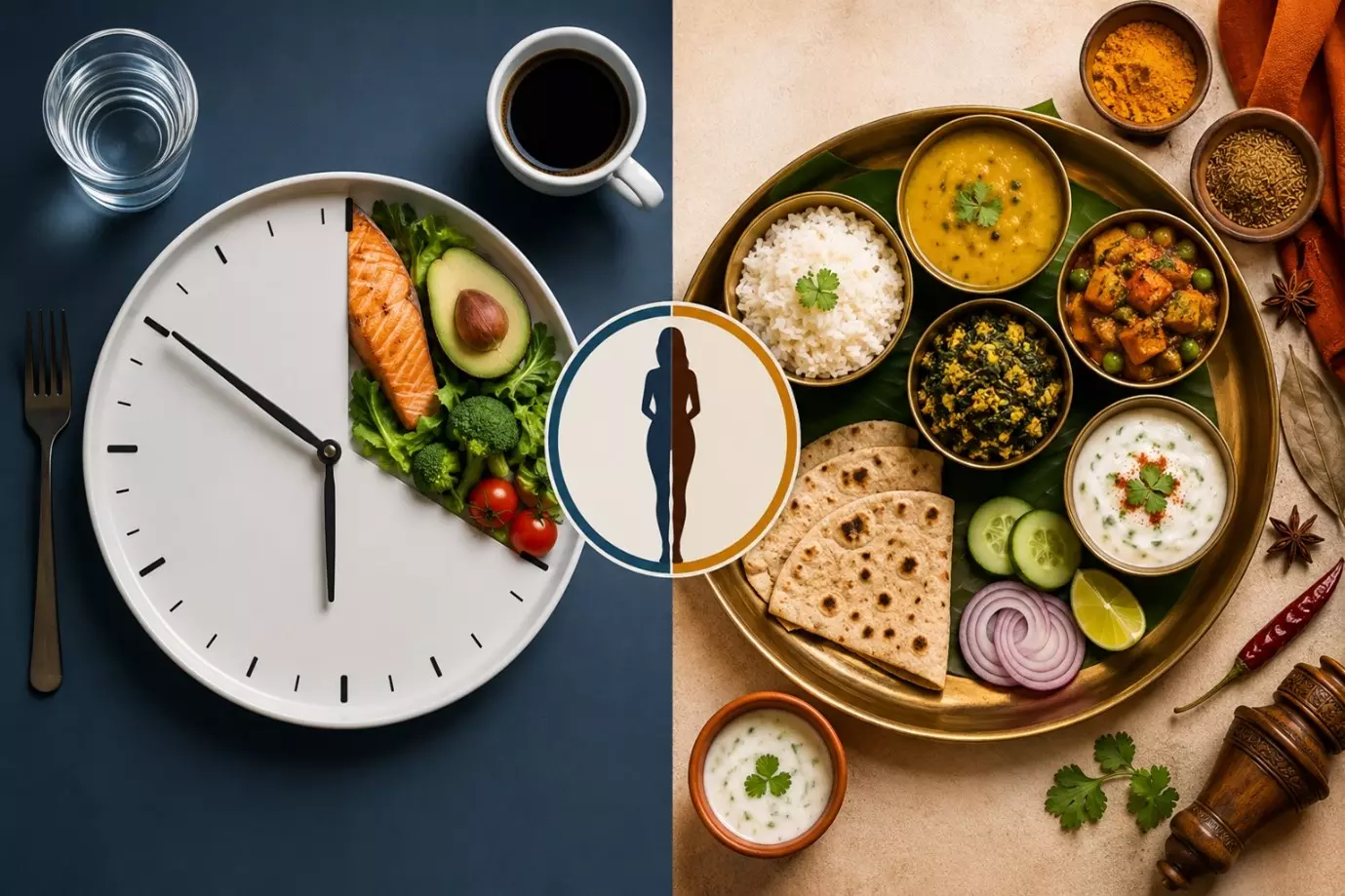
Intermittent Fasting vs Traditional Indian Eating
- You’ve probably seen people skipping breakfast, drinking black coffee till noon, and calling it “discipline.”
- That’s intermittent fasting.
- At the same time, some people still follow the old Indian style of eating. Fresh breakfast in the morning. Proper lunch. Light dinner before bed. Homemade food most days.
- So, which one actually works?
- Honestly, this question comes up a lot now. Especially with weight loss becoming such a stressful topic for many people.
- I’ve noticed something interesting, though.
- Most people don’t fail because a diet is bad. They fail because the eating style doesn’t fit their real life.
- And that changes everything.
What Is Intermittent Fasting?
Intermittent fasting is more about timing than food.
You eat during a fixed window and fast for the remaining hours.
The common methods are:
- 16:8 fasting
- Eat within 8 hours and fast for 16
- 14:10 fasting
- Slightly easier for beginners
- 5:2 method
- Normal eating for 5 days and low calories for 2 days
- A lot of people skip breakfast and start eating around noon.
- Some people love it because it feels simple.
- No calorie counting. No complicated meal plans. Less cooking too.
- But here’s the thing nobody talks about enough.
- Just because you skip meals doesn’t mean your body suddenly becomes healthy.
- What you eat still matters.
What Is Traditional Indian Eating?
Traditional Indian eating is honestly very different from modern diet culture.
Earlier, meals were built around:
- Freshly cooked food
- Seasonal ingredients
- Eating at regular timings
- Home-cooked meals
- Balanced plates
- Natural spices
- Smaller portions of sweets
Think about a regular Indian meal.
- Roti or rice
- Dal
- Sabzi
- Curd
- Pickles in small amounts
- Maybe buttermilk
Simple food.
Not perfect. But balanced in many ways.
The problem is that modern eating habits have changed this structure.
Now people eat:
- Late-night dinners
- Processed snacks
- Sugary drinks
- Bakery foods
- Excess takeout
Then traditional eating gets blamed unfairly.
Why Intermittent Fasting Became So Popular
Weight loss results show up fast for many people.
That’s the biggest reason.
When you shorten your eating window:
- You often eat fewer calories
- Mindless snacking reduces
- Late-night eating drops
- Blood sugar may improve
Some people also report:
- Better focus
- Reduced bloating
- More control over cravings
And honestly, it can feel freeing at first.
No constant meal planning.
No six small meals.
Just eat during certain hours.
But there’s another side too.
The Problem Many Indians Face With Intermittent Fasting
- Indian lifestyles are social.
- Food is emotional here.
- Morning chai with family. Office snacks. Late dinners during gatherings. Weekend lunches.
- Fasting schedules can become difficult to sustain.
- I’ve seen people do well for 10 days and then suddenly binge on fried food because they were too hungry.
- That cycle becomes exhausting.
Some common problems people face:
- Headaches in the beginning
- Low energy during workouts
- Overeating during eating windows
- Acidity issues
- Poor sleep from late heavy dinners
Women sometimes notice hormonal changes, too, when fasting becomes too extreme.
This doesn’t happen to everyone. But it happens enough.
Traditional Indian Eating Has Some Hidden Strengths
People often underestimate traditional Indian meals.
But when meals are cooked properly, they naturally include:
Fiber
Dal, vegetables, millets, and fruits.
Fibre helps digestion and keeps you full longer.
Fermented Foods
Curd, idli, dosa batter, buttermilk.
Good for gut health.
Spices
Turmeric, cumin, ginger, and coriander.
Indian kitchens already use ingredients linked with digestion and inflammation support.
Meal Satisfaction
A proper Indian meal can feel emotionally satisfying.
That matters more than people think.
When food feels satisfying, binge eating reduces.
But Traditional Eating Also Has Problems Today
Let’s be honest here.
Not every Indian meal is healthy now.
Some meals have become extremely carb-heavy.
For example:
- Huge portions of white rice
- Fried snacks every evening
- Sugary tea multiple times daily
- Desserts after dinner
- Restaurant gravies are full of oil
- Portion sizes changed, too.
- Physical activity has been reduced.
- Desk jobs increased.
- Stress eating became common.
- So when people say “our grandparents ate this and stayed healthy,” they forget one thing.
- Our grandparents moved a lot more.
Which One Is Better for Weight Loss?
This depends on your personality and routine more than people admit.
Intermittent fasting may work better if:
- You dislike frequent meals
- You snack constantly
- You have a busy morning routine
- You prefer simpler structures
Traditional Indian eating may work better if:
- You get acidity from long fasting
- You exercise early in the morning
- You enjoy regular meals
- You struggle with overeating later
The best approach is usually the one you can continue for months.
Not two weeks.
That’s where many diets collapse.
What Happens to Your Body During Intermittent Fasting?
Your body goes through different phases during fasting.
After several hours without food:
- Insulin levels start dropping
- Stored energy begins getting used
- Hunger hormones fluctuate
- Fat burning may increase
- Some people notice lighter digestion.
- Others feel tired and irritated.
- Both responses are normal initially.
- But fasting does not magically cancel unhealthy eating.
- You can still gain weight while intermittent fasting if your meals contain excess calories.
- A lot of people miss that point.
Traditional Indian Eating and Blood Sugar
Balanced Indian meals can support steady energy when portions are controlled.
For example:
- Dal slows digestion
- Vegetables add fibre
- Protein from curd or paneer improves fullness
- Whole grains digest more slowly than refined flour
But refined carbs create issues.
Frequent consumption of:
- White bread
- Sugary tea
- Biscuits
- Fried snacks
- Sweets
can cause energy crashes and cravings.
So traditional eating works best when it stays close to minimally processed food.
The Mental Side of Eating Matters Too
- This part gets ignored constantly.
- Some people become obsessed with fasting windows.
- They stop enjoying meals.
- Social events become stressful.
- Every bite feels calculated.
- That pressure can backfire.
- Food should support your life. Don't control your entire day.
- Traditional eating often feels emotionally easier because meals are shared and familiar.
- Still, emotional eating can happen in any eating style.
- Stress changes appetite in weird ways sometimes.
Read: From Idli to Vada: Discover It All at the Best South Indian
Can You Combine Both Approaches?
Honestly, this is where many people find balance.
You don’t always need extremes.
You can:
- Eat traditional Indian meals
- Reduce processed food
- Finish dinner earlier
- Avoid constant snacking
- Keep a gentle fasting gap overnight
Something as simple as a 12 to 13-hour overnight fast works well for many people.
For example:
- Dinner at 8 PM
- Breakfast at 8 or 9 AM
That alone can improve digestion for some people.
Without feeling restrictive.
What About Exercise?
- Your eating style should support movement.
- Not drain you.
- Some people work out well in a fasted state.
- Others feel dizzy and weak.
- There’s no universal rule.
- If you train intensely, your body may need proper fuel before workouts.
- Traditional Indian meals can support exercise well when balanced correctly.
Examples:
- Poha with peanuts
- Idli with sambar
- Roti with eggs
- Rice with dal and vegetables
Simple meals often work better than trendy “diet foods.”
The Role of Sleep and Stress
- You can follow the perfect eating plan and still struggle with weight.
- Poor sleep changes hunger hormones.
- Stress increases cravings.
- Late-night screen time affects eating habits, too.
- This is why sustainable health is never just about fasting hours.
- Lifestyle matters more than people expect.
What Many Diet Trends Ignore About Indian Bodies and Culture
- Western diet trends don’t always fit Indian routines perfectly.
- Our food culture is different.
- Family meals matter.
- Festivals involve food.
- Tea breaks are social.
- Even digestion patterns vary from person to person.
- That’s why blindly copying online fasting trends can create frustration.
- A personalised approach works better.
This is where guidance from professionals like Bangalore's Dietitian can help people understand what actually suits their body, work schedule, and health goals.
Signs Your Eating Style Is Not Working
Pay attention to your body.
Some warning signs include:
- Constant fatigue
- Hair fall
- Mood swings
- Poor sleep
- Extreme cravings
- Digestive discomfort
- Feeling obsessed with food
Healthy eating should feel manageable.
Not punishing.
A Simple Balanced Approach That Works for Many People
You don’t need perfection.
Most people improve their health by doing basic things consistently.
Like:
- Eating more home-cooked meals
- Including protein in every meal
- Reducing sugary drinks
- Sleeping better
- Walking daily
- Eating slowly
- Avoiding late-night overeating
These habits sound boring.
But honestly, they work better long term than extreme dieting.
Sample Day: Traditional Indian Eating with Balanced Timing
Morning
- Warm water
- Idli with sambar
- Or vegetable poha with peanuts
Mid-Morning
- Fruit or buttermilk
Lunch
- Roti or rice
- Dal
- Sabzi
- Curd
Evening
- Tea with roasted chana or nuts
Dinner
- Light khichdi
- Or roti with vegetables and paneer
Simple.
Affordable too.
And easier to continue.
Does Intermittent Fasting Work for Everyone?
- No.
- Some people genuinely feel better with it.
- Others feel miserable.
- Your health history matters.
- Your stress levels matter.
- Your routine matters.
- What works for your friend may not work for you.
- That’s completely normal.
FAQs
Is intermittent fasting safe for Indians?
It can be safe for many healthy adults when done properly. But aggressive fasting may not suit everyone. People with medical conditions should take professional advice before trying it.
Can I drink chai during intermittent fasting?
Plain tea without sugar or milk is usually allowed in stricter fasting styles. Traditional milk tea breaks the fast technically.
Which is better for belly fat: intermittent fasting or traditional Indian eating?
Both can help when calorie intake, sleep, and activity are managed properly. Sustainability matters more than trends.
Can I eat rice and still lose weight?
Yes. Portion size and overall eating habits matter more than completely removing rice.
Is skipping breakfast healthy?
For some people, yes. Others feel weak, acidic, or overly hungry later. Your body response matters more than internet trends.
What is the biggest mistake people make with intermittent fasting?
Overeating during eating windows. Many people fast for long hours and then consume very large meals.
Are traditional Indian meals unhealthy?
Not really. Balanced home-cooked Indian meals can support good health. Problems usually come from excess fried food, sugar, and processed snacks.
How long does it take to see results with intermittent fasting?
Some people notice changes within a few weeks. Energy levels, digestion, and weight changes vary from person to person.
Final Thoughts
- You don’t need to choose a diet that makes your life harder.
- That’s something more people should hear.
- Intermittent fasting can help some people simplify eating and reduce overeating.
- Traditional Indian eating can provide balance, satisfaction, and nourishment when meals are prepared thoughtfully.
- The better question is probably this:
- Which style helps you stay healthy without feeling trapped?
- Because the best eating pattern is usually the one you can live with peacefully.