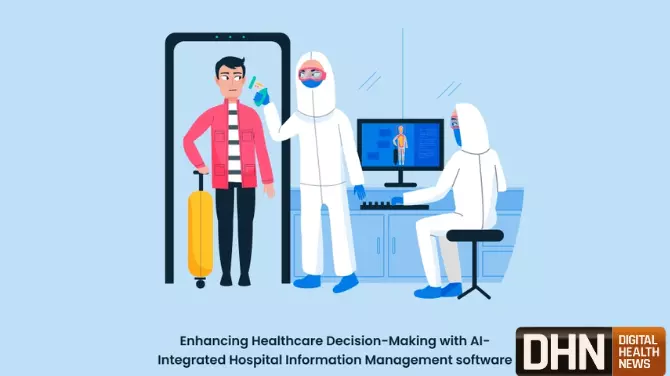
Integrating AI in Hospital Information Systems for Smarter Decision-Making
In the digital age, healthcare is no longer just about providing treatment—it’s about delivering smarter, data-driven care. One of the most significant advancements in this transformation is the integration of Artificial Intelligence (AI) into the Hospital Information System (HIS). AI-driven HIS platforms are reshaping how hospitals make decisions, manage patient data, and streamline workflows, ultimately leading to improved patient outcomes and operational efficiency.
In this article, we explore how AI is revolutionizing the Hospital Information System, the benefits of AI integration, real-world applications, and the future of intelligent healthcare.
What Is a Hospital Information System?
A Hospital Information System is a centralized, integrated platform that helps hospitals manage their clinical, administrative, financial, and legal operations. It stores and processes vital information such as:
- Electronic health records (EHRs)
- Appointment scheduling
- Billing and insurance
- Laboratory results
- Pharmacy inventory
The Hospital Information System acts as the digital backbone of a hospital, ensuring all departments work together seamlessly. With the integration of AI, this system becomes significantly more intelligent and responsive to real-time decision-making.
Why Integrate AI into Hospital Information Systems?
The traditional Hospital Information System is largely reactive—it stores and retrieves information but lacks the ability to analyze or make predictions. AI adds an intelligence layer that can:
- Analyze large volumes of structured and unstructured data
- Predict patient outcomes
- Flag anomalies in diagnostic results
- Automate administrative tasks
- Provide decision support to physicians
This shift from a static system to a dynamic, predictive tool marks a major leap in healthcare efficiency.
Key Benefits of AI in Hospital Information Systems
1. Enhanced Clinical Decision-Making
AI algorithms can analyze patient data and assist physicians in diagnosing diseases early. For example:
- AI can detect patterns in radiology images that may not be visible to the human eye.
- Natural Language Processing (NLP) tools can scan medical histories for risk factors.
- Predictive analytics can alert clinicians about potential complications before they arise.
By integrating AI into the Hospital Information System, hospitals can offer better, faster, and more accurate care.
2. Operational Efficiency
Hospitals deal with massive volumes of data daily. AI helps:
- Automate repetitive administrative tasks like appointment scheduling and billing.
- Optimize staffing by predicting patient influx.
- Reduce waiting times in emergency departments.
When powered by AI, the Hospital Information System becomes a productivity booster, not just a data warehouse.
3. Personalized Patient Care
AI makes it possible to tailor treatments based on individual patient profiles. Integrated HIS systems can:
- Recommend customized treatment plans based on genetic and medical history.
- Monitor patient adherence to prescriptions through connected wearables.
- Send real-time alerts to physicians for urgent interventions.
The Hospital Information System becomes a hub for proactive and personalized healthcare.
4. Error Reduction
Medical errors can be fatal. AI-integrated HIS platforms can minimize human errors by:
- Validating medication dosages and potential interactions.
- Automating transcription from voice to text.
- Providing real-time alerts on critical lab results.
This makes the Hospital Information System safer and more reliable for both patients and providers.
5. Predictive Maintenance of Medical Equipment
Hospitals depend on various machines for diagnosis and treatment. AI can:
- Predict equipment failures.
- Schedule maintenance before breakdowns occur.
- Extend equipment lifespan and reduce costs.
With AI-powered insights, the Hospital Information System supports smooth clinical operations beyond just data handling.
Real-World Applications of AI in HIS
IBM Watson Health
IBM Watson uses AI to provide evidence-based clinical decision support. When integrated into HIS, it helps doctors identify treatment options for complex diseases like cancer.
Google DeepMind Health
DeepMind developed an AI system capable of detecting over 50 eye diseases from retinal scans. This system can be connected to a hospital’s existing HIS to automate diagnostics.
Mayo Clinic
Mayo Clinic uses AI to predict patient readmissions and personalize post-discharge care. This data feeds into their Hospital Information System for real-time action.
Challenges in AI Integration with Hospital Information Systems
While the benefits are clear, the integration of AI into the Hospital Information System also comes with challenges:
- Data Privacy and Compliance: Compliance with HIPAA and other regulations is critical when AI is analyzing sensitive patient data.
- Interoperability Issues: Legacy HIS platforms may not be compatible with modern AI tools.
- High Implementation Costs: Integrating AI systems requires investment in hardware, software, and training.
- Resistance to Change: Some healthcare professionals may be hesitant to rely on AI for clinical decisions.
Overcoming these barriers is crucial for the successful adoption of AI in the Hospital Information System.
The Future of AI-Driven Hospital Information Systems
The coming years will see rapid advancements in AI capabilities, leading to:
- Voice-Activated HIS Platforms: Clinicians will interact with the Hospital Information System through voice commands.
- Real-Time Disease Surveillance: AI will help monitor outbreaks and predict public health trends.
- AI + IoT Integration: Wearable devices will stream real-time health data into HIS for continuous patient monitoring.
- Cloud-Based AI Models: Scalable AI algorithms will analyze data across multiple facilities to provide holistic insights.
These innovations will transform the Hospital Information System into a central nervous system for intelligent healthcare delivery.
Conclusion: Smarter Systems, Better Care
Integrating AI into the Hospital Information System is not just a technological upgrade—it’s a strategic shift toward smarter, more responsive healthcare. With AI, hospitals can unlock the full potential of their data, reduce operational inefficiencies, and deliver personalized patient care like never before.
As hospitals continue to embrace digital transformation, those who integrate AI into their Hospital Information System will lead the way in innovation, performance, and patient satisfaction.
Backlink Opportunity