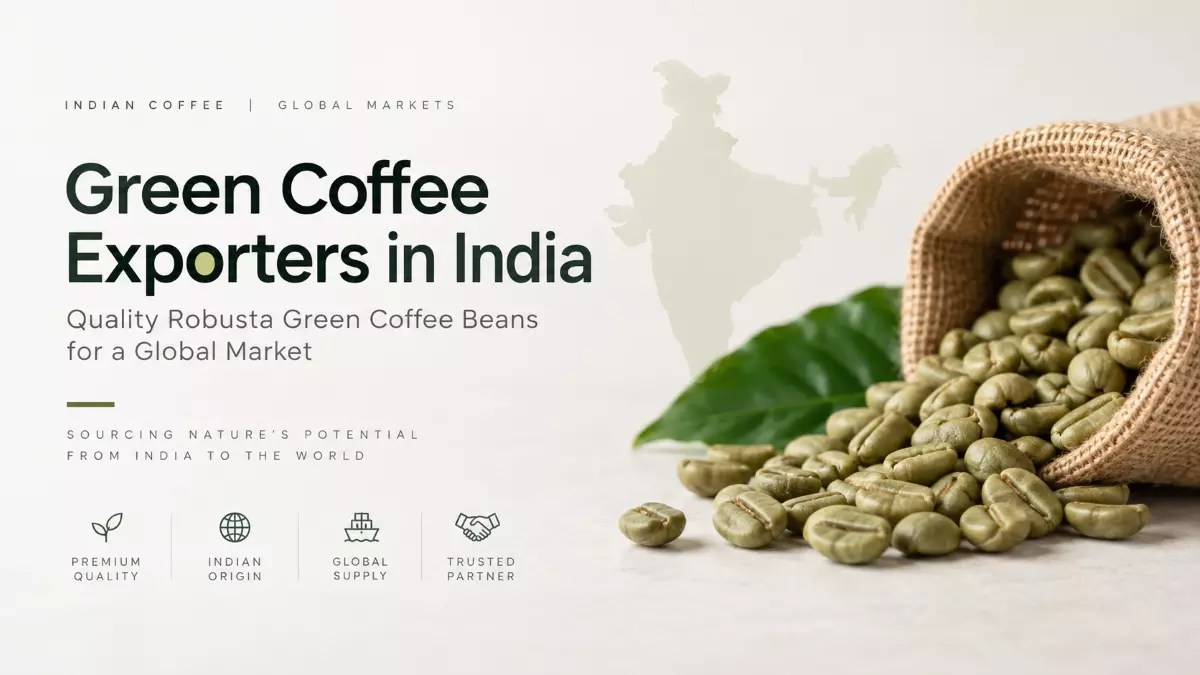
A Buyer’s Guide to Indian Green Coffee and Robusta Beans
India is an established coffee-producing country with a diverse supply chain serving both domestic and international markets.
From independent roasters to large-scale coffee manufacturers, businesses can source different types of Indian coffee depending on their product requirements.
For companies importing unroasted coffee, finding dependable green coffee exporters is an important first step. A suitable supplier can help with sourcing, product specifications, quality requirements, packaging, export documentation, and shipment coordination.
But choosing a coffee supplier requires more than comparing quotations. Buyers should understand the product they need and evaluate how well a potential exporter can meet those requirements.
India's Coffee Supply Chain
Coffee cultivation in India is concentrated mainly in the southern parts of the country. The country's growing regions offer conditions suitable for producing both Arabica and Robusta.
Once harvested, coffee moves through several stages before reaching international buyers. Depending on the supply chain, these stages can involve farmers, processors, traders, exporters, logistics companies, and importers.
This established network enables international businesses to source Indian coffee in commercial quantities.
For an overseas buyer, the exporter often becomes the primary point of coordination between the source and the destination market.
What Makes Green Coffee Different?
Green coffee consists of coffee beans that have been processed after harvesting but have not yet been roasted.
This makes green beans particularly useful for commercial roasters. Instead of buying a finished roasted product, businesses can import the raw beans and determine their own roasting parameters.
Green coffee is commonly sourced by:
- Coffee roasting companies
- Importers and distributors
- Café and restaurant suppliers
- Instant coffee manufacturers
- Private-label coffee brands
- Food and beverage manufacturers
Because each business has different production requirements, the specifications of the green coffee can vary considerably.
Indian Robusta Green Coffee Beans
Robusta is an important part of India's coffee production and has numerous commercial applications.
Robusta green coffee beans are frequently used in espresso blends, instant coffee, commercial roasting, and other manufactured coffee products.
Robusta is often selected for its body and intensity, but the characteristics of the final beans depend on several variables. Origin, cultivation, harvesting, processing, grading, moisture, storage, and transportation can all influence the quality of a particular lot.
Therefore, buyers should avoid treating all Robusta coffee as the same product.
When requesting a quotation, it can be useful to ask for details such as:
- Coffee variety
- Grade
- Screen size
- Moisture specifications
- Processing method
- Defect tolerance
- Origin
- Available quantity
- Packaging format
Having these details in advance makes supplier comparisons much easier.
Read: How to Stand Out in a Crowded Coffee Expo at World
How Indian Coffee Reaches International Buyers
The coffee export from India process involves several stages, from sourcing the beans to preparing them for international transportation.
Sourcing
An exporter may obtain coffee through farmers, processors, traders, or established regional sourcing networks. The sourcing approach depends on the required product and volume.
Processing
After harvesting, coffee undergoes post-harvest processing. The beans may subsequently be cleaned, sorted, graded, and prepared according to the buyer's requirements.
Quality Assessment
The coffee should be evaluated against agreed specifications before shipment. Depending on the buyer's requirements, this can involve checking moisture, bean size, appearance, defects, and other characteristics.
Packaging
Appropriate packaging is important because green coffee may spend considerable time in storage and transit. Buyers should confirm bag type, weight, labeling, and handling requirements.
Documentation and Shipping
Commercial and export documentation is prepared before the shipment leaves India. The exact documents required can depend on the destination market and transaction.
The cargo can then be transported to the relevant port and shipped to the international buyer.
What Should Importers Look for in an Exporter?
There are many suppliers operating in the coffee trade, so buyers should evaluate exporters on several factors.
1. Product Knowledge
A capable coffee exporter should be able to explain the available varieties, grades, processing methods, and product specifications clearly.
2. Sourcing Network
Established sourcing relationships can be useful when buyers need particular grades, larger quantities, or repeat shipments.
3. Quality Control
Ask how coffee is inspected and whether the supplier can provide product specifications or samples before a commercial order.
4. Export Documentation
Documentation is an essential part of international trade. Buyers should establish which documents will be supplied and whether additional destination-specific requirements need to be addressed.
5. Logistics Coordination
Shipping involves more than moving cargo from one location to another. Packaging, port arrangements, freight, customs, and delivery schedules may all need coordination.
6. Consistency
A supplier suitable for a one-time purchase may not necessarily be suitable for recurring procurement. Businesses with regular requirements should discuss the possibility of maintaining consistent specifications across future orders.
Buying Coffee for Different Applications
The right green coffee depends heavily on how it will be used.
A specialty or commercial roaster may focus on origin, processing, and roasting characteristics. An instant coffee manufacturer may have different requirements related to grade and volume.
Similarly, an importer supplying multiple customers may prioritize a broader product range and dependable availability.
This is why buyers should communicate the intended application when contacting a supplier. It gives the exporter additional context when recommending available products.
Preparing an Import Requirement
A clear buying specification can make the sourcing process considerably more efficient.
Before approaching an exporter, buyers should ideally determine:
- Required coffee variety
- Preferred grade
- Approximate order volume
- Processing requirements
- Packaging preference
- Destination port
- Required documents
- Expected delivery period
- Intended application
The more complete the initial requirement, the easier it becomes for suppliers to respond with relevant information.
Working With an Indian Coffee Exporter
SNU Global Exim is an India-based merchant exporter supplying coffee and other agricultural products to international B2B buyers. Its coffee portfolio includes green and roasted Robusta, with sourcing connections that include farmers in Kerala.
Companies researching green coffee exporters can approach suppliers with their product specifications and destination details to discuss available options.
For buyers looking for Robusta green coffee beans, specifying the desired grade, quantity, packaging, and intended use can help create a more focused sourcing discussion.
Conclusion
India offers international buyers an established source of green coffee, with Robusta serving a wide range of commercial applications.
However, successful coffee procurement depends on more than finding an available product. Buyers should examine quality specifications, sourcing practices, processing, packaging, documentation, logistics, and the supplier's ability to maintain consistency.
For businesses considering Indian coffee, clearly defining requirements before requesting quotations can simplify the entire process.
Whether the goal is commercial roasting, espresso blending, instant coffee manufacturing, or wholesale distribution, working with an experienced coffee exporter can help buyers navigate the different stages involved in sourcing green coffee from India.