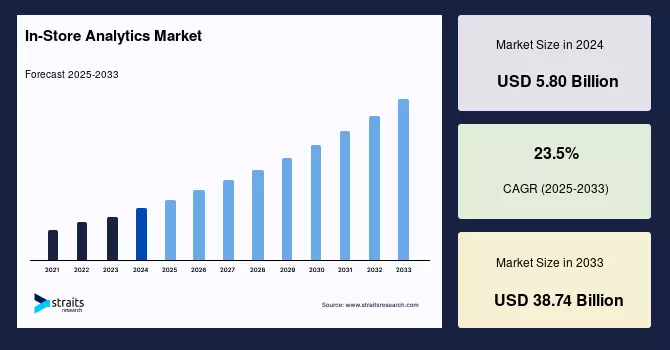
In-Store Analytics Market to Skyrocket from USD 5.8B to USD 38.7B by 2033
Explore how in-store analytics is transforming retail—from USD 5.8 billion in 2024 to an anticipated USD 38.7 billion by 2033—driven by AI, enhanced customer experiences, and real-time operational insights.
Introduction
In-store analytics is revolutionizing physical retail by turning observational data into actionable insights. Using sensors, cameras, Wi-Fi signals, and AI-powered platforms, store operators now track customer movements, dwell times, purchase behaviors, and even aisle heat maps in real time.
These insights inform everything from merchandising layouts and staffing decisions to personalized promotions and security. As digital and physical retail collide, in-store analytics is redefining what brick-and-mortar success looks like—enhancing engagement, performance, and loyalty.
Market Snapshot
- 2024 Market Size: USD 5.80 Billion
- 2025 Estimate: USD 7.16 Billion
- 2033 Projection: USD 38.74 Billion
- CAGR (2025–2033): 23.5%
This explosive growth reflects retailers' pivot toward data-driven decisions, both online and offline, to stay competitive in the digital age.
Growth Drivers
Smart-Tech Integration
AI, machine learning, big data, and cloud infrastructure are reshaping retail operations. From chatbot assistants and virtual sales advisors to predictive inventory management and personalized marketing, tech is making stores smarter, faster, and more customer-centric.
Enhanced Customer Understanding
Analyzing in-store behaviors—like time spent per section or responder tendencies—helps retailers tailor experiences, double-check engagement, and offer more contextually relevant promotions. This fuels higher conversion and customer stickiness.
Omnichannel Synergy
Consumers regularly cross between physical and digital touchpoints. In-store analytics bridges this behavior gap, enabling retailers to trace online activity to in-store interactions, and vice versa, creating cohesive and consistent experiences.
Market Challenges
Privacy and Compliance Hurdles
With sweeping data privacy laws like GDPR and CCPA, cleanup around data capture and use is critical. Retailers must implement clear and respectful consent mechanisms, ensuring analytics tools enhance—not infringe on—customer trust.
Market Opportunities
AI-Powered Predictive Retail
Advanced analytics can forecast demand, plan layout adjustments, and dynamically change promotions. AI models process shopping patterns and previous traffic to predict popular products and category hotspots, helping retailers stay agile.
Elevated In-Store Experiences
Smart fitting rooms, gesture-driven kiosks, and context-aware mobile nudges are all powered by in-store analytics. Combining physical exploration with digital overlays enriches shopping journeys like never before.
REQUEST SAMPLE: https://straitsresearch.com/report/in-store-analytics-market/request-sample
Regional Breakdown
- North America: Holds the largest market share due to early technology adoption, retail innovation, and mature analytics ecosystems.
- Asia-Pacific: Fastest-growing market, buoyed by digital transformation, rising eCommerce penetration, and emerging hypermarkets using advanced analytics.
- Europe: Steady expansion anchored by a balance of privacy regulations and retail modernization.
- LAMEA: Expanding steadily as technology diffuses into retail outside hyperurban areas—driven by mobile device usage and retail digitization initiatives.
Segmentation Overview
SegmentDominant ContributorNotesComponentSolutionsRetailers prefer full-stack platforms (AI dashboards, sensor arrays, data modeling) over standalone services.Deployment ModeOn-PremiseFavored by large chains wanting full control over data privacy and infrastructure.ApplicationCustomer Experience ManagementUsed for dwell time, customer flow, targeted engagement strategies.
Industry Use Cases
- Retail: Optimizing product placement, queue management, and personalized offers—leading to higher conversion rates.
- Consumer Engagement: Real-time alerts on crowd density and shopper behavior help staff interact more effectively.
- Resource Optimization: Analytics streamline staffing, cleaning, and restocking schedules—saving on overhead.
- Security: Heat maps and traffic patterns aid in detecting unusual behaviors—improving safety.
- Cross-channel Insights: Linking mobile app data with in-store analytics reveals how online campaigns drive walk-ins.
Conclusion
With a projected leap to USD 38.74 billion by 2033 and a strong CAGR of 23.5%, the In-Store Analytics Market poised to redefine retail standards. Powered by AI, smart hardware, and omnichannel strategies, analytics now fuels more than just insights—it delivers improved customer experiences, operational efficiencies, and strategic agility.