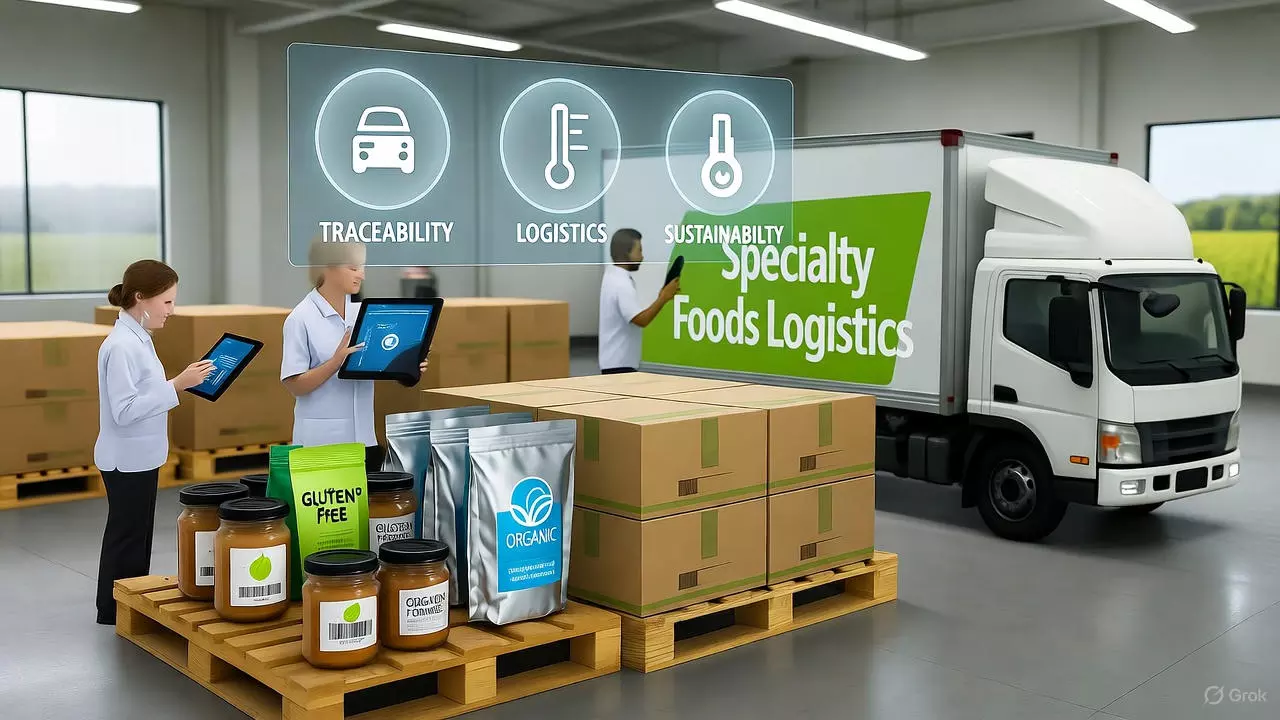
Supply Chain Best Practices for Specialty Food Products
The specialty food business is growing very fast. Customers are seeking increasingly nutritious, more differentiated, and high-quality products. This is the pressure that makes supply chains do better. In the United States, the volume of specialty foods sold in 2023 reached over 206 billion dollars, and this fact justifies the importance of well-developed supply chains. You can also get a clue why it is important to know about this billion-dollar industry.
In this guide, I will explain supply chain best practices for specialty food products. With these techniques, you can better understand and improve the supply chain of specialty food products.
Understanding the Specialty Food Supply Chain
Supply chain of food is the line through which food products travel between the producers of food and the ultimate consumers. This becomes more complex in specialty food because the items of this industry are often produced by a small-scale manufacturer, organic farm, or niche suppliers.
When you bring up the question of what a food chain is, the simplest way to define it is that it is the process that the food goes through the producer to the consumer. In this case, a small producer in the food chain may be a small organic mushroom farm or a local bakery that makes gluten-free bread.
The food and beverage supply chain of specialty products has numerous stops. The ingredients may be of a foreign nature. It is small batch processing. The distribution must be kept in store and have fewer delivery schedules. This makes food supply and management an important determinant of freshness, safety and quality.
Key Challenges in Specialty Food Supply Chains
Specialty food products have their own difficulties. Wholesalers Small manufacturers have limited means to grow their business and it leads to supply chain issues within the whole foods industry, including shortages, delays or high costs.
Another transportation issue is that the majority of products need a certain temperature. The process can also be blocked by stringent labelling and certification requirements by the retailers.
Consumer expectations are the second challenge. Consumers today demand transparency. They would like to learn the origin of ingredients and the sustainability of the process. It takes a good deal of planning to meet these expectations without adding extra costs. Software applications are assisting, although not every small company can afford to invest in continuous food supply chain software.
- Availability of poor quality raw materials.
- Poor load and shelf life of products.
- Having a high level of food safety and compliance.
- Costs of high transportation and storage.
- Seasonal changes in the supply of ingredients.
- Complex regulatory documentation in the regions.
- Challenging to scale back production and still produce quality.
- Handling relations with local small suppliers.
- Poor cold chain facilities in certain markets.
- The difficulty with demand forecasting is because of niche market.
- Global event/climate change supply disruption risk.
Best Practices to Optimize the Supply Chain
To make specialty food supply chains stronger, businesses can follow a set of best practices that focus on efficiency and customer trust:
- Build strong relationships with producers: A close partnership with suppliers helps avoid shortages. Long-term contracts with reliable farms and manufacturers reduce risks.
- Invest in traceability: Simple digital tools can track products from farm to shelf. This improves food safety and builds consumer confidence.
- Plan distribution smartly: Use regional warehouses or third-party logistics partners to reduce delivery times.
- Focus on sustainability: Eco-friendly packaging, energy-efficient transportation, and waste reduction create long-term value.
- Strengthen packaging solutions: Packaging is not just about storage but also about branding. For instance, using custom printed mylar bags gives both protection and a marketing edge. They protect sensitive food items from moisture, light, and contamination while promoting brand identity.
Leveraging Technology in the Food Supply Chain
Technology has taken center stage in addressing supply chain issues. Inventory tracking, demand forecasting and order management are some of the functions aided by food supply chain software. As one such case example, AI in food supply chain management forecasts demand changes. It is particularly handy with short shelf life products such as dairy substitutes, fresh juices, or specialty baked goods.
Cloud-based platforms can also help small businesses work with their suppliers and retailers. Even simple devices that monitor shipments or order management can reduce errors and time wasted. Accuracy is enhanced through technology, and this aspect matters where you must work with tight certifications and health laws.
Future Trends in Specialty Food Supply Chains
Food supply chains of the future appear more interconnected and sustainable. Automation will probably lessen the shortage of labor. Increasing numbers of businesses will resort to blockchain to achieve traceability. Customers will still insist on packaging that is greener and suppliers who are transparent. Brands that match these expectations will be specialty brands that will be distinct in the market.
Packaging will continue to become an important consideration in the future of specialty food distribution. Examples of packaging for niche products include Tailored solutions such as Custom Mushroom Mylar Bags. These bags preserve the freshness of mushrooms, satisfy health requirements, and promote brands on the shelves of stores. In the case of small producers, product protection and attractiveness are balanced with packaging innovations such as this.
Concluding
The specialty food products rely on effective, consistent, and clear supply chains. Compared to manufacturers, retailers, and all the other steps, they should also take care of quality and efficiency. The best practices are establishing effective supplier relationships, applying modern technology, planning intelligent distribution and emphasizing packaging as a safety and branding instrument.
With the changing food and beverage supply chain, companies investing in intelligent solutions will overcome the problems more easily and grow more rapidly. As with the implementation of AI in food supply chains or the adoption of packaging, such as custom lettered mylar bags, the correct actions now will set your business up to meet the demand down the line.