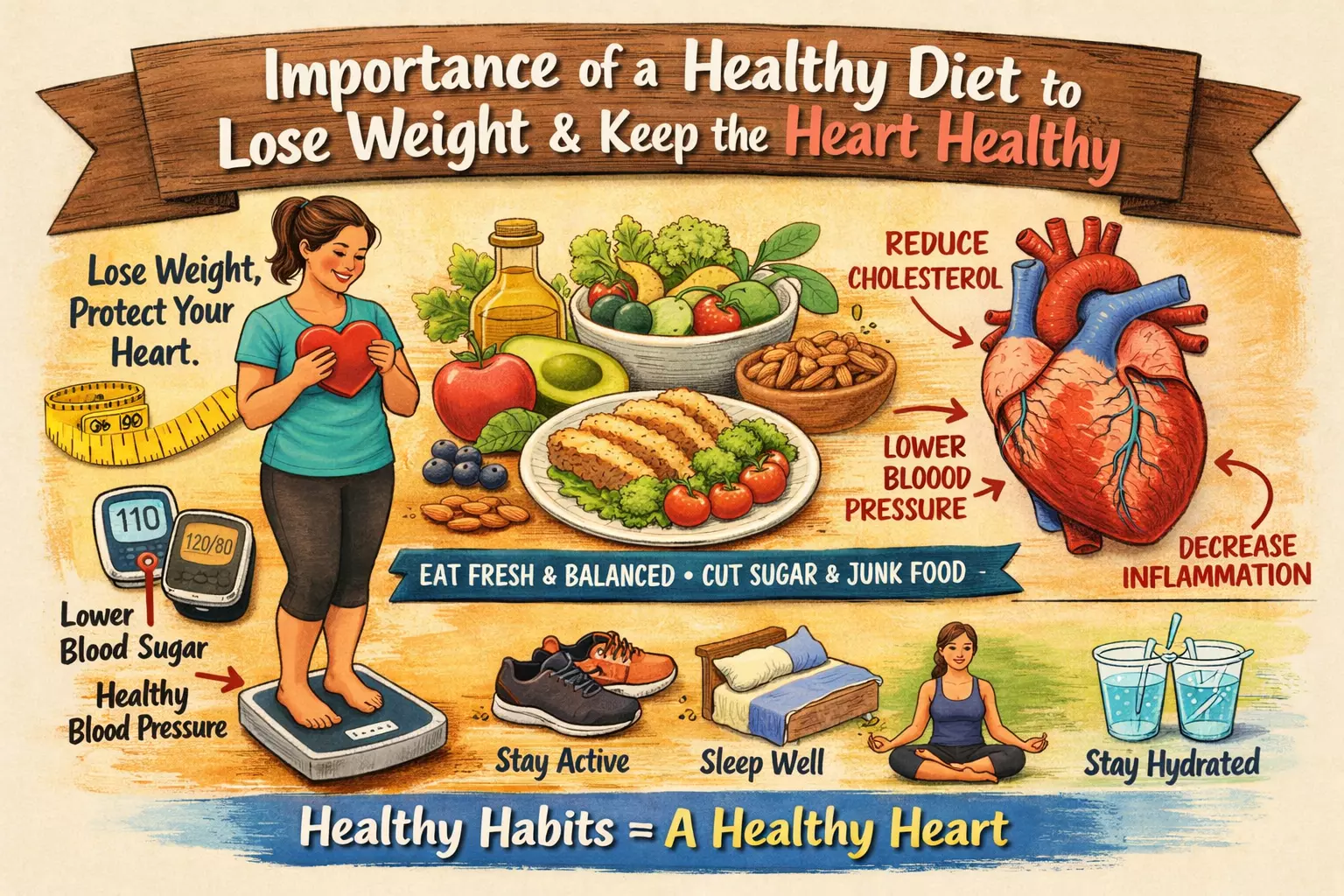
Importance of a Healthy Diet to Lose Weight and Keep the Heart Healthy
Most people think of weight loss as a mirror problem. Clothes fit better, numbers go down, compliments come in. But when you sit in a clinic or talk to people who’ve had heart trouble, you start hearing a different story.
They don’t talk about looks. They talk about blood pressure. Sugar levels. Fatigue while walking. A tight feeling in the chest after climbing stairs.
Healthy Weight Matters
Keeping a healthy weight for many reasons, but the heart feels it first. Extra weight makes the heart work harder to pump blood.
Over time, this strain shows up as high blood pressure, higher cholesterol, and insulin resistance. Doctors usually notice that patients who lose even a small amount of weight often see improvements in all three.
BMI is commonly used to judge whether someone is at a healthy weight. It’s not perfect, especially for very muscular people, but for most adults it gives a rough idea.
What matters more than the number is what’s happening inside the body. Fat around the abdomen, for example, tends to be more dangerous for the heart than fat on the hips or thighs.
What is the reason of heart attack?
There isn’t just one. But poor diet, excess weight, high sugar, high BP, and smoking are regular players. And diet connects to almost all of them.
There Are Healthy Ways to Lose Weight
People mostly expecting to loose weight fast. Usually, because they’ve tried slow before and felt nothing happened. But healthy ways to lose weight don’t feel dramatic. They feel boring. And boring is usually what works.
A balanced diet is the starting point. Not extreme rules. Not removing entire food groups. Just fewer packaged foods, less sugar, and less fried stuff. More vegetables, fruits, whole grains, and protein that isn’t swimming in oil.
Many people don’t realize how much hidden sugar they eat. Tea with sugar. Biscuits. Juices that claim to be “natural.” These things add up quietly and affect both weight and heart health.
Exercise doesn’t need to mean gym. Walking daily, climbing stairs, cycling, swimming. Doctors usually notice that people who move regularly, even lightly, control weight better than those who diet only.
And then there’s patience. Weight never goes up or down in a day. It changes in patterns. Slow is smooth. Smooth is fast. The heart likes slow change too.
Stress eating is real. I’ve seen patients who eat well all day and lose control at night. Not because of hunger, but because of frustration, loneliness, or exhaustion. This part doesn’t get fixed with meal charts. It gets fixed with awareness.
Fast Weight Loss and the Side Effects of Dieting
Crash diets sound attractive. Ten kilos in one month. No carbs. Only juices. Very low calories.
But the body fights back.
Some of the common side effects of dieting this way include nutrient deficiencies, weakness, hair fall, irregular periods, and muscle loss.
Hormones also get disturbed. For people with diabetes, heart disease, or during pregnancy, this can become dangerous.
Doctors usually warn patients that fast loss often leads to fast gain. And the heart doesn’t like these swings. Sudden changes can affect electrolytes, blood pressure, and even heart rhythm in some people.
Instant fixes don’t last. Lifestyle does.
Micronutrients and the Heart
Even when portions are smaller, the food still needs to nourish. Vitamins and minerals play quiet roles in heart function. B vitamins help with energy and red blood cell formation.
Vitamin D and calcium affect muscle contraction, including heart muscle. Magnesium and potassium help regulate heart rhythm.
Omega fatty acids from nuts, seeds, and certain fish support good cholesterol and reduce inflammation. People often focus only on calories and forget quality. The heart notices quality.
How to Maintain a Healthy Weight?
This part sounds simple but is hard in real life.
Eat reasonable portions. Not tiny, not huge. Include healthy fats but not in excess. Watch calorie intake without turning food into an enemy.
Reduce sugar and salt. High salt raises blood pressure. High sugar feeds fat storage and insulin resistance. Both are tied to heart disease.
Drink water regularly. Dehydration can affect circulation and energy levels, making exercise feel harder.
Don’t take long breaks from your routine. One festival or vacation is fine. One year of “I’ll start later” is not.
Eat with people. Meals feel different when shared. Patients often say they eat better when they sit with family instead of eating alone in front of a screen.
How Diet Protects the Heart?
A healthy diet not only help to loose weight but, it directly affects blood vessels. Fibre helps lower bad cholesterol. Fruits and vegetables contain antioxidants that protect vessel walls. Healthy fats support flexible arteries.
How to prevent heart disease?
The honest answer is not one magic food. It’s patterns. Eating regularly. Sleeping well. Moving daily. Managing stress. Keeping weight in a range the body can handle.
And it doesn’t mean you never enjoy food. It means you don’t turn treats into habits.
Many people don’t realize how closely weight and heart attacks are connected. Extra fat tissue releases chemicals that increase inflammation. Inflammation damages arteries over time. Plaque forms. Blood flow reduces. One day, it blocks completely.
That’s how slow habits create sudden events.
Read: Top 10 Super Healthy Foods to Include in Your Diet
Weight Loss and the Mind
Self-hate doesn’t help weight loss. It usually makes it worse. Patients who succeed long-term are not the ones who punish themselves. They’re the ones who stay consistent.
Healthy ways to lose weight are not loud. They’re quiet routines. Morning walks. Home food. Smaller plates. Better sleep.
You don’t need money for most of this. Walking is free. Cooking at home is cheaper than ordering out. Motivation is not magic. It’s built from small wins.
And yes, professional help matters. Nutritionists, doctors, trainers. But even without them, basic habits still count.
Final Thought
To maintain a healthy weight is not a mystery. It’s just not dramatic enough for social media.
Control what you eat. Move your body. Respect your sleep. Reduce stress where you can.
These protect your heart more than any supplement ever will.
Self-love matters. Progress may not show daily. Sometimes the scale stays the same while your blood pressure improves. Sometimes clothes fit better before weight changes.
The heart doesn’t care about perfection. It cares about consistency.
And if you protect it with food and movement today, it works better for you tomorrow.