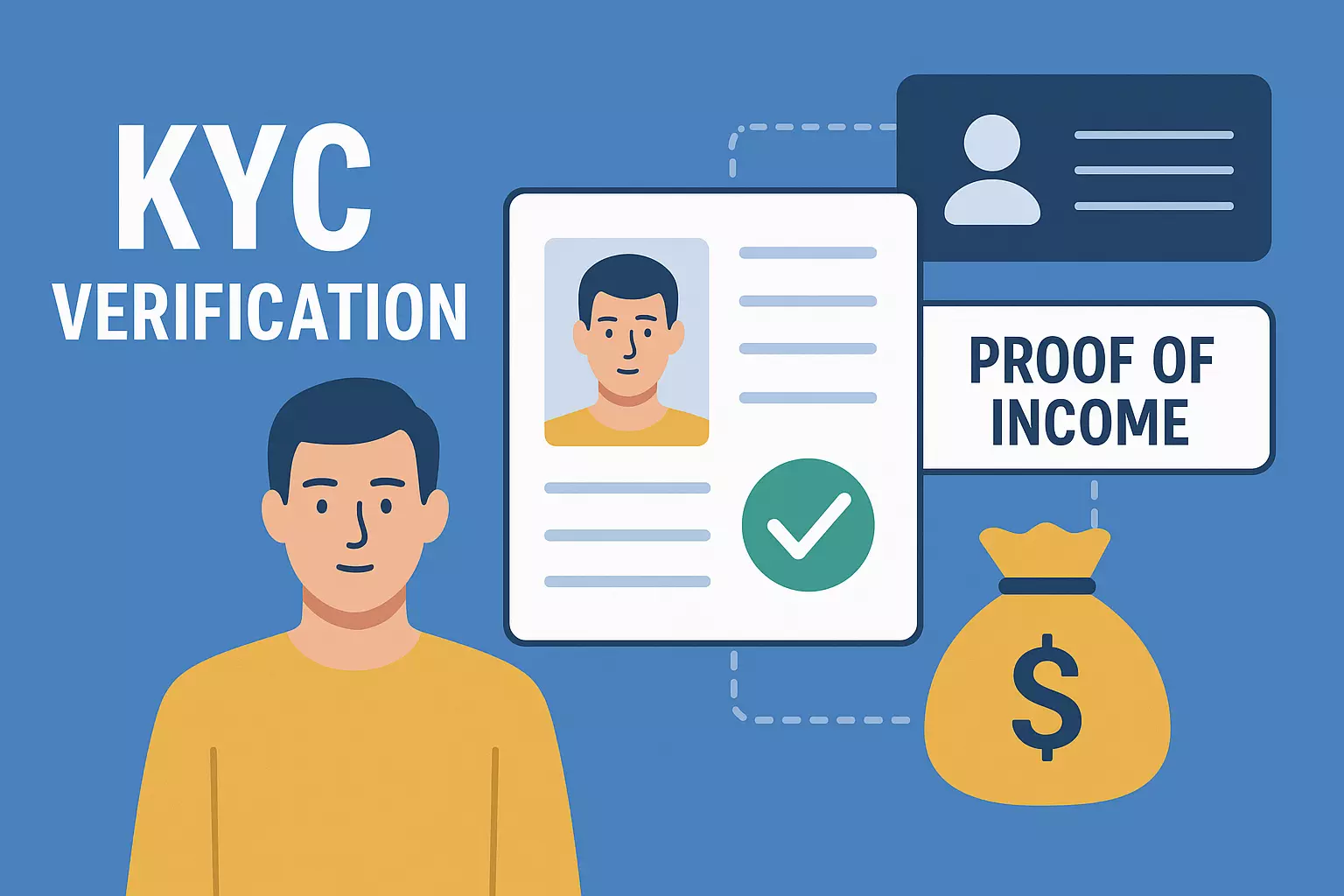
Identity Checks to Proof of Income: The Controversies of the Modern KYC Process
KYC verification is a critical process in the current financial landscape which is digital in nature and safeguards the businesses and the customers. Know Your Customer (KYC) is a term that is used in reference to the regulatory obligation that requires businesses, particularly financial institutions, to confirm the identities of their clients before transacting with them.
KYC process assists in identifying and thwarting money laundering, terrorist money laundering and identity theft among other financial crimes.
With the increasingly tough international regulations, KYC check has ceased to be a mere identity check. It has now adopted several levels of documentation, data analysis and continuous monitoring to guarantee conformity and reliability in all transactions.
What KYC Verification Means
KYC check ensures that the institutions are aware of the institutions by whom they are operating. This is whereby the identity of individuals or businesses are confirmed by using documents like government issued IDs, address proof and in some cases income proof. The aim is to ensure that the individual who opens an account or participates in a financial operation is genuine and is not trying to conceal his real identity or source of finances.
It is no longer the banks that are involved in the process. Fintech services, crypto exchanges, insurance companies, and even real estate agencies have established a strong KYC verification system to ensure compliance with the laws and the trust of their customers.
The KYC Process Explained
The KYC process is generally decomposed into three primary phases, which include customer identification, customer due diligence (CDD), and continuous monitoring.
At the initial level, the client is required to provide identifying information to the institutions. This may contain full name, date of birth, residential address and identity numbers issued by the government. After this data has been provided, it is checked against trustworthy databases to ensure that it is genuine.
Customer due diligence is the second stage that is more in-depth. This is done by determining the degree of risk that a customer has. A politically exposed individual (PEP) or a subject in a high-risk area might, as an example, need to be subjected to extreme due diligence. Institutions can even demand evidence of income or source of funds to make sure that the money being dealt with is a real one.
Lastly, the active surveillance will ensure that the transactions of the customer remain consistent with the risk profile. Various internal checks can be imposed to stop possible fraud or laundering by suspicious activity or a large transfer.
Significance of KYC Check in Financial Systems
KYC verification is not only a compliance measure, but it is a security that contributes to the integrity of the global financial system. Institutions by ensuring that they verify the identity and financial background of every customer can minimize chances of exploitation by criminals.
It also increases the confidence of the customers. Users now feel safer when they are informed that a financial platform has a strict KYC process because they are assured that any sensitive information provided is safe and that the transactions carried out are safe. Additionally, global regulators impose severe fines on those organizations that cannot ensure effective KYC standards and verifying them is a critical part of stability in operations.
Financial transparency is also encouraged by KYC. Organizations should ensure that they receive money that is acquired through legitimate means by enforcing documentation including showing evidence of income. This is an important measure of stopping tax evasion and other corruption related practices that keep the financial systems clean and responsible.
Digital KYC and Automation
With the increased use of technology, the conventional paper-based KYC has turned to digital verification. The system is also referred to as eKYC or digital KYC, it allows institutions to authenticate identities in real time through AI-based tools, biometric authentication, and liveness detection systems.
As an illustration, they are now able to post their identification files, as well as take facial recognition tests, in the comfort of their homes. Such automated systems are able to identify forgeries, compare identities to world watch lists, and even verify evidence of income records like pay slips or income tax returns.
The outcome is an expedited and efficient and secure verification process that minimizes the operation cost without compromising the compliance. Digital KYC is also useful in assisting financial organizations to onboard clients faster without losing customer experience.
Problems with KYC Verification
KYC verification is problematic even with technological progress. Global business might find it challenging to harmonize its KYC process in different jurisdictions due to the complexity of regulatory frameworks. Besides, the process of document manual review may be time-consuming and subject to human error.
The other issue is associated with security versus user experience. Recurrent KYC verifications are annoying to the customers, particularly when they are asked to submit various documents such as evidence of income each time they are using a new service. To get around it, companies are progressively moving to centralized KYC platforms and hi-tech data analytics to automate verification without reduction of compliance.
The Future of KYC checks
Automation, integration of blockchain and AI is the future of KYC verification. KYC systems based on blockchain will bring secure and non-tamper able digital identities that can be shared with the consent of the customer across institutions. This would remove unnecessary checks and limit breaches of data.
Artificial intelligence will also increase KYC process by detecting suspicious patterns of behavior, scoring risks automatically, and providing real-time monitoring capabilities. Digital wallets and decentralized identity solutions, on the other hand, will enable the user to have greater control over personal information without violating international AML and KYC regulations.
In addition, the regulators should agitate towards increased standardization in the collection and storage of the data on the proof of income and identity. Such a change will facilitate the interoperability of institutions and increase the combat on global financial crime.
Conclusion
KYC verification is not just a legal obligation but the basis of trust in the digital economy. An effectively adopted KYC system helps secure institutions against fraud and regulate them effectively and promote safer financial ecosystems.
As technology keeps on increasing, digital KYC solutions will transform the way identity and proof of income verification are done. Organizations investing in smarter, automated and user-friendly KYC systems today will be in a better position to counter the challenges that will be posed by the changing financial nature of tomorrow.