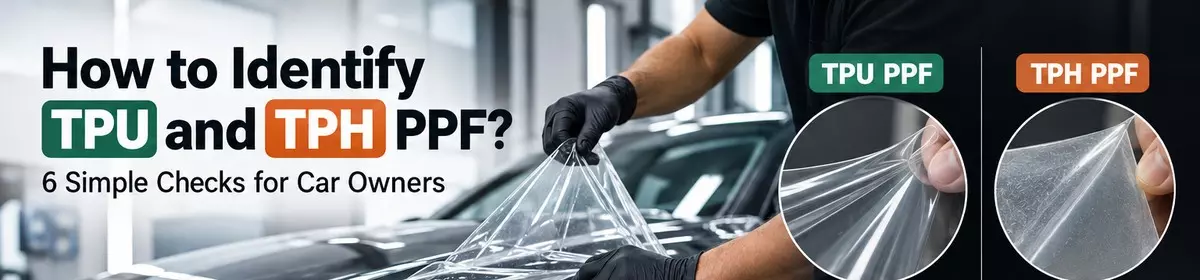
Identify TPU and TPH PPF Like a Pro in 6 Steps
Shops often offer both TPU and TPH film. Once on the car, they look almost the same. That makes it easy to overpay for the lower grade. Here is how to identify TPU and TPH PPF with steps any car owner can follow.
What Is PPF Made Of?
There are three main types of paint protection film: TPU, TPH, and older PVC. TPU (thermoplastic polyurethane) is the top-tier material. TPH is a cheaper hybrid, though sources describe it in different ways. These three types are worth knowing.
TPU vs TPH PPF for Cars: What Changes
- TPU: Flexible, self-healing, stays clear, and lasts longer
- TPH: Less stretchy, limited healing, may yellow or crack, and costs less
You will see the quality difference later, not on the first day.
Want dependable Car Paint Protection Services in Baner? Ask the shop which film it uses. That helps you make the right call for your car.
6 Steps to Tell TPU From TPH
One test cannot give the full answer. Combine a few.
How Real TPU Film Behaves
Real TPU usually carries a trusted brand and a spec sheet that names TPU. It also has a warranty from the maker. It stretches smoothly, stays clear, and fixes light scratches with heat. Ask your installer for the roll label, the data sheet, and a sample.
- Ask for the brand and model. See the roll or box yourself. A film without a known brand is a red flag.
- Ask for the data sheet. It should show TPU, the thickness, and the warranty terms.
- Check the warranty. It should cover yellowing, cracking, and peeling. Confirm it with the brand.
- Test self-healing on a sample. Scratch lightly, then warm it. TPU heals, while TPH often does not.
- Test flexibility. TPU stretches and returns to its shape. A stiffer feel points to TPH or PVC.
- Inspect clarity. View the sample on a dark panel under bright light. It should look clear, not hazy or yellow.
Read: Automotive Tint: A Smart Upgrade for Comfort, Privacy, and
Warning Signs of TPH PPF
Finding TPH is often about spotting these red flags:
- A price much lower than other quotes
- An unbranded roll or vague answers about the material
- A hazy or slightly yellow tint
- A stiff feel and little to no self-healing
- A short warranty, or none from the manufacturer
A box or label alone is not proof. Verify with the manufacturer if you can.
Can You Identify PPF After Installation?
Not easily by eye. Check your invoice and warranty card for the brand, then ask the manufacturer to confirm. If the film yellows or cracks over time, it is likely lower grade.
How to Select the Right PPF
- Put quality first: TPU build, topcoat, and clarity matter more than price.
- Request it in writing: The quote or warranty should name the film and type.
- Compare warranties: Longer coverage shows the maker trusts the film.
- Choose a skilled installer: Even great film fails when it is applied poorly. Work with professional PPF services in Baner that know the craft.
Closing Thoughts
When you know how to identify TPU and TPH PPF, you avoid paying premium rates for budget film. Check the brand, data sheet, warranty, healing, and clarity before you commit.