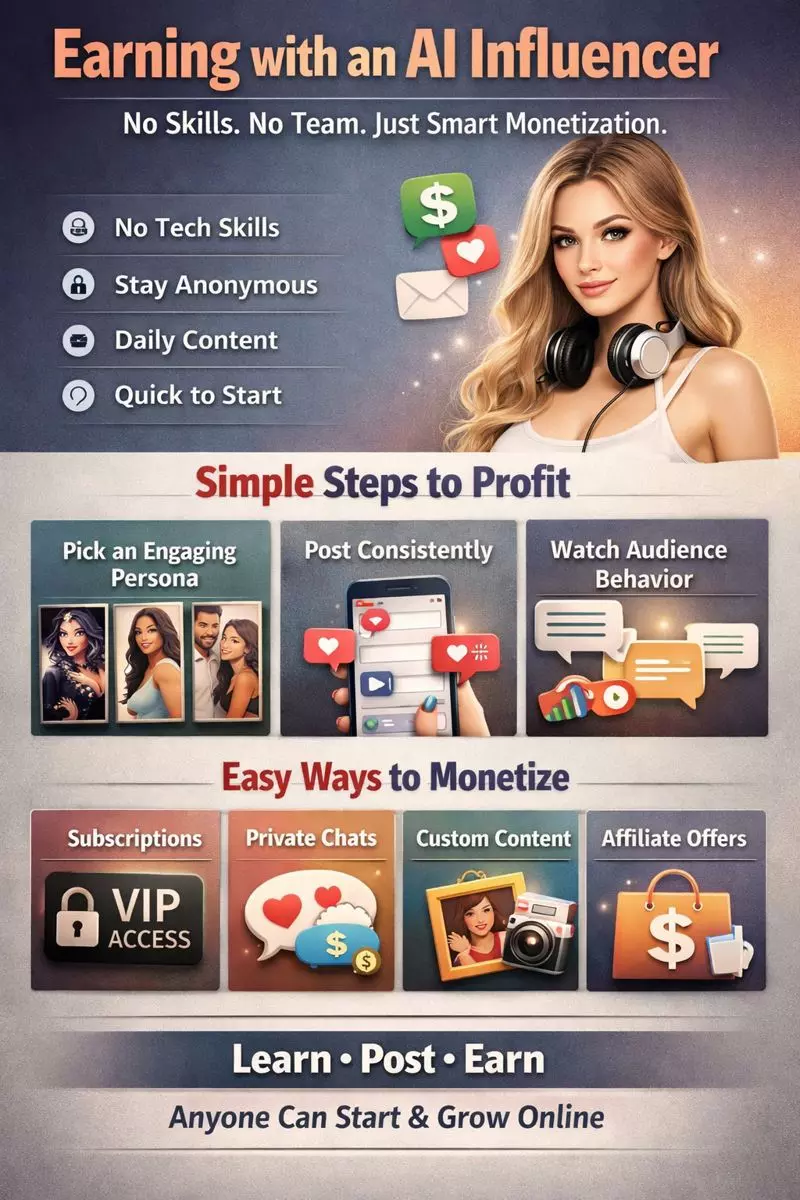
How Anyone Can Monetize an AI Influencer Without Technical Skills
I’ve noticed that more people are curious about how digital creators are earning online without filming videos, hiring teams, or learning complex software. We’re not talking about traditional content creation anymore. We’re talking about building income streams around an AI influencer, even if someone has zero technical background.
Initially, this idea sounds unrealistic. However, once you see how these systems work, it becomes clear why so many beginners are trying it. They don’t code. They don’t design apps. They simply make smart choices, stay consistent, and focus on what audiences already respond to.
In this post, I’ll break down how monetization works, what steps matter most, and how regular people are already making this approach work. We’ll talk in practical terms, using real-world logic instead of hype. And yes, I’ll keep it fully human, direct, and grounded in reality.
Why AI-driven personas attract attention faster than personal brands
Building a personal brand takes time. People judge how you look, sound, and behave. In comparison to that, an AI influencer starts with a clean slate. You decide how they look, how they talk, and what tone they use from day one.
Similarly, audiences often feel more comfortable interacting with a digital persona because expectations are different. They don’t expect perfection. They want consistency and personality.
Here’s why these personas gain traction quickly:
- They operate 24/7 without burnout
- Their personality never drifts or contradicts itself
- Content can be created daily without delays
- The creator stays anonymous if they want
As a result, creators spend less energy managing themselves and more time shaping content that performs well.
Starting without technical skills is more realistic than it sounds
Many assume they need coding knowledge or advanced design experience. Clearly, that’s not the case anymore. Modern tools are built for people who click, type, and adjust settings rather than write code.
I’ve seen creators start with nothing more than an idea and a basic understanding of online trends. They learn by doing, not by studying manuals.
Specifically, beginners usually handle tasks like:
- Choosing a visual style
- Writing short character descriptions
- Posting content consistently
- Responding to audience behavior
Eventually, confidence grows, and they refine their approach. But initially, simplicity wins.
Picking a personality concept that people actually follow
Not every digital persona succeeds. Some fail because the idea is too vague. Others fail because the tone changes too often. A strong AI influencer has a clear role and stays within it.
In the same way human creators niche down, AI-based personas must do the same.
Some concepts that tend to work well include:
- Lifestyle-focused characters with daily updates
- Fantasy-inspired personas with strong backstories
- Relationship-style interactions built around emotional presence
- Creative figures who comment on trends or culture
Admittedly, it’s tempting to copy what others are doing. But small twists make a big difference.
Content consistency matters more than perfection
People often overthink quality at the start. However, consistency builds trust faster than perfect visuals. An AI influencer who posts regularly becomes familiar, and familiarity leads to engagement.
Despite early imperfections, staying active helps creators understand what audiences react to. Likes, comments, and private messages all offer clues.
Of course, visuals matter. But rhythm matters more.
A simple weekly structure could look like:
- Short daily posts for visibility
- One longer interaction-based post each week
- Occasional behind-the-scenes style updates
As a result, the persona feels active rather than static.
Monetization paths that don’t require advanced setup
Once attention grows, income options open up naturally. This is where many beginners realize how flexible an AI influencer can be.
Here are common monetization routes that don’t require technical skills:
- Subscription-based content access
- Paid private chats or messages
- Custom content requests
- Affiliate-style promotions
- Digital items like wallpapers or themed packs
Not only do these methods scale easily, but they also allow creators to test pricing without long-term commitments.
Using audience behavior to guide income decisions
One mistake beginners make is forcing monetization too early. However, watching how followers behave gives better signals.
For example:
- If people ask questions, private chats may work
- If visuals get saved often, premium image access makes sense
- If comments focus on personality, conversational content performs better
Consequently, income grows in response to demand rather than guesswork.
Where specialized platforms simplify the process
At some point, creators look for tools that reduce friction. Instead of juggling multiple services, they use centralized systems built for digital personas.
I’ve seen creators mention platforms like Sugarlab AI in discussions about managing characters, visuals, and interactions in one place. In particular, these platforms reduce setup time and help beginners focus on creativity instead of logistics.
Similarly, having built-in systems helps avoid common beginner mistakes.
Handling mature themes with clear boundaries
Some creators choose adult-oriented directions. Others don’t. Both paths exist. However, clarity matters.
When someone builds an AI influencer around flirtation or fantasy, setting boundaries protects both creator and audience. In spite of stereotypes, not all adult-themed personas rely on explicit material.
For instance, some focus on suggestion, tone, or emotional connection. Others move toward premium-only access models. I’ve even seen discussions around an NSFW AI influencer handled with clear audience filters and opt-in systems.
The key point is control. Creators decide what’s shared and where.
Audience trust grows when the persona feels consistent
Trust doesn’t come from realism alone. It comes from predictability. When followers know what to expect, they stay.
Likewise, consistency in voice, posting style, and behavior strengthens connection. Even though the persona is artificial, emotional patterns feel familiar.
Creators often forget that people aren’t looking for perfection. They’re looking for presence.
Expanding income by testing multiple formats
Once a base audience exists, experimentation becomes easier. An AI influencer can appear in different formats without rebranding.
Some creators test:
- Short-form posts for discovery
- Longer storytelling updates
- Visual-only drops
- Conversation-focused sessions
Eventually, one or two formats outperform others. At that point, effort shifts naturally.
Comparing AI personas to human subscription creators
In comparison to traditional creators, AI-based personas remove certain pressures. There’s no camera anxiety. No schedule conflicts. No personal exposure.
I’ve seen creators compare engagement patterns with onlyfans models, especially in terms of subscriber behavior. Interestingly, consistency and character clarity often matter more than realism.
That insight changes how people approach content planning.
Managing time without burnout
One underrated benefit of running an AI influencer is time flexibility. Content can be prepared in batches. Responses can be scheduled. Breaks don’t disrupt the persona.
Meanwhile, creators maintain control over pacing. Some spend one hour a day. Others automate parts of the workflow.
As a result, the process stays manageable rather than exhausting.
Avoiding common beginner mistakes
Even though the entry barrier is low, mistakes still happen. Being aware of them saves time.
Common issues include:
- Changing the persona too often
- Posting inconsistently
- Ignoring audience feedback
- Pricing too high without testing
- Copying others without adaptation
However, mistakes aren’t fatal. Adjustments can be made quickly.
Long-term growth depends on adaptability
Trends change. Platforms shift. Audience tastes evolve. A successful AI influencer adapts without losing identity.
Creators who last tend to:
- Listen more than they talk
- Adjust formats gradually
- Keep core personality intact
- Experiment without rushing
Eventually, the persona becomes an asset rather than a project.
Subtle emotional appeal makes a difference
Some personas focus on companionship rather than visuals. I’ve seen discussions where creators mention concepts like an AI dream girlfriend to describe emotionally supportive characters. These personas succeed because they meet specific emotional needs without promising realism.
Especially in niche audiences, emotional tone matters more than aesthetics.
Read: AI in Social Media Marketing: Smarter Marketing, Better
Monetization feels easier when pressure stays low
When creators stop chasing instant income, results improve. Audiences sense authenticity even in artificial personas.
Thus, monetization becomes a byproduct of engagement rather than the sole focus.
Why this model keeps attracting beginners
The appeal is simple. Anyone can start. Skills grow over time. Identity stays flexible.
An AI influencer doesn’t replace creativity. It reshapes how creativity is expressed. People who never considered themselves creators now participate in digital economies.
Clearly, that’s why interest keeps growing.
Final thoughts on starting without fear
I’ve seen enough examples to say this confidently: technical skills are no longer the gatekeepers. Curiosity, consistency, and observation matter more.
If someone approaches this space with patience, learns from feedback, and respects their audience, progress happens naturally. They don’t need perfection. They need persistence.
And while not every attempt succeeds, the barrier to trying has never been lower.