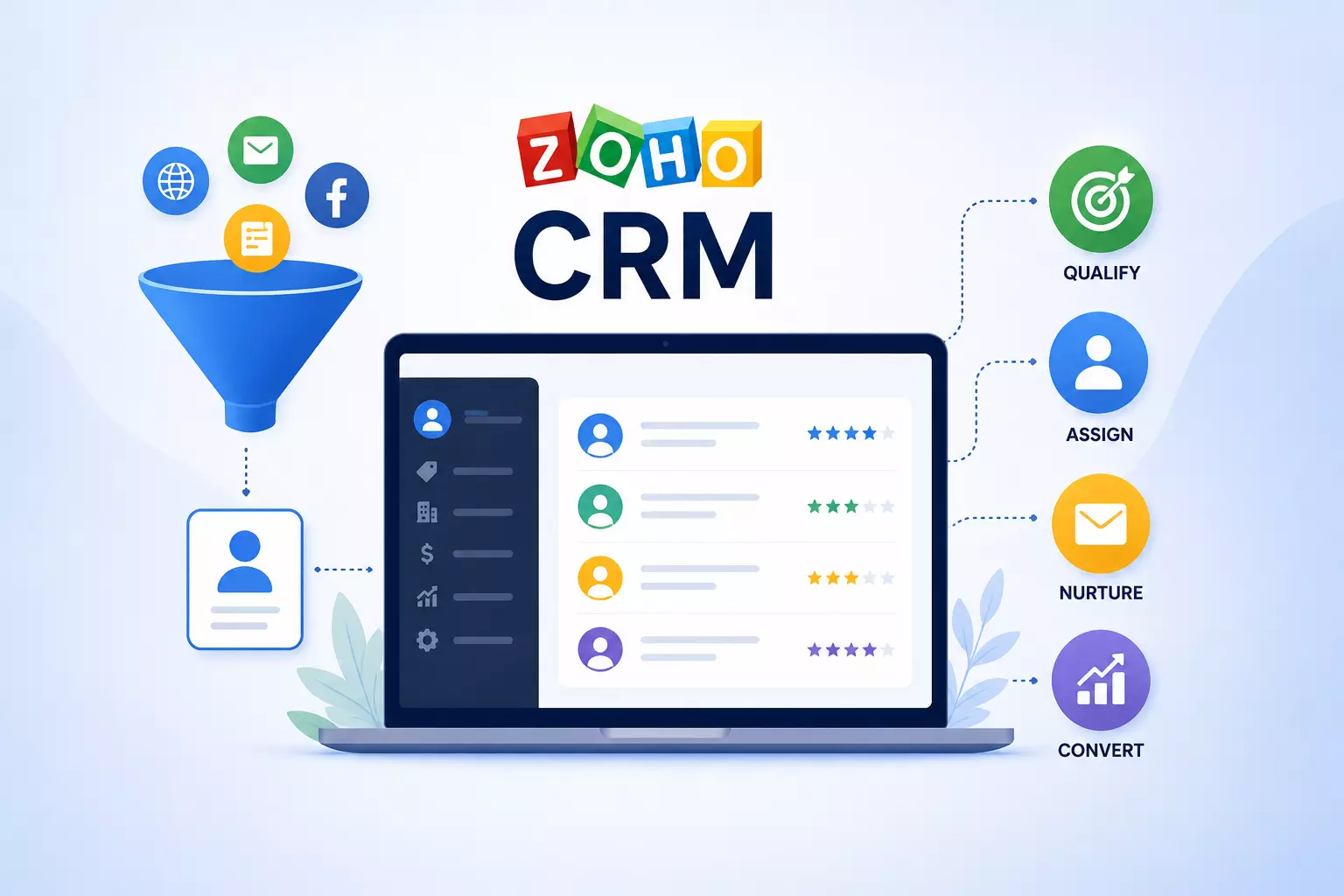
How Zoho CRM Improves Lead Management
Lead management is one of the most critical aspects of a successful sales process. Businesses invest significant resources in generating leads through various marketing and sales activities, but without an effective system to capture, organize, nurture, and convert those leads, valuable opportunities can easily be lost.
This is where a robust customer relationship management solution becomes essential. Zoho CRM offers a comprehensive set of tools specifically designed to streamline lead management and help organizations maximize the value of every prospect.
Zoho CRM provides a structured approach to handling leads from the moment they enter the system until they are converted into customers. By combining automation, customization, analytics, and communication capabilities, the platform helps businesses create a more organized and efficient lead management process.
Ways Zoho CRM Enhances the Lead Management Process
Centralized Lead Information
One of the primary ways Zoho CRM improves lead management is by centralizing all lead-related information in a single platform. Instead of managing prospect details through spreadsheets, emails, or disconnected systems, businesses can store all lead data in one secure location.
Every lead profile can include contact information, communication history, source details, notes, tasks, and other relevant records. This centralized structure ensures that sales teams have immediate access to accurate information whenever they interact with prospects.
A unified database reduces confusion, prevents duplicate entries, and allows team members to work with consistent data. As a result, sales representatives can focus more on building relationships rather than searching for information.
Efficient Lead Capture
Generating leads is only beneficial if those leads are captured effectively. Zoho CRM offers multiple methods for collecting lead information and automatically adding it to the CRM database.
Leads can enter the system through web forms, landing pages, social media channels, email campaigns, and other digital touchpoints. Automatic lead capture eliminates the need for manual data entry, reducing administrative work and minimizing the risk of human error.
By ensuring that lead information is recorded instantly, businesses can respond to inquiries more quickly and maintain engagement with potential customers.
Lead Qualification Made Simpler
Not every lead has the same level of interest or potential value. Identifying which prospects deserve immediate attention is a major challenge for sales teams. Zoho CRM addresses this challenge through lead qualification tools that help businesses categorize and prioritize prospects.
Organizations can define qualification criteria based on factors such as industry, company size, location, engagement level, budget, or other relevant attributes. These criteria help sales teams determine which leads are more likely to move through the sales pipeline.
When lead qualification becomes more systematic, businesses can allocate resources more effectively and improve conversion rates.
Automated Lead Assignment
As lead volume increases, manually assigning leads to sales representatives becomes inefficient. Zoho CRM improves lead management by automating the lead assignment process.
Businesses can establish assignment rules that distribute leads based on territory, product interest, department, workload, or other predefined conditions. This automation ensures that each lead reaches the appropriate representative without delays.
Faster lead distribution can improve response times and help organizations maintain a consistent follow-up process. It also creates a balanced workload across sales teams, improving overall productivity.
Lead Scoring for Better Prioritization
One of the most valuable features of Zoho CRM is lead scoring. This functionality helps businesses identify which prospects are most likely to convert into customers.
Lead scoring assigns numerical values based on predefined behaviors and characteristics. Actions such as email engagement, website visits, form submissions, and other interactions can contribute to a lead's score. Higher scores indicate stronger interest or higher potential value.
By using lead scoring, sales representatives can focus their efforts on the most promising opportunities. This approach helps improve efficiency while ensuring that qualified leads receive timely attention.
Improved Follow-Up Management
Consistent follow-up is essential for successful lead conversion. However, managing follow-up activities manually can lead to missed opportunities and delayed responses.
Zoho CRM helps businesses stay organized by allowing users to schedule tasks, reminders, meetings, and follow-up activities directly within the platform. Sales teams can create structured workflows that ensure every lead receives appropriate attention throughout the nurturing process.
Automated reminders reduce the likelihood of forgetting important interactions, while activity tracking provides complete visibility into ongoing communication efforts.
Workflow Automation
Manual processes often slow down lead management and increase the risk of errors. Zoho CRM includes workflow automation capabilities that help businesses streamline repetitive tasks.
Organizations can automate actions such as sending emails, updating lead statuses, assigning tasks, creating notifications, and triggering approval processes. Automation reduces administrative burdens and allows sales teams to focus on relationship-building activities.
By eliminating repetitive manual work, businesses can create a more efficient lead management environment and improve overall operational performance.
Enhanced Lead Nurturing
Many leads are not ready to make immediate purchasing decisions. Effective lead nurturing helps businesses maintain engagement until prospects are prepared to move forward.
Zoho CRM supports lead nurturing through automated communication workflows, email campaigns, personalized messaging, and activity tracking. Businesses can create targeted engagement strategies based on lead behavior and interests.
These nurturing capabilities help maintain consistent communication while providing valuable information that supports the decision-making process. As a result, businesses can strengthen relationships and increase the likelihood of future conversions.
Better Visibility Into the Sales Pipeline
A clear understanding of lead progression is essential for effective management. Zoho CRM provides visual pipeline management tools that allow businesses to monitor the status of every lead.
Sales managers can track movement through different stages, identify bottlenecks, and evaluate overall pipeline health. This visibility enables proactive decision-making and helps teams address issues before they impact performance.
With a structured pipeline view, businesses gain greater control over lead management activities and can make more informed strategic decisions.
Read: 10 Features That Make Zoho CRM a Leading CRM Solution
Customization for Unique Business Needs
Every organization has unique lead management requirements. Zoho CRM offers extensive customization options that allow businesses to tailor the platform according to their specific processes.
Users can create custom fields, modules, workflows, layouts, and reporting structures. This flexibility ensures that the CRM aligns with existing business operations rather than forcing organizations to adapt to rigid processes.
Many businesses work with Zoho CRM consultants during implementation to design customized lead management workflows that align with their sales objectives. These consultants help configure automation rules, lead scoring models, and reporting frameworks to maximize the effectiveness of the CRM system.
Comprehensive Communication Tracking
Maintaining a complete communication history is essential for effective lead management. Zoho CRM enables businesses to track interactions across multiple channels, including email, phone calls, meetings, and notes.
Having access to a detailed communication record allows sales representatives to understand previous conversations and provide more personalized engagement. This continuity improves the customer experience and helps build stronger relationships with prospects.
Communication tracking also enhances collaboration among team members by ensuring everyone has access to the same information.
Data-Driven Decision Making
Successful lead management requires more than intuition. Zoho CRM provides reporting and analytics tools that help businesses evaluate performance using real data.
Organizations can generate reports on lead sources, conversion rates, sales activities, response times, and pipeline performance. These insights help identify strengths, weaknesses, and opportunities for improvement.
By analyzing lead management metrics, businesses can refine their strategies and make informed decisions that support long-term growth.
Reduced Lead Leakage
Lead leakage occurs when prospects are lost due to poor follow-up, incomplete records, or inefficient processes. Zoho CRM helps minimize lead leakage by creating structured workflows and automated monitoring systems.
The platform ensures that leads remain visible throughout the sales cycle and that important actions are completed on time. Automated alerts and reminders help prevent opportunities from slipping through the cracks.
Reducing lead leakage allows businesses to maximize the return on their lead generation efforts and improve overall conversion performance.
Improved Team Collaboration
Lead management often involves collaboration between sales, marketing, and customer service teams. Zoho CRM creates a shared environment where departments can access relevant information and coordinate activities more effectively.
Team members can share updates, assign tasks, leave notes, and track progress within the platform. Improved collaboration helps ensure that leads receive consistent communication and a seamless experience throughout their journey.
Organizations that engage Zoho CRM consultants frequently focus on optimizing cross-department workflows to improve collaboration and create a more unified lead management process.
Scalability for Business Growth
As businesses grow, lead volumes typically increase. Zoho CRM is designed to scale alongside organizational growth, making it easier to manage larger databases and more complex sales processes.
The platform supports advanced automation, expanded reporting capabilities, and customizable workflows that can adapt to changing business requirements. This scalability ensures that organizations can maintain efficient lead management practices even as their operations expand.
Conclusion
Zoho CRM significantly improves lead management by providing a centralized, automated, and data-driven approach to handling prospects. From lead capture and qualification to nurturing and conversion, the platform offers tools that help businesses organize their sales activities and improve overall efficiency.
Features such as lead scoring, workflow automation, communication tracking, pipeline visibility, and advanced analytics enable organizations to manage leads more effectively and reduce missed opportunities.
Additionally, businesses can leverage the expertise of Zoho CRM consultants to customize the platform according to their unique requirements and optimize lead management processes further.
By creating a structured environment for managing prospects, Zoho CRM helps businesses improve productivity, strengthen customer relationships, and increase the likelihood of successful lead conversions.