
How US SaaS Teams Implement End-to-End Testing at Scale
As US SaaS companies grow, reliability becomes a growth requirement, not a nice-to-have. With frequent releases, distributed teams, and cloud-native architectures, traditional testing approaches no longer scale. That’s why mature SaaS teams in the US rethink how they design, run, and maintain end-to-end (E2E) testing.
This article breaks down how US SaaS teams implement end-to-end testing at scale—focusing on strategy, architecture, execution, and ownership rather than tools alone.
What “End-to-End Testing at Scale” Really Means
At small scale, end to end testing might mean a handful of UI tests validating basic flows.
At SaaS scale, it means:
- Validating critical user journeys, not every scenario
- Running tests across multiple services and APIs
- Executing in CI/CD pipelines with fast feedback
- Supporting parallel execution and frequent releases
- Keeping tests stable, trusted, and maintainable
US SaaS teams treat E2E testing as engineering infrastructure, not just test scripts.
Why US SaaS Teams Invest Heavily in E2E Testing
High-growth SaaS companies operate under constant pressure:
- Continuous delivery and feature flags
- Microservices and API-first architectures
- Enterprise SLAs and uptime expectations
- Large, global user bases
In this environment, failures often occur between systems, not within isolated components. E2E testing provides confidence that real user workflows still work after every change.
Core Principles Followed by Scaled SaaS Teams
1. Focus on Business-Critical Workflows
US SaaS teams avoid trying to test everything end to end. Instead, they prioritize flows that directly impact users and revenue, such as:
- Authentication and onboarding
- Payments and subscriptions
- Core create/read/update/delete workflows
- Integrations and webhooks
If a workflow breaks customer trust or revenue, it earns an E2E test.
2. Layered Testing, Not E2E-Only Testing
Scaled teams use a testing pyramid, not an E2E-heavy strategy:
- Unit tests for fast logic validation
- Integration and contract tests for service boundaries
- End-to-end tests for system-level confidence
E2E tests are few, intentional, and high value.
Architecture: How E2E Fits Into CI/CD
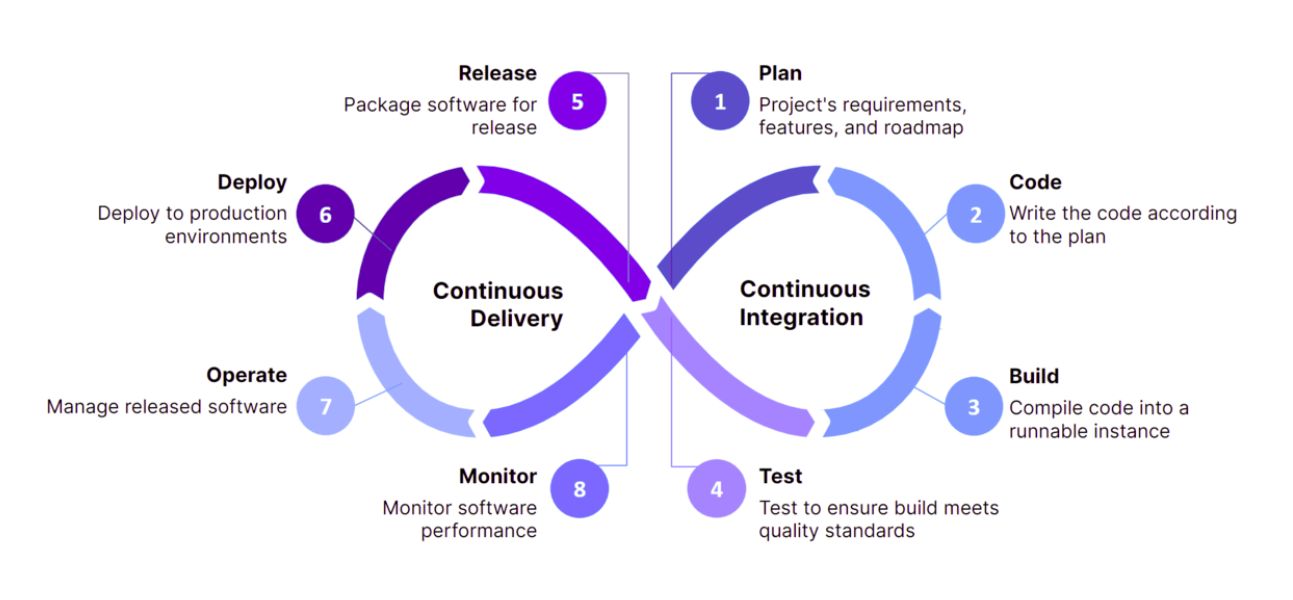
CI/CD-Native by Default
In US SaaS teams, E2E tests are tightly integrated into CI/CD pipelines:
Code is merged
A production-like environment is provisioned
E2E tests run automatically
Results gate deployment
No green tests means no release.
Ephemeral Test Environments
To avoid flaky tests and environment conflicts, teams rely on:
- Containerized services
- Temporary environments spun up per pipeline
- Isolated databases with seeded data
This makes test runs repeatable and deterministic, even at scale.
API-First End-to-End Testing
One major shift among US SaaS teams is moving away from UI-heavy E2E testing.
Why API-first E2E wins at scale
- Faster execution
- Lower flakiness
- Better coverage for microservices
- Easier parallelization
UI-based E2E tests are still used—but mostly for smoke testing and UX validation. Core logic is validated at the API level.
Parallel Execution Is Non-Negotiable
At scale, E2E tests must run in parallel.
Common strategies include:
- Sharding tests by feature or service
- Running tests across distributed CI runners
- Separating API and UI pipelines
What once took hours is reduced to minutes, keeping developer feedback fast.
Managing Flakiness as a First-Class Problem
Flaky tests are the fastest way to lose trust in E2E testing.
US SaaS teams actively manage flakiness by:
- Eliminating static waits
- Using deterministic test data
- Mocking unstable third-party services
- Tracking flaky tests as technical debt
Tests that repeatedly fail without providing value are rewritten or removed.
Observability for Test Failures
Scaled teams treat E2E failures like production incidents.
They capture:
- Logs across services
- API request and response data
- Environment metadata
- Screenshots or traces where relevant
This makes it possible to quickly answer:
- What failed?
- Where did it fail?
- Is it a product bug or a test issue?
Ownership Model: Why Developers Own E2E Tests
In high-performing SaaS teams:
- Developers own E2E tests for their features
- QA engineers define strategy and coverage
- DevOps teams maintain CI infrastructure
- Product teams define critical user flows
This shared ownership keeps E2E tests aligned with real product behavior.
How E2E Strategy Evolves With Scale
Early Stage
- A few happy-path UI tests
- Manual regression before releases
Growth Stage
- CI-integrated E2E tests
- API + UI mix
- Parallel execution
Mature SaaS
- Minimal but powerful E2E coverage
- Strong observability
- Zero-tolerance for flaky tests
- E2E as a release confidence gate
Read: Importance of Test Case Management in Software Testing
Common Mistakes US SaaS Teams Avoid
- Using E2E tests for full coverage
- Running full suites on every commit
- Relying only on UI automation
- Ignoring test maintenance costs
- Treating E2E failures as “QA problems”
Avoiding these pitfalls is often more important than choosing the “right” tool.
Final Thoughts
US SaaS teams scale end-to-end testing not by writing more tests, but by writing fewer, better tests and embedding them deeply into CI/CD workflows.
The most successful teams:
- Test what truly matters
- Prefer API-first E2E validation
- Design for parallel execution
- Treat flakiness as a critical issue
- Share ownership across engineering
When implemented correctly, end-to-end testing becomes a confidence multiplier, enabling SaaS teams to ship faster without sacrificing reliability.