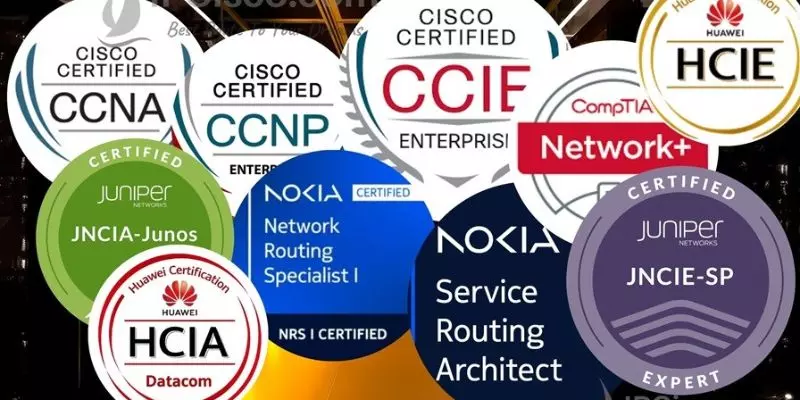
How to Understand the Types of CCNP Certifications
Networking workers need enhanced abilities to manage complex IT infrastructures in today's technologically evolved society.
In order to facilitate digital operations, cloud services, and communication, organizations greatly depend on safe and dependable networks.
Professional certifications are now a crucial component of career growth in the IT sector due to the increasing need for qualified network engineers.
A professional's competence to develop, deploy, and troubleshoot enterprise-level networking solutions is validated by the CCNP certification.
CCNP emphasizes advanced networking knowledge and specialized abilities, in contrast to entry-level qualifications. FITA Academy’s CCNP course delivers advanced networking knowledge, covering enterprise networking concepts, routing and switching, network security, and troubleshooting skills required to manage and optimize complex network infrastructures.
CCNP credentials provide a variety of specialized options, whether you want to work in data centers, enterprise networking, cybersecurity, or collaboration systems.
Overview of the CCNP Certification Program
IT workers who wish to expand their networking abilities beyond basic certifications like the Cisco Certified Network Associate (CCNA) can enroll in the Cisco Certified Network Professional (CCNP) program.
The ability to work with intricate network solutions, such as routing, switching, security, and automation technologies, is demonstrated by this qualification.
In 2020, Cisco revised the CCNP curriculum to make it more specialized and adaptable. Candidates now select a core test and a concentration exam within a certain technical track rather than adhering to a single, strict course.
Professionals can customize their learning according to their career interests thanks to this system.
For instance, a professional with an interest in enterprise infrastructure might concentrate on network automation and routing, while another would specialize in cybersecurity or collaboration technology.
Additionally, the certification highlights contemporary networking concepts including cloud integration, network programmability, and software-defined networking.
Professionals can show off their sophisticated problem-solving skills and establish themselves as authorities in their networking field by obtaining a CCNP certification.
CCNP Enterprise Certification
Because it focuses on enterprise network infrastructure, the CCNP Enterprise certification is one of the most well-liked CCNP courses.
Professionals can design, implement, and troubleshoot large-scale enterprise networks with the help of this qualification.
Advanced routing protocols, virtualization, infrastructure security, and network automation are among the subjects covered in ENCOR 350-401, the core test for this track.
Key networking concepts such as routing, switching, network security, and troubleshooting are implemented in enterprise networks.
The CCNP Training in Chennai provides hands-on training in advanced networking technologies, configuration, and network management to build a strong foundation in enterprise networking and infrastructure management. Candidates select a concentration exam based on their interests after passing the core exam.
These concentration exams may focus on advanced routing, wireless networking, software-defined access, or network design. For network engineers that oversee corporate networks or collaborate with big businesses that need dependable connectivity across several sites, the CCNP Enterprise certification is perfect.
Professionals holding this qualification frequently deal with network management systems, switches, and enterprise routers.
Engineers can support contemporary digital services in enterprise settings and maintain effective network operations by becoming proficient in these technologies.
CCNP Security Certification
Ensuring secure communication inside enterprises and safeguarding network infrastructure from cyber threats are the main objectives of the CCNP Security certification.
Businesses require qualified experts who can create and manage secure networks since cyberattacks are becoming more complex.
IT workers can gain proficiency in fields including identity management, threat detection, network security architecture, and secure access technologies with the use of this certification.
SCOR 350-701, which covers contemporary security solutions like firewalls, VPNs, endpoint protection, and network monitoring tools, is the main test for this track.
Candidates can choose a concentration test pertaining to firewall configuration, secure network access, or email security to further specialize after passing the core exam.
Network security experts, cybersecurity analysts, and security engineers frequently seek this certification to bolster their knowledge.
Professionals who acquire the CCNP Security certification prove their capacity to defend enterprise networks and vital data from cyber attacks, making them invaluable assets to businesses all over the world.
CCNP Data Center Certification
To store, process, and manage enormous volumes of digital data, modern enterprises rely on strong data centers.
Storage networking, virtualization, and automation are among the technologies utilized in contemporary data center settings that are the emphasis of the CCNP Data Center certification.
Professionals with this certification are better equipped to oversee high-performance data centers that serve enterprise applications and cloud computing.
DCCOR 350-601, which covers data center networking, computing systems, and storage solutions, is the main test for this track.
The CCNP Training Institute in Chennai focuses on practical, hands-on preparation to help learners develop strong skills in advanced networking, routing and switching, network security, and enterprise network management.
After that, candidates select a concentration test that focuses on particular technologies like automation, data center design, or application-centric infrastructure.
This certification confirms the proficiency of data center engineers and infrastructure professionals in managing intricate server settings and networking systems.
Professionals with CCNP Data Center certification are in great demand as more companies use cloud-based solutions. Their capacity to manage scalable and effective infrastructure enables businesses to guarantee dependable performance for vital applications.
CCNP Service Provider Certification
Professionals that work with internet service providers and telecommunications organizations are the target audience for the CCNP Service Provider certification.
These companies run extensive networks that provide millions of consumers with communication and internet services.
Advanced routing, network automation, and infrastructure services utilized in service provider settings are the main topics of the certification. SPCOR 350-501, which includes subjects like network design, MPLS technologies, automation tools, and service provider infrastructure, is the main test for this track.
Candidates can choose concentration tests pertaining to network automation, VPN services, or advanced routing after passing the core exam.
The majority of professionals who seek this qualification are employed by telecommunications corporations as network engineers or infrastructure specialists.
They frequently have to maintain backbone networks, optimize traffic flow, and guarantee dependable customer connectivity.
Professionals can prove their proficiency in overseeing extensive service provider networks and providing top-notch communication services by obtaining this certification.
CCNP Collaboration Certification
In today's businesses, communication tools are essential since they allow workers to work together efficiently no matter where they are.
Voice, video conferencing, and messaging platforms are examples of unified communication systems that are the emphasis of the CCNP Collaboration certification.
We should also know about the difference between CCNP and CCNA. Professionals who hold this qualification are better equipped to create and manage collaborative solutions for usage in companies and organizations.
CLCOR 350-801, the core test for this track, includes call control systems, quality-of-service technologies, and collaborative architecture.
After that, candidates can choose a concentration test that focuses on certain collaboration tools, like automation inside collaboration platforms, enhanced call routing, or video communication.
This certification is frequently sought for by IT professionals that work with enterprise communication systems in order to bolster their competence.
Engineers can help companies increase efficiency and improve internal communication by becoming experts in collaborative technologies. Professionals in charge of unified communication systems in sizable business settings may find this certification especially useful.
Choosing the Right CCNP Certification Path
Your professional interests and career goals play a major role in selecting the appropriate CCNP certification. The CCNP Enterprise track can be the best choice if you like creating and overseeing business networks.
CCNP Security is frequently pursued by professionals that are interested in safeguarding systems and averting cyberattacks.
The CCNP Data Center certification can be more applicable to those who work in large server settings or cloud infrastructure. In the meantime, networking experts in telecom firms may select CCNP Service Provider.
However, engineers in charge of communication platforms can like CCNP Collaboration. Think about your long-term professional objectives, industry demand, and your present employment function before choosing a certification path.
You can determine which certification best fits your intended career path by looking into job ads and industry trends. You can increase the value of your certification and expand your career prospects by selecting the appropriate specialization.
Read: The Future of Networking Jobs: Why CCNA Professionals Are in
Career Opportunities After Earning CCNP Certification
Your employment options in the IT sector might be greatly increased by obtaining the Cisco Certified Network Professional (CCNP) certification.
Because CCNP certification indicates advanced networking competence and practical problem-solving skills, many firms actively seek for CCNP-certified workers. Network engineers, network administrators, security specialists, and infrastructure architects are among the positions that professionals with CCNP certification frequently hold.
These jobs entail creating network topologies, resolving connectivity problems, and guaranteeing safe communication between business systems.
CCNP certification might result in more pay and employment security in addition to professional progression. The Cisco Certified Internetwork Expert (CCIE) is one of the more advanced certificates that many certified professionals utilize the CCNP as a springboard.
The need for qualified workers is still high as businesses continue to rely on sophisticated networking technologies. You may establish a prosperous and fulfilling career in networking by being aware of the various CCNP certifications and choosing the appropriate course.