How to Start a Bookkeeping Business: A Complete Guide
Starting a bookkeeping business is one of the most practical ways to build a profitable service-based business. Companies of every size need accurate financial records, and many prefer outsourcing bookkeeping instead of hiring full-time staff.
With affordable accounting software, cloud-based collaboration, and growing demand from e-commerce businesses, you can launch a bookkeeping business with relatively low startup costs.
The key to long-term success isn't simply knowing bookkeeping—it's building efficient systems, choosing the right niche, and providing reliable financial support that helps clients make better business decisions.
What Does a Bookkeeping Business Do?
Many people assume bookkeeping is only about recording transactions. In reality, professional bookkeepers help businesses stay financially organized and compliant.
Typical bookkeeping services include:
- Recording income and expenses
- Bank and credit card reconciliations
- Managing accounts payable and receivable
- Preparing monthly financial reports
- Tracking cash flow
- Assisting accountants during tax season
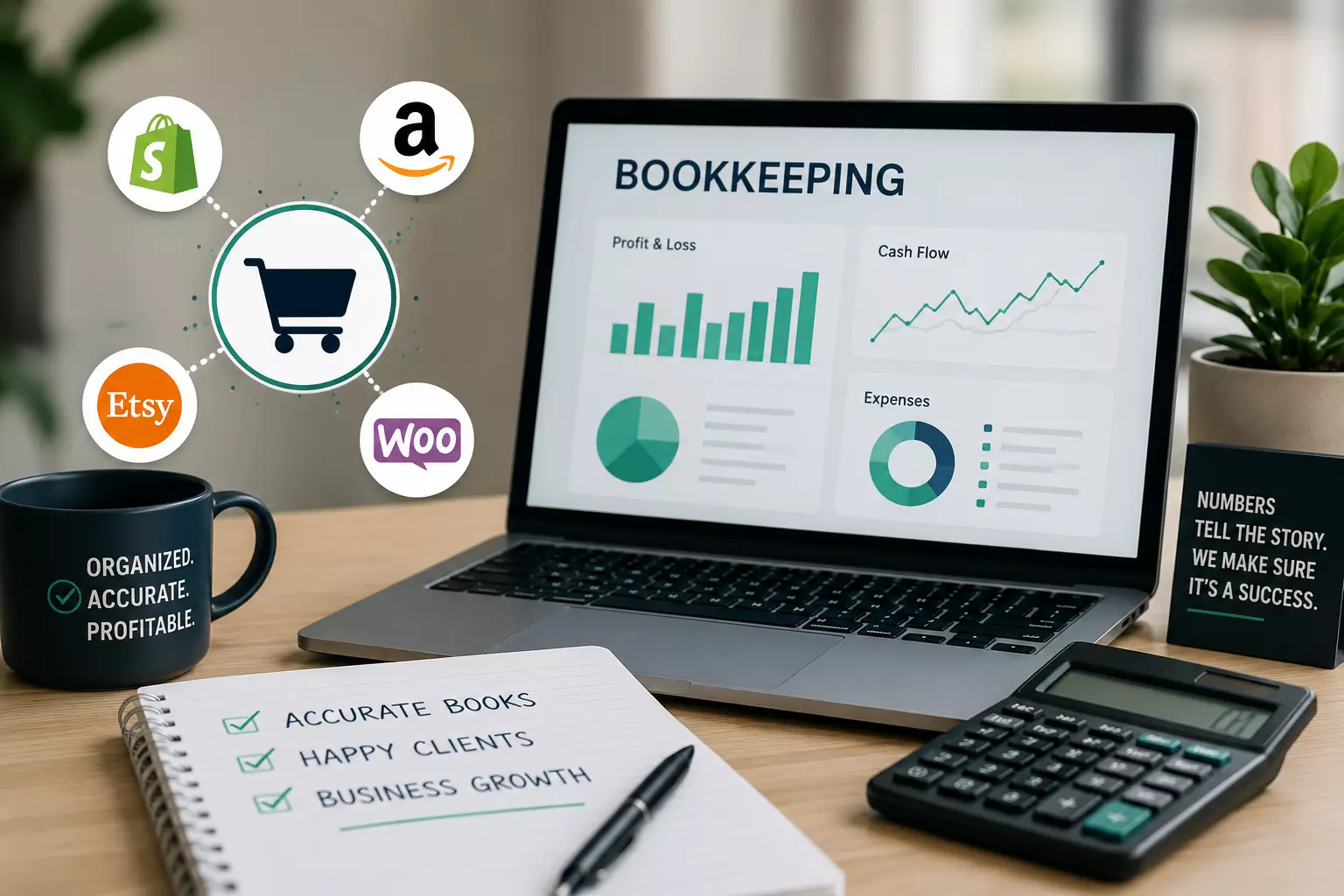
For ecommerce businesses, bookkeeping often includes reconciling marketplace payouts, tracking inventory costs, and organizing transactions from platforms like Shopify, Amazon, Etsy, and WooCommerce.
Do You Need Qualifications to Start a Bookkeeping Business?
A college degree isn't required to become a bookkeeper, but certifications can help establish trust with new clients.
Popular certifications include:
- QuickBooks ProAdvisor Certification
- Intuit Bookkeeping Certificate
- Certified Bookkeeper (AIPB)
- Certified Public Bookkeeper (NACPB)
If you're just getting started, becoming a QuickBooks ProAdvisor is often the best first step because many small businesses specifically look for QuickBooks experts.
Choose a Profitable Bookkeeping Niche
Serving everyone can make marketing difficult. Focusing on a specific industry allows you to develop expertise and charge higher rates.
Some profitable bookkeeping niches include:
- Ecommerce businesses
- Real estate investors
- Construction companies
- Digital marketing agencies
- Healthcare practices
- Restaurants
- Freelancers and consultants
Ecommerce remains one of the fastest-growing bookkeeping niches because sellers often manage multiple sales channels, payment gateways, inventory systems, and sales tax requirements.
Register Your Bookkeeping Business
Before working with clients, set up your business properly.
Common business structures include:
Sole Proprietorship
Simple and inexpensive to start, making it suitable for beginners.
LLC
Offers liability protection while keeping taxes relatively simple. Many bookkeeping businesses eventually choose this structure.
You'll also want to:
- Apply for an EIN if required
- Open a dedicated business bank account
- Purchase professional liability insurance
- Register your business name if necessary
Separating personal and business finances makes bookkeeping much easier from the beginning.
Essential Software for a Bookkeeping Business
The right software helps you work efficiently while delivering better service.
Accounting Software
- QuickBooks Online
- Xero
- Wave Accounting
Ecommerce Bookkeeping Tools
- A2X
- TaxJar
- Avalara
Productivity Tools
- Calendly
- Notion
- ClickUp
- Google Workspace
- Microsoft 365
Start with only the tools you need and expand your software stack as your client base grows.
How Much Does It Cost to Start a Bookkeeping Business?
Compared to many businesses, bookkeeping requires a relatively small investment.
Typical startup expenses include:
- Business registration
- Insurance
- Accounting software subscriptions
- Website and domain
- Computer equipment
- Marketing
Many successful bookkeeping businesses launch for under $3,000 depending on local licensing requirements and software choices.
How to Price Your Bookkeeping Services
Avoid charging only by the hour whenever possible. Value-based monthly pricing creates predictable revenue and simplifies budgeting for clients.
Common pricing models include:
Monthly Retainer
Best for ongoing bookkeeping services.
Hourly Billing
Suitable for consultations, clean-up projects, or short-term work.
Fixed Project Pricing
Ideal for historical bookkeeping cleanup or accounting software migrations.
Typical monthly pricing:
Client Type
Monthly Fee
Small business
$250–$500
Growing business
$600–$1,000
Ecommerce seller
$900–$2,000
Larger businesses
$2,000+
Package your services into Basic, Standard, and Premium plans to make buying decisions easier.
Read: Smart Finance: Bookkeeping for Startup Success
How to Find Your First Bookkeeping Clients
Landing your first few clients often comes from consistent networking rather than paid advertising.
Effective client acquisition methods include:
- Ask friends and business contacts for referrals.
- Create a professional LinkedIn profile.
- Join local business networking groups.
- Optimize your Google Business Profile.
- Partner with tax professionals and CPAs.
- Publish helpful bookkeeping content on your website.
Offering excellent service to your first clients often leads to referrals, which become one of the most reliable sources of long-term business.
Running Your Bookkeeping Business Efficiently
As your client list grows, organization becomes essential.
Develop repeatable processes for:
- Client onboarding
- Document collection
- Monthly reconciliations
- Financial reporting
- Secure file sharing
- Client communication
Using standardized workflows saves time and creates a consistent experience for every client.
How to Grow Your Bookkeeping Business
Once your business becomes stable, focus on scaling instead of simply adding more work.
Growth strategies include:
- Hiring virtual assistants or junior bookkeepers
- Offering payroll services
- Adding cash flow reporting
- Providing management reporting
- Specializing in ecommerce bookkeeping
- Raising prices annually
Documenting your processes before hiring makes expansion much easier.
Common Mistakes to Avoid
Many new bookkeeping business owners make avoidable mistakes during their first year.
Some of the most common include:
- Accepting every client regardless of fit
- Mixing business and personal finances
- Working without signed agreements
- Underpricing services
- Ignoring cybersecurity
- Failing to collect testimonials and reviews
Avoiding these issues helps build a stronger and more profitable business from the start.
Start Your Bookkeeping Business with Confidence
Starting a bookkeeping business doesn't require a huge investment, but it does require planning, consistency, and a commitment to delivering accurate financial support.
By choosing a niche, investing in the right software, building efficient systems, and focusing on excellent client service, you can create a business that generates recurring income for years to come.
Whether you plan to serve local businesses or specialize in ecommerce bookkeeping, success comes from becoming a trusted financial partner rather than simply entering transactions. Build your reputation one satisfied client at a time, and your bookkeeping business will have a solid foundation for long-term growth.