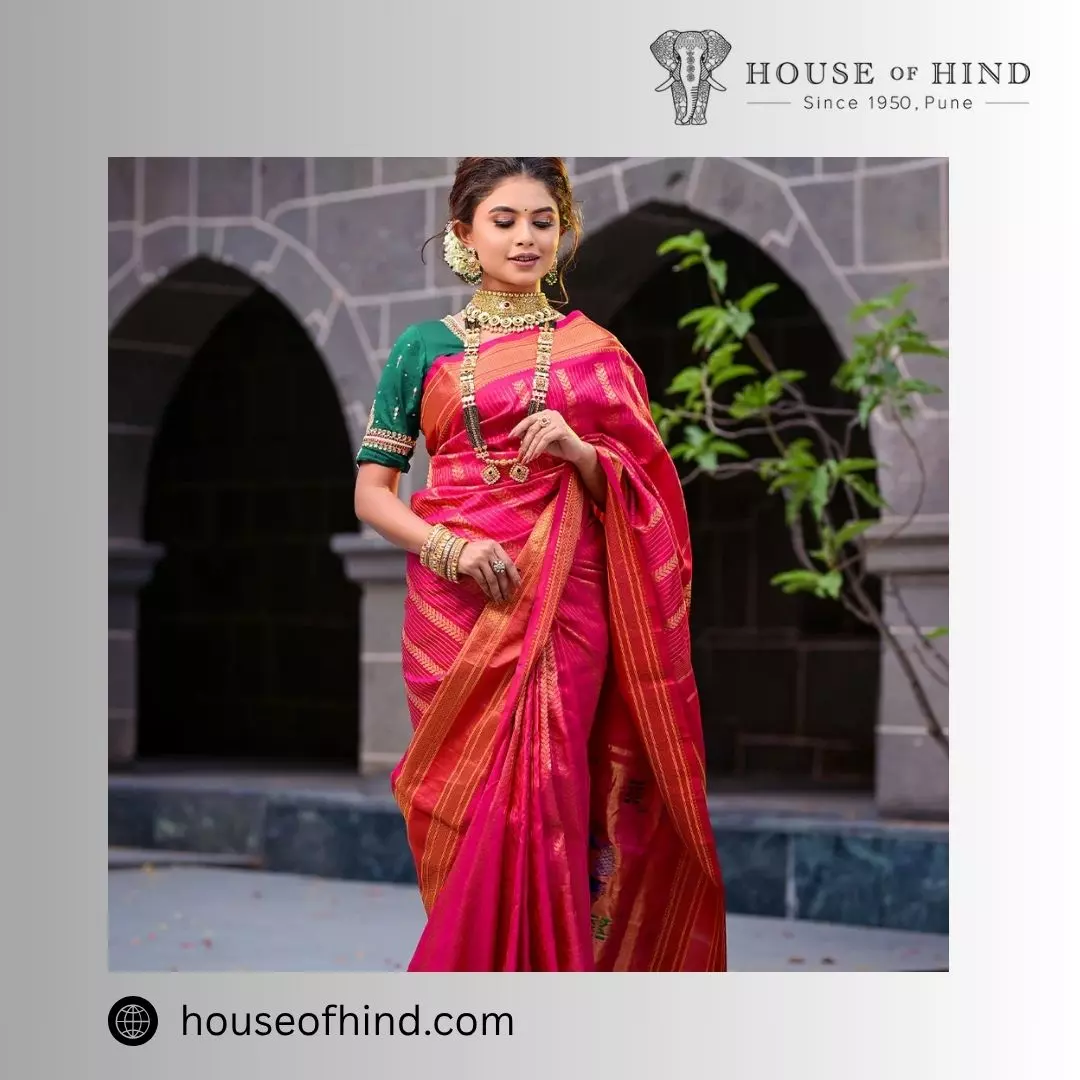
How to Spot an Authentic Paithani Saree Before You Buy Online
Introduction – The Royal Beauty of Paithani Saree
The charm of a Paithani saree lies in its rich heritage, luxurious feel, and intricate craftsmanship. Originating from the town of Paithan in Maharashtra, this traditional handwoven masterpiece is often referred to as the “Queen of Silks.” A true Paithani is more than attire — it’s a legacy, an heirloom, and a symbol of Indian artistry passed down through generations.
However, with the rising popularity of Paithani sarees, the market has become flooded with machine-made imitations that look similar but lack the authenticity, quality, and cultural depth of the original. Recognizing a genuine Paithani saree is essential to ensure that your investment honors both craftsmanship and tradition.
Read: Paithani Saree Colors and Their Significance in Indian Culture
In this blog, we’ll guide you through the key indicators that help distinguish an authentic Paithani from counterfeit versions, ensuring that when you drape one, you’re wearing a true piece of Indian heritage.
Understanding the Heritage Behind Paithani Saree
Before identifying authenticity, it’s important to understand what makes the Paithani o special. Handwoven in Maharashtra, each saree is crafted using pure mulberry silk threads combined with real gold or silver zari. The signature motifs — peacocks, parrots, lotuses, and vines — are inspired by nature and mythology.
Unlike printed or embroidered sarees, Paithani sarees feature designs that are woven directly into the fabric. The process is completely manual, often taking months to complete a single saree. No two authentic Paithani sarees are identical; each piece tells its own story through colors, motifs, and weaving techniques.
For centuries, Paithani sarees have been a part of royal wardrobes, bridal trousseaus, and festive celebrations. Owning one is like owning a fragment of Indian cultural history — one that never loses its grace or value.
🧵 How to Identify an Authentic Paithani Saree
1. Examine the Weaving Technique
A true Paithani is handwoven using a tapestry weaving technique. Both sides of the saree look identical because the motifs are woven, not printed or stitched. If the reverse side shows loose threads, patchwork, or embroidery backing, it’s a fake.
Authentic Paithani sarees are woven on pit looms, where artisans manually interlock each weft thread with precision. Machine-made versions lack the depth and smooth texture of handwoven silk.
2. Check the Zari Quality
The zari used in a genuine Paithani is made of real silver threads dipped in gold. This gives the saree its subtle yet rich shine. Fake Paithanis use plastic or metallic yarn, which fades or turns dull after a few wears.
To test, gently rub a small portion of the zari — if it feels rough or flakes off, it’s synthetic. Real zari will always retain its soft texture and golden glow for years.
3. Look at the Borders and Pallu
One of the most distinctive features of the Paithani saree is its elaborately designed pallu (the end portion) and borders. Traditional motifs like peacocks, parrots, and lotuses are intricately handwoven with contrasting colors.
The transitions between the body, border, and pallu in an authentic saree are seamless, while in imitations, they’re often stitched or visibly joined. The hallmark of originality is symmetry — both borders will have identical patterns, perfectly aligned.
4. Color Play and Natural Dyes
Genuine Paithani sarees are dyed using natural dyes derived from plants, flowers, and minerals. The result is a subtle, elegant color palette that never bleeds or fades.
Mass-produced fakes use chemical dyes, which often appear too bright or uneven. When buying online, always check if the product description mentions natural or vegetable dyes — this is a good indicator of authenticity.
5. Price Reflects the Craftsmanship
A real Paithani saree can take anywhere from 1 to 9 months to weave, depending on the design complexity. Naturally, the price reflects the skill, time, and materials involved.
If you come across a “Paithani saree” priced unreasonably low, it’s most likely machine-made or imitation. Authentic handloom Paithanis start from a few tens of thousands of rupees and can go up significantly for bridal or antique weaves.
6. Authenticity Certification
Reputed sellers provide Handloom Mark or GI (Geographical Indication) Tag certification with genuine Paithani sarees. These tags authenticate the origin and craftsmanship. Always ask for certification when making an online purchase.
Buying from a trusted platform like House of Hind ensures that your saree is 100% authentic and sourced directly from skilled artisans of Maharashtra.
Read: Artistry Behind Banarasi Silk Sarees Revealed
💻 Buying an Authentic Paithani Saree Online
Today, technology makes it easier than ever to shop for authentic handloom sarees from home. Reliable websites like House of Hind offer customers a curated selection of traditional Paithani saree online, ensuring quality, authenticity, and transparency.
When purchasing online, always review these points:
- Product Description: Look for “handwoven,” “pure silk,” and “real zari.”
- Close-up Photos: Genuine sellers show clear, zoomed-in images of borders and pallus.
- Reviews and Ratings: Check customer feedback for authenticity assurance.
- Return and Exchange Policies: Trusted platforms offer flexible policies in case of quality concerns.
Online shopping eliminates geographical limitations and allows you to explore a variety of colors, motifs, and weaves — whether it’s the classic lotus Paithani, the peacock motif Yeola, or contemporary pastel versions.
The Skill and Patience Behind Each Saree
Behind every Paithani saree is a skilled artisan, often from weaving families with generations of experience. Weaving a single saree can take up to 9 months of labor-intensive work. Each thread is carefully selected, dyed, and interwoven to form motifs that appear identical on both sides.
The passion and patience required for this art are immeasurable. The process reflects not only the weaver’s technical skill but also their deep emotional connection to the fabric. Supporting authentic handwoven Paithanis sustains this traditional craft and the livelihoods of artisans who keep it alive.
Preserving the Elegance of Your Paithani Saree
Once you own a Paithani saree, preserving it properly ensures that it retains its beauty for generations.
- Always dry clean instead of washing at home.
- Store in a muslin cloth, folded neatly in a cool, dry place.
- Avoid hanging, as the zari may stretch over time.
- Refold every few months to prevent permanent creases.
Treat it like an heirloom — because that’s exactly what it is.
💎 Why It’s Worth Investing in an Authentic Paithani Saree
Owning a genuine Paithani saree is more than a fashion choice — it’s a celebration of art, culture, and womanhood. Each saree is a result of months of skilled handwork and dedication. Unlike mass-produced imitations, an authentic Paithani holds emotional and historical value, making it a true investment piece.
Furthermore, when you choose authentic handloom sarees, you support India’s weaving communities, encourage sustainable craftsmanship, and help preserve cultural traditions for future generations.
Final Thoughts – Choose Legacy Over Imitation
In today’s fast-paced fashion world, authenticity matters more than ever. The elegance and purity of a Paithani saree cannot be replicated by machines. When you drape an authentic one, you don’t just wear silk and zari — you wear history, artistry, and soul.
If you’re planning to Buy Paithani saree, ensure you choose trusted sources that value authenticity and heritage. House of Hind offers a curated range of handcrafted Paithani sarees that bring together elegance, tradition, and timeless artistry.
Let your wardrobe reflect true Indian luxury — the kind that shines not because it’s trendy, but because it’s timeless.