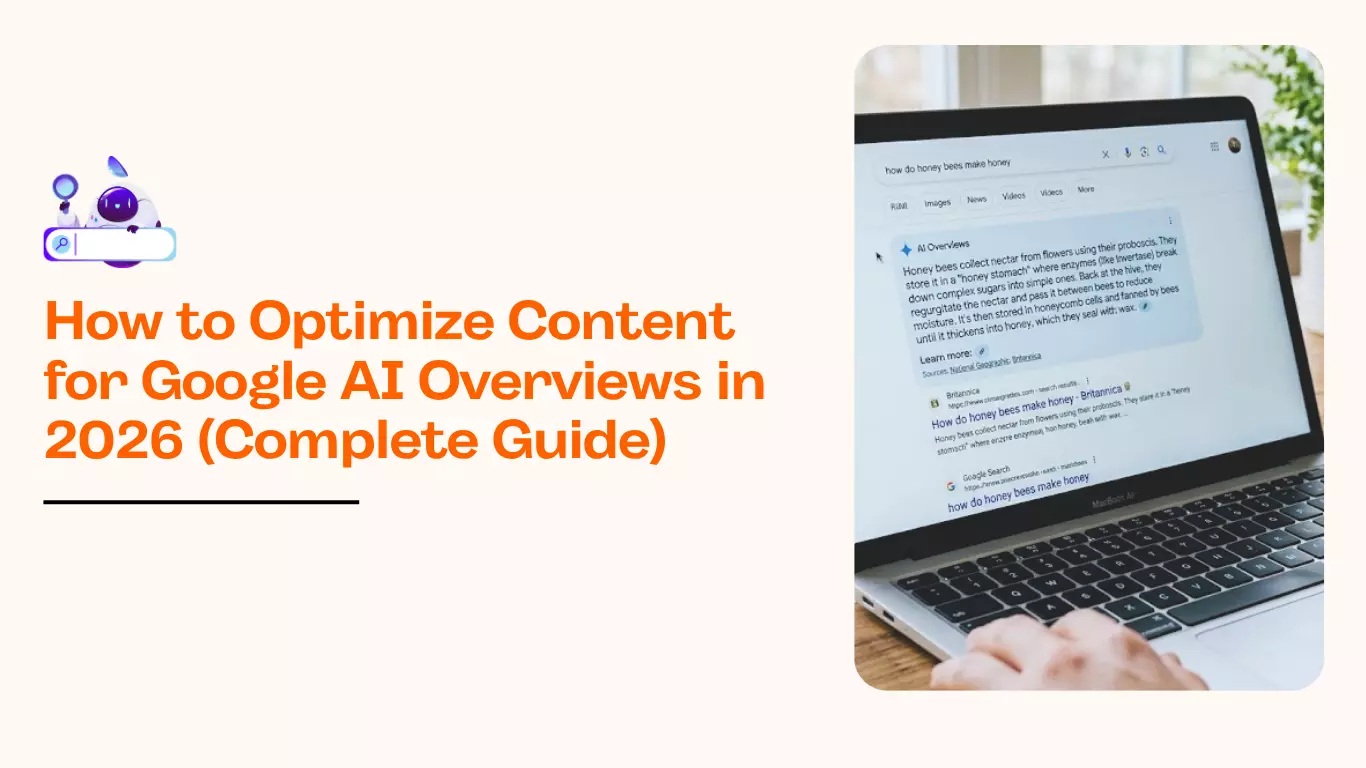
How to Optimize Content for Google AI Overviews in 2026 (Complete Guide)
Search is changing rapidly. With the rise of Google AI Overviews, AI-powered search engines, and generative results, traditional SEO strategies are no longer enough. Today, businesses need AI-ready content optimization strategies to stay visible in search results.
If your content isn’t optimized for Google AI Overviews, you risk losing organic visibility—even if your website ranks well.
In this guide, we’ll explain how to optimize your content for AI-driven search results in 2026, so your pages can appear in AI summaries, featured answers, and voice search results.
What Are Google AI Overviews?
Google AI Overviews are AI-generated summaries shown at the top of search results. Instead of users clicking multiple websites, Google’s AI collects information from trusted sources and generates a concise answer directly in search.
This means your content must be:
- Clear
- Structured
- Authoritative
- Helpful
Only well-optimized pages get selected as AI Overview sources.
Businesses that adapt early can gain massive visibility in AI search results.
Why Content Optimization for AI Search Matters
AI search is changing how people find information online, with users now depending on AI-generated summaries, conversational results, and smart recommendations instead of browsing multiple links.
Optimizing your content for AI search can help you:
- Appear in Google AI Overviews
- Increase organic search traffic
- Improve topical authority
- Rank for long-tail and conversational queries
- Capture voice search traffic
For a detailed strategy, read this complete step-by-step guide.
This guide explains the exact framework businesses should follow to rank in AI-powered search results.
Key Strategies to Optimize Content for Google AI Overviews
1. Focus on Search Intent
Google AI prioritizes content that directly answers user intent.
Your content should target:
- Informational intent
- Problem-solving intent
- Comparison intent
- Decision-making intent
Example queries:
- “How to optimize content for AI search.”
- “How to rank in Google AI Overviews.”
- “Best SEO strategy for AI search”
2. Use Question-Based Headings
AI systems prefer structured content that answers specific questions.
Examples:
- What is AI search optimization?
- How does Google AI Overviews work?
- How can businesses optimize content for AI results?
This increases the chances that your content will be quoted in AI summaries.
3. Structure Content for AI Readability
AI prefers well-organized content with:
- Clear headings (H2 / H3)
- Short paragraphs
- Bullet points
- Tables
- FAQ sections
Structured content helps search engines easily extract answers.
4. Add Topical Authority
Publishing multiple related articles builds topical authority.
For example, combine content around:
- AI SEO strategies
- AI search ranking factors
- Generative engine optimization
- AI content optimization
This signals expertise to Google’s AI systems.
5. Use Semantic SEO Keywords
Instead of repeating one keyword, use related search terms such as:
- AI search optimization
- Generative engine optimization
- AI SEO strategies
- optimizing content for AI search
- ranking in Google AI Overviews
- AI-powered search visibility
Semantic SEO helps Google understand the depth and context of a topic.
6. Optimize for Conversational Search
More users now search using natural language queries.
Examples:
- “How do I optimize content for Google AI results?”
- “What is the best strategy for ranking in AI Overviews?”
Write content that answers these queries naturally.
7. Add Expert Insights and Data
AI systems prefer credible sources. Improve your content by including:
- Expert opinions
- Statistics
- Industry examples
- Case studies
This increases your chances of being selected as an AI Overview reference source.
8. Build High-Quality Backlinks
Backlinks remain one of the strongest ranking signals in 2026.
When authoritative websites link to your content, it signals to Google that your page is trustworthy.
That’s why publishing high-quality backlink articles like this one helps strengthen your SEO authority.
Read: Engineering Content for AI Search Citations in 2026
Future of SEO: AI-First Content Strategy
The future of search is AI-driven, conversational, and intent-focused.
Businesses that invest in:
- AI SEO
- structured content
- topical authority
- helpful information
will dominate search results.
Companies that continue to rely solely on old SEO tactics may lose visibility as AI search evolves.
Final Thoughts
Ranking in Google AI Overviews requires more than just traditional SEO. You must create structured, helpful, and authoritative content designed for AI-driven search engines.
If you want to learn the complete 10-step framework for optimizing content for AI Overviews, read the full guide here:
This step-by-step guide explains how businesses can adapt their SEO strategy for the AI search era and increase organic visibility in 2026 and beyond.