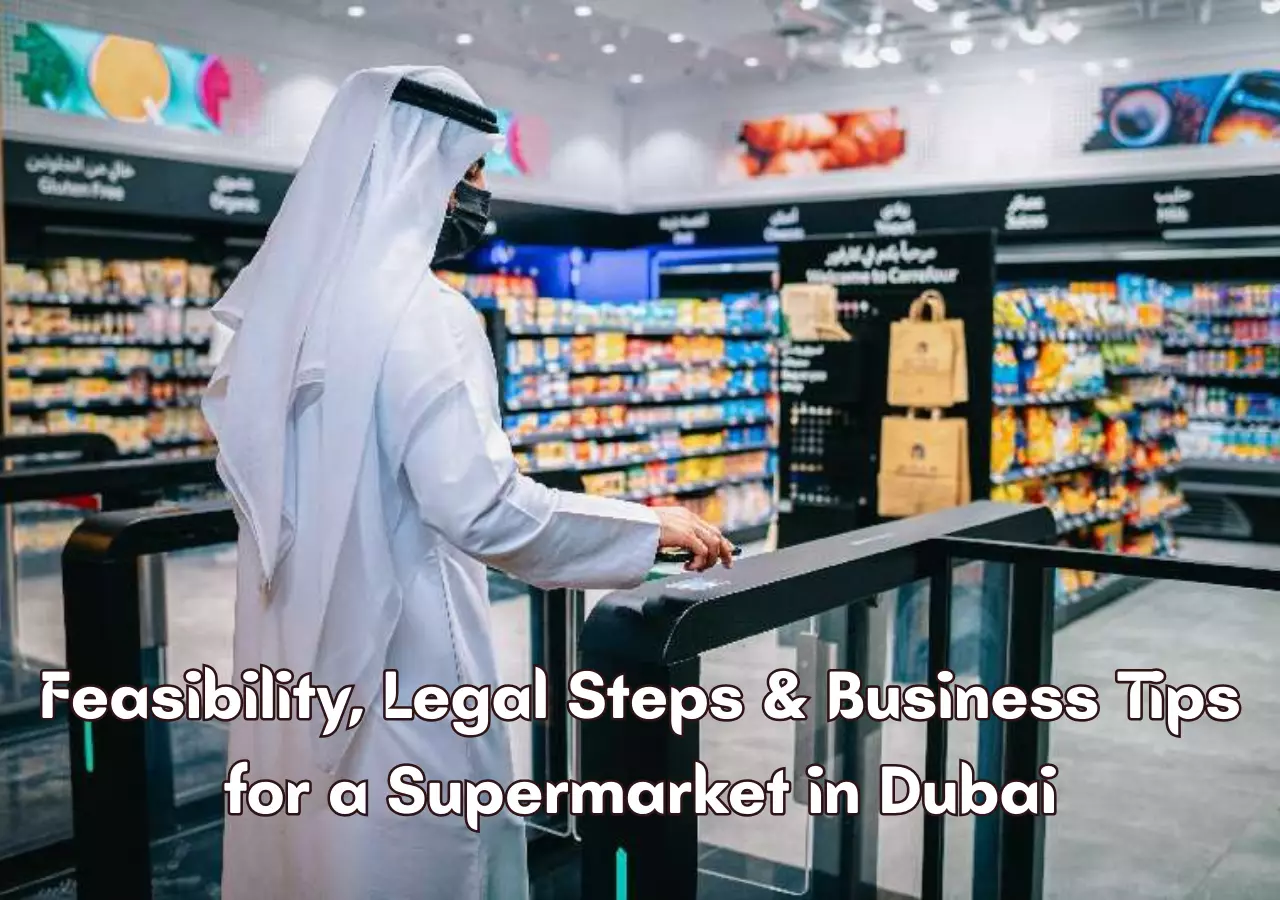
How to Open a Supermarket in Dubai: Feasibility, Legal Steps & Business Tips
Dubai's increasing population attracts a remarkably diverse demographic, and its well-maintained retail infrastructure; in fact, it has become one of the most preferred cities in the Middle East to set up a supermarket business. With demand increasing for convenience shopping with international brands, organic foods, and locally sourced produce, a well-organised supermarket can achieve success in both residential and commercial zones.
Yet, this is not just about filling the shelves-all managers starting a supermarket in Dubai require strategic planning, regulatory compliance, and a detailed financial feasibility study. This is all that it takes to set up such a venture.
Understanding the Economic Potential
Indeed, one can speak of billions of dollars in the retail market of the UAE, with Dubai at the forefront of it all. Supermarkets will be found in such a setup, catering to local and foreign nationals from 200 countries.
An example of how demands for supermarkets are maintained and are expected to grow is the Dubai Food Security Strategy, spearheaded by Dubai, as well as gated communities and sprawling residential developments.
Once you leap, it is time to take a valuable look at the more significant economic indicators that shape supermarket destiny. This includes population density in the target area, purchasing power of local customers, competition from established retail chains, and access to suppliers. Understanding these economic factors could solidify choosing the right size, scale, and site for your investment.
Conducting a Financial Feasibility Study
Investment feasibility in opening a supermarket in Dubai entails financial studies covering cost and revenue generation, which may involve risk assessment and profitability projection from the business under consideration. Such would be useful in helping the investor obtain a loan from banks or other private parties.
Components of a feasibility study are:
- Capital Investments at Start Up: This means estimating the entirety of the value to be invested in a supermarket establishment. This includes license fee, raw rent deposits, interior layout, shelving and refrigeration equipment, IT systems (billing, inventory, POS), initial stocks, hiring costs, and marketing, to begin with.
- Operating Costs: Include all the regular monthly expenses, such as salaries, utilities, rental costs, stock replenishment, maintenance, delivery services, and promotional activities in projections.
- Revenue Projections: Models of revenue generation should be built using footfall expectations, the average value of purchases, and the frequency of customers. This is especially important as it provides break-even points and net profit margins.
Drafting the Legal Structure and Licensing
Operating a supermarket in Dubai requires that the firm first register with the Department of Economic Development (DED) or decide to operate in a Free Zone, depending on the target market. Most supermarkets opt for a Mainland licence under the “Grocery and Supermarket” activity to operate in a residential community in the city centre.
Basic legal steps include:
- Reservation of the trade name and initial approval
- Earn and obtain a commercial space
- Health and safety clearances
- Apply for a DED trade licence
- Acquire food and hygiene permits from Dubai Municipality
If you are more into imports or selling international brands, additional customs and import permits may also come into play. It is the best option to work with a very trusted law consultant to ensure that you meet all of your local regulatory obligations without delay.
Choosing the Right Site
Location in a retail market, making a successful supermarket ideally positioned in an area that has high pedestrian traffic, easy access, and a solid local customer base. Close to schools, residential apartments, high buildings, or clusters of offices stand good spots. The following tests should evaluate existing competition—setting up next to large chains without a niche strategy can be financially unsustainable.
That is why there are commercial real estate agents in Dubai who can help you identify spaces with great potential based on the score of size, rent, and demographic suitability. Such will also impact the product mix, store layout, and pricing strategy.
Stocking and Supplier Net
A good network of reliable suppliers will aid in sustaining stock availability, variety, and competitiveness. In Dubai, there are several local distributors for fresh produce, packaged foods, beverages, personal care products, and household goods.
Establish relationships with reputable vendors and consider importing unique items if you plan to offer specialised products or international selections.
Efficient inventory management systems and cold storage facilities are all necessary for the minimisation of wastage.
Conclusion
In Dubai, starting a supermarket is a good investment proposal, but it must involve planning, understanding of the market, and actual financial prudence. Getting through all the right licenses and suppliers, all the way up to conducting a financial feasibility study to start a supermarket in Dubai, required master handling to be successful. Your supermarket can then become an asset and sustainable through all the buzz Dubai is generating in retail.