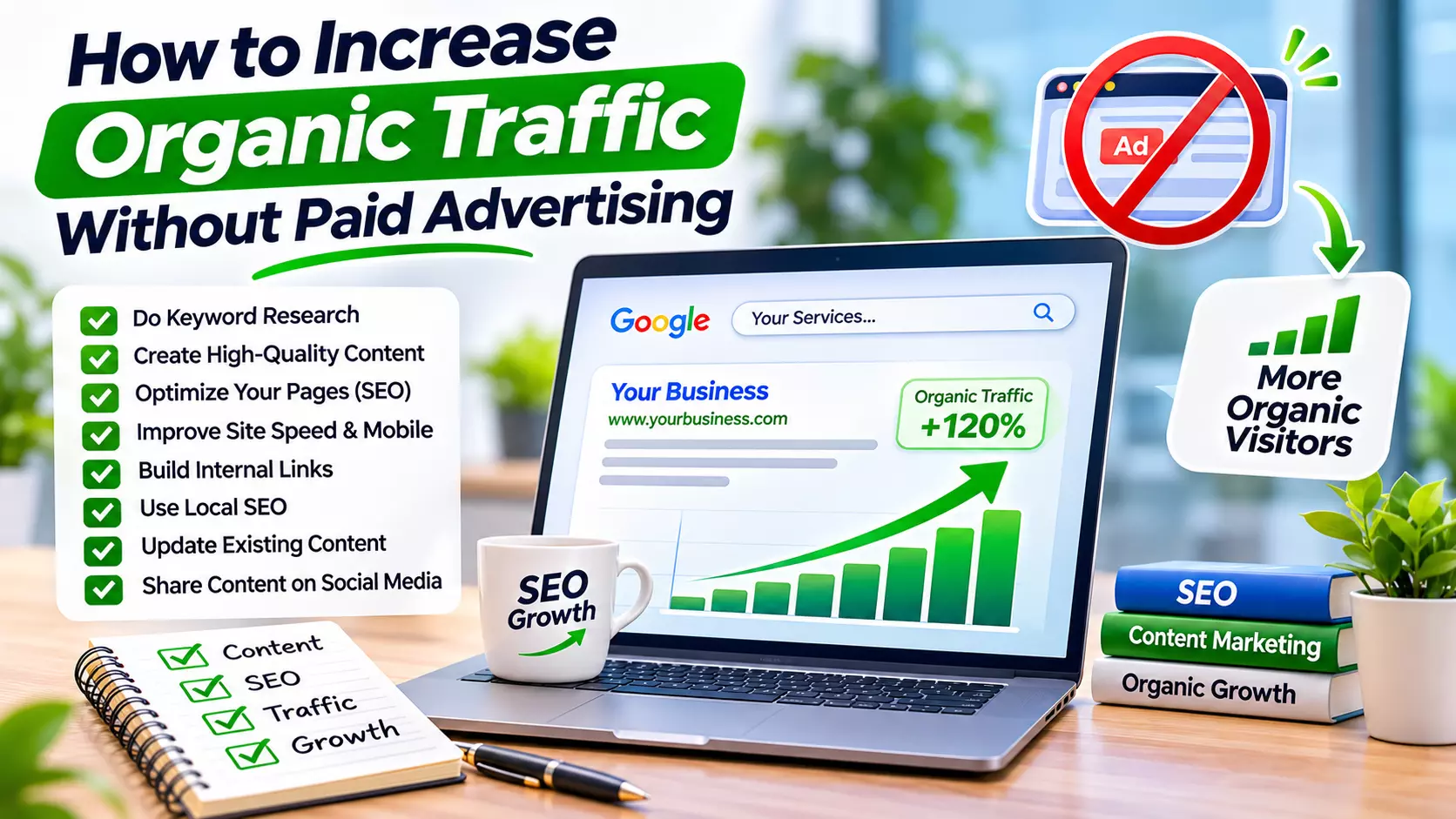
How to Increase Organic Traffic Without Paid Advertising
Every business wants more people to visit its website, explore its services, and become potential customers.
However, increasing website traffic can be challenging, especially when businesses have limited marketing budgets. Paid advertising may bring visitors quickly, but maintaining that traffic often requires continuous spending.
This is why many businesses look for effective ways to increase organic traffic without relying on advertisements.
Organic traffic refers to visitors who discover your website through unpaid search engine results. When people search for information, products, or services on Google, they may find your website naturally if its content is relevant and properly optimized.
Unlike paid campaigns, organic search visibility can continue attracting visitors over time, although maintaining strong performance requires consistent effort.
Growing organic traffic requires a combination of search engine optimization (SEO), helpful content, keyword research, technical improvements, and a positive user experience.
By focusing on these areas, businesses can improve their online presence and attract customers who are actively searching for relevant solutions.
In this guide, we will explore practical strategies to increase organic website traffic without paid advertising and explain how these methods can support long-term business growth.
What Is Organic Traffic and Why Does It Matter?
Organic traffic consists of website visits that originate from unpaid search engine listings. When someone enters a query into Google and clicks a regular search result rather than an advertisement, that visit is generally classified as organic search traffic.
For businesses, organic traffic is valuable because it provides opportunities to reach people who are already searching for particular information, products, or services.
Instead of interrupting potential customers with advertisements, organic search helps businesses become visible when users express an existing need.
For example, a business owner searching for professional SEO services may discover a digital marketing company through its optimized website. Similarly, someone looking for home improvement advice may find a contractor through an informative blog article.
Organic traffic can support brand awareness, customer engagement, and lead generation. However, not every organic visitor will become a customer. Businesses need to focus on attracting relevant audiences and creating website experiences that encourage meaningful actions.
Although organic traffic does not involve paying for individual search clicks, SEO still requires investment in content development, technical maintenance, and ongoing optimization.
1. Start With Proper Keyword Research
Keyword research is one of the most important steps in increasing organic website traffic. It helps businesses understand which words and phrases potential customers use when searching for information online.
Many businesses make the mistake of targeting highly competitive keywords without considering their relevance. Although these terms may attract significant search interest, they do not always bring visitors who need the company's services.
For example, a digital marketing company targeting the broad keyword "marketing" may compete with large informational websites and attract users with different interests. A more specific phrase such as "SEO services for small businesses" may have lower search volume but stronger commercial relevance.
Effective keyword research helps businesses identify opportunities that match their audience, services, and marketing objectives.

Focus on Relevant and Long-Tail Keywords
Long-tail keywords are specific search phrases that often describe a particular question, service, or customer need.
For example, instead of targeting only "website traffic," a business could create content around "how to increase organic website traffic for small businesses."
This phrase communicates a more specific purpose and may be easier to address through focused educational content.
Long-tail keywords do not always have low competition, but they can help businesses reach users with clearer expectations.
Keyword research tools such as Google Keyword Planner and Semrush can help identify related searches, estimated demand, and competitive opportunities.
Businesses should select keywords based on relevance and search intent rather than search volume alone.
2. Create High-Quality Content That Answers Customer Questions
Content marketing is one of the most effective methods for attracting organic traffic over time.
Search engines aim to provide users with useful information that answers their queries. Businesses can improve their search visibility by publishing original, accurate, and helpful content around relevant topics.
However, simply publishing more articles does not guarantee increased traffic. Content should address real customer questions and provide information that visitors can use.
For example, a digital marketing company might publish articles explaining common SEO mistakes, social media marketing strategies, or ways to improve website performance.
These articles can attract people who are researching online marketing challenges. Over time, relevant educational content can introduce potential customers to a business and encourage them to explore its services.
Write Content With a Clear Purpose
Every article should focus on a particular subject and satisfy the reader's search intent. If someone searches for instructions, provide practical guidance. If the search involves comparing solutions, explain the relevant differences.
Avoid including unrelated information simply to increase the article's length.
Well-organized content with clear headings, useful examples, and natural explanations helps visitors understand the topic.
Businesses should also review published content regularly to ensure that information remains accurate and relevant. A consistent content strategy can help websites build topical coverage and attract visitors through multiple related search queries.
3. Optimize Your Website Pages for Search Engines
On-page SEO involves improving individual website pages so that search engines can better understand their content and relevance. A website may contain valuable information but struggle to attract organic visitors if its pages are poorly organized or lack clear descriptions.
Important on-page elements include title tags, headings, page content, image descriptions, and internal links. Each page should focus on a specific topic or service rather than attempting to target unrelated keywords.
For example, a company offering SEO, social media marketing, and website design may benefit from separate service pages explaining each offering. This approach helps potential customers find the information that matches their needs.
Improve Page Titles and Meta Descriptions
A title tag should clearly describe the subject of a webpage and include relevant keywords where they fit naturally.
For example, a page about organic search growth might use a title such as "How to Increase Organic Website Traffic Naturally."
A meta description should briefly explain what visitors can expect from the page. Although meta descriptions are not a direct Google ranking factor, useful descriptions may encourage relevant users to click a search result.
Avoid using identical titles or descriptions across important pages. Clear metadata helps communicate page relevance and creates a better first impression in search results.
Use Headings That Improve Readability
Headings organize content and help visitors understand how information is structured. The main H1 heading should clearly describe the page topic, while H2 and H3 headings can introduce important sections and supporting explanations.
However, headings should not be filled with repetitive keywords. Use natural language that accurately describes the information beneath each heading. A logical structure makes content easier to navigate and helps search engines interpret the relationship between different sections.
4. Improve Your Website's Loading Speed and Mobile Experience
Website performance affects how easily visitors can access and use your content. If a website takes too long to load, users may leave before exploring its pages.
This can reduce engagement and limit opportunities to generate leads. Slow loading can result from oversized images, unnecessary scripts, inefficient website code, or poor hosting performance.
Mobile usability is equally important because many people use smartphones to search for businesses and information online. Google primarily uses the mobile version of website content for indexing, so important information should remain accessible across devices.
Make Your Website Faster and Easier to Use
Start by testing important pages with Google PageSpeed Insights. This tool can help identify performance issues related to loading speed, responsiveness, and visual stability.
Optimize large images, remove unnecessary website features, and use appropriate caching techniques where possible. A responsive website design should automatically adjust content to different screen sizes. Navigation menus, buttons, and contact forms should work properly on mobile devices.
Although faster loading does not guarantee higher rankings, improving website performance creates a better experience for visitors and supports overall website quality.
5. Build a Strong Internal Linking Structure
Internal linking is an important but often overlooked SEO strategy. Internal links connect different pages within the same website. They help search engines discover content and allow visitors to explore related information.
For example, a blog article explaining how organic search works could link to a relevant SEO services page.
Similarly, an article about keyword research could connect to another guide covering search intent or content optimization. These links create logical pathways through the website.
Connect Related Content Naturally
Internal links should be relevant to the information being discussed. Use descriptive anchor text that helps readers understand what they will find on the linked page.
Avoid adding excessive links that interrupt the reading experience or provide little value. A well-organized linking structure can also help businesses connect informational content with commercially important pages.
For example, someone reading an educational SEO article may later want to learn about professional website optimization services.
Providing a relevant internal link makes that transition easier. Internal linking improves website navigation and supports a more connected content strategy.
6. Target Search Intent Instead of Chasing Traffic Numbers
Search intent refers to the reason someone performs a particular search. Understanding intent is essential because not every keyword represents a potential customer. Some users want information, while others are comparing services or preparing to make a purchase.
For example, a search for "what is SEO" usually indicates informational intent.
In comparison, a search for "SEO services for local businesses" may indicate commercial intent. A business targeting both keywords should create content that reflects these different needs.
Create Content for Different Customer Needs
Informational keywords are often suitable for blog articles, tutorials, and educational guides. Commercial keywords may require comparison content, detailed service explanations, or case studies. Transactional searches are usually better suited to service pages, product pages, or booking pages.
Businesses should review Google search results to understand which types of content appear for their target keywords.
Matching content with search intent can help attract more relevant visitors and improve opportunities for meaningful engagement. Instead of focusing entirely on traffic volume, businesses should prioritize visitors who are interested in their products or services.

7. Update and Improve Existing Website Content
Creating new content can help expand a website's organic reach, but improving existing pages is equally important.
Many websites contain older articles that receive limited traffic because the information is outdated, incomplete, or no longer matches user expectations. Updating these pages may help improve their usefulness and relevance.
For example, an article about digital marketing strategies published several years ago may contain outdated platform information or recommendations that are no longer applicable. Reviewing and improving the article can provide readers with more accurate guidance.
Identify Content That Needs Improvement
Google Search Console can help businesses identify pages receiving impressions but relatively few clicks.
Website analytics can also reveal pages with low engagement or limited conversion activity. Review these pages to determine whether their content addresses the target search intent. You may need to improve explanations, update examples, clarify headings, or add relevant information.
However, avoid changing content simply to make it appear newer. Updates should provide meaningful improvements that benefit readers.
Maintaining useful existing content can support organic performance without requiring businesses to publish entirely new articles for every keyword opportunity.
8. Use Local SEO to Attract Nearby Customers
Local SEO helps businesses improve visibility for searches connected to particular geographic areas. It is especially useful for companies that serve customers in specific cities, neighborhoods, or service locations.
For example, someone searching for a nearby cleaning company or digital marketing agency may see geographically relevant results. Businesses can strengthen their local presence through accurate business listings, relevant website content, and genuine customer reviews.
Optimize Your Google Business Profile
Eligible businesses can use Google Business Profile to provide important information in Google Search and Maps.
This information may include the business name, service categories, operating hours, website, and contact details. Keeping these details accurate helps potential customers understand what the business offers.
Businesses should also select appropriate categories and provide clear descriptions of their services. Customer reviews can influence purchasing decisions and contribute to local prominence considerations. Encourage genuine feedback and respond professionally to customer reviews.
Create Useful Location-Relevant Content
If your business serves particular areas, explain that coverage naturally on relevant service pages.
For example, a service provider may describe the types of customers it serves in a city and the services available there. Avoid creating large numbers of nearly identical location pages simply to target different city names.
Every location page should provide unique, useful information and accurately represent the business's service availability. Local SEO can help businesses attract customers who are searching for services in their area without relying entirely on paid advertising.
9. Earn Relevant Backlinks Through Valuable Content
Backlinks are links from other websites that point to your website. Search engines can use links as signals for discovering pages and understanding relationships between websites.
However, the quality and relevance of backlinks matter more than simply collecting large numbers of links.
Some businesses attempt to improve rankings through spammy link-building practices, such as buying links intended to manipulate search results or participating in excessive link exchanges. These approaches can violate Google's spam policies and create long-term SEO problems.
Focus on Earning Genuine Links
One way to attract relevant backlinks is to publish content that other websites find useful. Original research, detailed guides, practical resources, and helpful industry insights can give other publishers reasons to reference your content.
Businesses may also build relevant relationships with industry organizations, professional associations, or local community websites.
For example, a business contributing useful expertise to an industry publication may earn a relevant editorial mention.
The goal should be to build credibility and provide value rather than artificially manipulate search rankings. Natural, relevant backlinks can support a broader SEO strategy while helping new audiences discover your website.
10. Improve Website User Experience and Navigation
Attracting organic visitors is only one part of successful website marketing. Once people arrive, they need to find relevant information quickly and understand how to move through the website.
Confusing navigation, unclear content, and difficult contact processes can discourage potential customers.
For example, a visitor searching for a particular service may leave if the website does not clearly explain what the business offers. Improving user experience helps visitors explore content and take meaningful actions.
Make Important Information Easy to Find
Organize website navigation around the main services, products, or information your audience needs.
Use clear page labels and avoid creating unnecessarily complicated menus. Important service pages should be accessible through relevant navigation paths and internal links.
Make contact information easy to locate, particularly for businesses focused on generating inquiries. Calls to action should explain the next step without overwhelming visitors with repeated promotional messages. A well-organized website supports better engagement and helps turn relevant organic traffic into potential customers.
11. Share Your Content Through Social Media and Other Free Channels
Organic search traffic and social media traffic are different website traffic sources.
However, promoting useful content through social media can help more people discover your website without paying for advertisements.
For example, a business can share new blog articles on Facebook, LinkedIn, or other platforms where its target audience is active. These posts may encourage visitors to read the content, share it with others, or explore additional website pages.
Social media activity does not directly guarantee improved Google rankings, but content promotion can support broader visibility and audience development.
Promote Content Where Your Audience Is Active
Choose social media platforms based on your target customers rather than attempting to publish everywhere.
Share content that answers questions, explains useful topics, or addresses common industry challenges. Instead of posting only a link, explain why the content is relevant and what readers can learn.
Businesses can also share helpful resources through relevant email newsletters, professional communities, and other appropriate channels. Avoid spammy promotion or posting unrelated links in online discussions.
Content distribution helps businesses reach additional audiences and may create opportunities for genuine references and links over time.
12. Monitor SEO Performance and Make Data-Driven Improvements
Increasing organic traffic requires consistent monitoring. Businesses need to understand which pages attract search visitors, which keywords generate visibility, and whether website traffic supports meaningful goals.
Without performance measurement, it becomes difficult to identify successful strategies or understand why traffic changes.
For example, a business may publish several blog articles but receive little additional traffic. Performance data can help determine whether the pages are being indexed, appearing in relevant search results, or attracting clicks.
Use Google Search Console to Track Organic Visibility
Google Search Console provides information about search impressions, clicks, search queries, and average search positions. Businesses can use this data to identify their strongest pages and discover opportunities for improvement.
For example, a page receiving increasing impressions may be becoming visible for more searches. However, businesses should also review clicks and query relevance before deciding whether the change represents meaningful progress.
Analyze Website Traffic and Conversions
Google Analytics 4 can help businesses understand website traffic sources, user engagement, and configured conversions.
Track actions that matter to your business, such as contact form submissions, consultation requests, and purchases. Remember that traffic growth does not automatically mean revenue growth.
A smaller number of highly relevant visitors may produce more valuable leads than large amounts of unrelated traffic. Regular reporting helps businesses focus on SEO activities that support real business objectives.
How Professional SEO Services Help Businesses Increase Organic Traffic
Improving organic traffic requires a combination of keyword research, content development, technical optimization, and ongoing performance analysis.
For businesses managing several services or operating in competitive markets, maintaining a complete SEO strategy can become challenging.
Professional SEO services can help identify opportunities that may not be obvious through basic website reviews.
An SEO audit may reveal technical problems, underperforming pages, keyword gaps, or content that does not match customer search intent. Addressing these issues through a structured plan can help businesses improve their website's ability to attract relevant organic visitors.
Smart Leading provides SEO and digital marketing services that help businesses strengthen their online presence and improve search visibility.
Through keyword research, on-page SEO, technical website optimization, content marketing, and digital marketing strategy, Smart Leading supports businesses looking to attract relevant visitors and generate more customer inquiries. A coordinated approach is especially valuable because organic traffic growth depends on several connected factors.
For example, keyword research identifies search opportunities, content marketing addresses customer questions, and technical SEO helps search engines access important pages. When these activities work together, businesses can create a stronger foundation for long-term organic search performance.
Common Mistakes That Prevent Organic Traffic Growth
Many businesses struggle to increase organic traffic because their websites contain avoidable SEO mistakes. One common problem is targeting keywords based only on search volume.
Broad keywords may attract attention, but they do not always represent relevant customer needs. Another issue is publishing low-quality or repetitive content. Creating articles simply to increase website size does not guarantee stronger search visibility.
Some websites also experience technical problems that make important pages difficult for search engines to access or index. Poor internal linking, slow loading, and weak mobile usability can create additional challenges.
Businesses sometimes overlook existing content and focus entirely on publishing new articles, even when older pages could be improved.
Another mistake is expecting immediate organic traffic growth. SEO usually requires consistent work, and results depend on factors such as competition, website condition, and changing search demand.
Avoiding these issues helps businesses develop a more sustainable approach to organic traffic generation.
How Long Does It Take to Increase Organic Traffic Without Ads?
Organic traffic growth does not follow a fixed timeline. Some websites may experience improvements within a few weeks after resolving important technical problems or optimizing existing pages.
However, new websites and businesses targeting competitive keywords may need several months or longer to establish stronger organic visibility. The timeline depends on factors such as website history, competition, content quality, technical performance, and the relevance of targeted keywords.
Businesses should avoid expecting immediate results from every SEO change.
Instead, focus on consistent improvements and review progress over meaningful periods.
For example, a business might begin by optimizing important service pages, improving internal linking, and publishing helpful content around relevant customer questions.
Over time, performance reports can reveal which activities contribute to increased visibility and qualified traffic. SEO is best approached as an ongoing process rather than a one-time marketing task.
Building a Long-Term Organic Traffic Growth Strategy
A successful organic traffic strategy begins with understanding business objectives. Instead of targeting every available keyword, businesses should identify the search queries most closely connected to their products, services, and customer needs.
Start with a website audit to identify technical problems, weak content, and opportunities for improvement. Develop a keyword strategy that includes relevant informational, commercial, and transactional searches.
Create helpful content that answers customer questions and supports different stages of the buying journey. Optimize important service pages so potential customers can understand the available solutions and contact the business easily.
Maintain a logical internal linking structure and ensure the website works properly across mobile devices. Review existing content regularly and update pages when meaningful improvements are necessary.
Finally, track organic traffic, search visibility, and conversions to understand whether the strategy supports business growth. A consistent, customer-focused approach can help businesses reduce unnecessary dependence on paid advertising while developing sustainable organic search opportunities.
Conclusion
Increasing organic traffic without paid advertising is possible when businesses invest in effective SEO strategies, helpful content, and continuous website improvements.
Keyword research, search intent optimization, technical SEO, internal linking, and mobile-friendly design all contribute to making websites easier to discover and use.
Local SEO and relevant content promotion can also help businesses reach additional audiences. However, organic traffic growth should not be measured only by the number of website visitors.
Businesses need to attract people who are genuinely interested in their offerings and provide clear opportunities for those visitors to become customers.
By focusing on quality, relevance, and consistent performance analysis, businesses can improve their online visibility, strengthen customer trust, and develop organic traffic sources that support long-term growth without depending entirely on paid advertising.
Frequently Asked Questions
Can a website get organic traffic without paid advertising?
Yes, websites can attract visitors through SEO, helpful content, relevant keywords, and technical optimization. Organic search traffic does not require payment for individual clicks, although optimization requires ongoing effort.
What is the fastest way to improve organic website traffic?
Improving existing high-potential pages, resolving important indexing issues, and targeting relevant search queries can produce early improvements. However, results depend on website condition and competition.
Is organic traffic better than paid website traffic?
Neither is always better. Organic traffic can support long-term visibility, while paid advertising offers faster targeting opportunities. The best approach depends on business goals, resources, and customer acquisition needs.