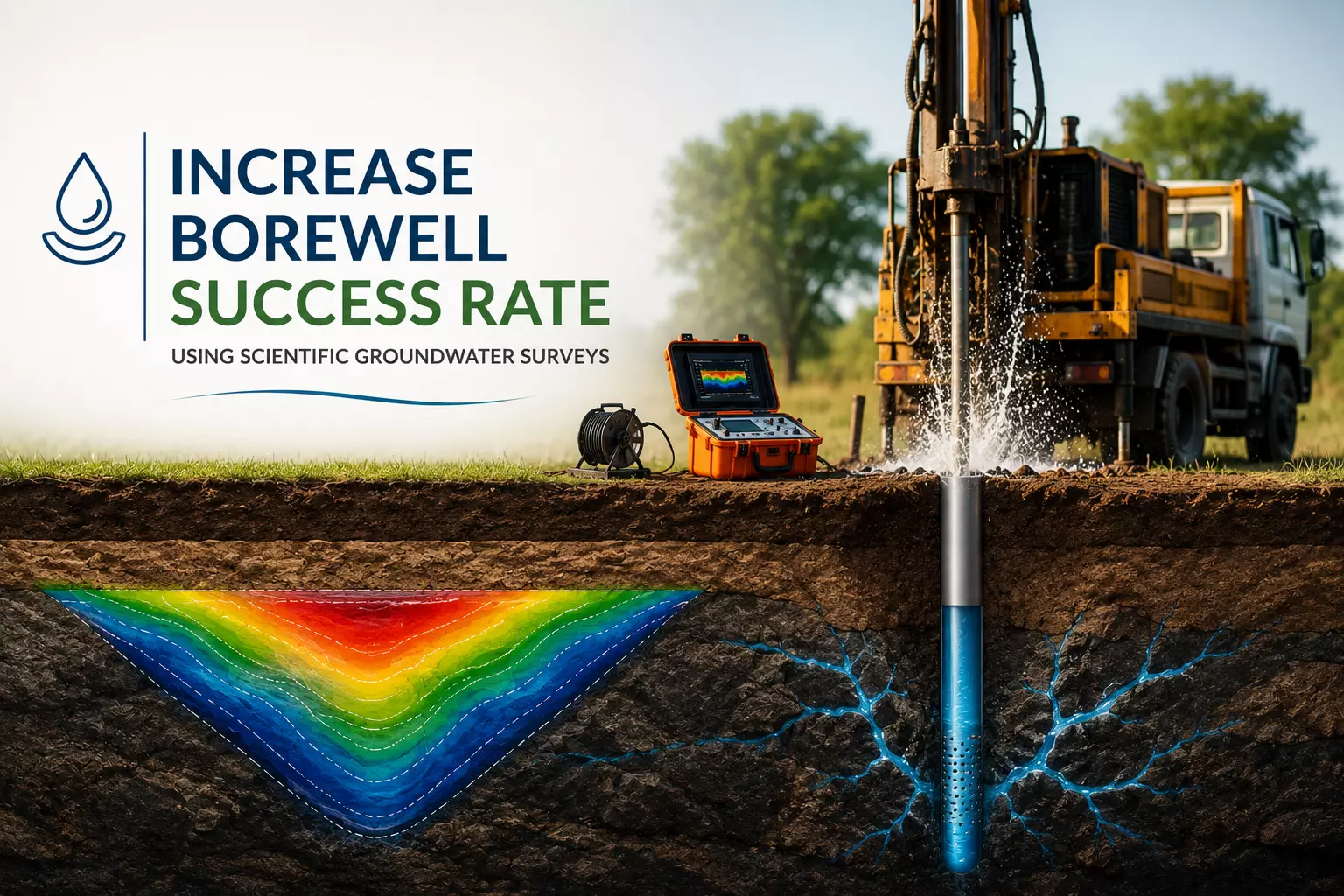
How to Increase Borewell Success Rate Using Scientific Groundwater Surveys
Finding groundwater isn't as simple as drilling wherever there's open land. It might have worked decades ago in some places, but today the situation is very different. Groundwater levels have changed, water demand has increased, and random drilling often ends with disappointment.
If you're planning to increase borewell success rate using scientific groundwater surveys, the smartest decision is to understand what's happening beneath the surface before a single machine arrives.
A scientific survey doesn't guarantee unlimited water, but it greatly improves the chances of locating a productive groundwater zone while helping you avoid unnecessary drilling costs.
Why Scientific Groundwater Surveys Matter Before Borewell Drilling
Understanding What's Happening Below the Ground
The ground beneath our feet isn't uniform. One section may contain fractured rocks capable of storing groundwater, while another just a few metres away may be almost dry. That's why drilling based on guesswork or local assumptions often leads to poor results.
Scientific groundwater surveys use modern hydrogeological techniques to study underground formations, rock structures, groundwater movement, and water-bearing zones before drilling begins.
Instead of relying on luck, property owners make decisions using actual geological data. In many cases, this approach saves both time and significant drilling expenses.
How Scientific Groundwater Surveys Improve Borewell Success
Accurate Identification of Water-Bearing Zones
One of the biggest advantages of a scientific survey is locating potential groundwater zones before drilling starts. Specialists analyse geological conditions, underground fractures, resistivity data, and surrounding hydrogeological features to identify locations where groundwater is more likely to be available.
This doesn't mean every borewell will produce the same amount of water—nature doesn't really work that way—but selecting a scientifically recommended drilling point significantly improves the probability of success compared to random site selection.
Reducing the Risk of Dry Borewells
Every failed borewell represents wasted money, time, and resources. Drilling equipment, labour, casing pipes, and additional work quickly increase project costs when groundwater isn't found.
Scientific groundwater investigations help reduce this risk by eliminating unsuitable drilling locations before excavation begins.
Companies like Bhoojal Survey combine hydrogeological expertise with modern survey techniques to recommend locations based on scientific observations rather than assumptions. For landowners, industries, and farmers, this often means making a much more informed investment.
Key Methods Used in Modern Groundwater Surveys
Electrical Resistivity Survey
Among the most reliable groundwater investigation techniques is the Electrical Resistivity Survey, which measures how electrical current moves through underground rock layers.
Different geological formations respond differently, allowing hydrogeologists to identify potential water-bearing fractures and aquifers without disturbing the land.
Because the survey provides valuable information about subsurface conditions, it helps determine not only where groundwater may exist but also the approximate drilling depth required. That level of planning can make a noticeable difference in both drilling efficiency and overall project costs.
Hydrogeological Investigation
A hydrogeological investigation goes beyond simply locating groundwater. Experts evaluate surface geology, soil characteristics, rock formations, drainage patterns, nearby borewell performance, rainfall history, and groundwater recharge conditions before recommending a drilling location.
Rather than depending on a single observation, multiple data points are combined to build a clearer understanding of underground water availability. This comprehensive approach helps improve borewell planning, especially in regions where groundwater levels vary significantly from one location to another.
Factors That Influence Borewell Success
Groundwater Recharge and Seasonal Conditions
Groundwater isn't a fixed resource. It changes with rainfall, nearby water usage, soil conditions, and natural recharge. A location that produced plenty of water years ago may not perform the same today.
That's one reason scientific surveys are carried out based on current site conditions rather than old records or assumptions. Evaluating seasonal groundwater behaviour helps experts recommend locations that have a better chance of providing a sustainable water supply instead of only short-term results.
Geological Conditions Matter More Than Distance
Many people believe that drilling a few metres away from a successful borewell will guarantee similar results. Unfortunately, groundwater doesn't spread evenly underground.
Rock fractures, fault lines, and aquifer formations can change within a surprisingly short distance. Scientific groundwater surveys study these geological variations carefully before suggesting a drilling point. That detailed analysis often becomes the difference between a productive borewell and an expensive dry one.
Benefits of Choosing a Scientific Groundwater Survey
Better Planning, Lower Costs
Every borewell project involves investment, whether it's for agriculture, residential construction, commercial buildings, or industrial operations. Starting with a scientific groundwater survey reduces uncertainty and allows property owners to plan drilling more confidently.
Instead of spending additional money correcting failed attempts, they can focus on drilling at a location supported by geological evidence. Businesses like Bhoojal Survey help clients make informed decisions through professional hydrogeological investigations that improve planning from the very beginning.
Supports Long-Term Water Management
Finding groundwater is only one part of the process. Sustainable water usage matters just as much. Scientific surveys provide valuable information about groundwater conditions, helping landowners understand how water resources should be managed over time.
This is particularly important in regions where groundwater levels continue to decline because of increasing demand and changing rainfall patterns. Responsible planning today can help protect water availability for years to come.
Choosing the Right Groundwater Survey Company
Experience and Technology Make the Difference
Not every survey follows the same approach. A reliable groundwater survey company combines experienced hydrogeologists with modern investigation techniques such as electrical resistivity surveys, geological mapping, and detailed field analysis. The final recommendations should be based on scientific observations rather than assumptions or guesswork.
Working with experienced professionals like Bhoojal Survey ensures that every stage of the investigation is carried out systematically. From analysing geological formations to identifying suitable drilling locations, professional expertise helps improve the overall success rate of borewell projects while reducing unnecessary risks.
Smarter Decisions Begin Below the Surface
Drilling a borewell is a significant investment, and once the drilling begins, there's very little room for trial and error. Taking time to understand underground conditions before starting the project can save both money and frustration later.
Scientific groundwater surveys provide a practical way to reduce uncertainty, improve drilling decisions, and increase the chances of finding productive groundwater sources.
As groundwater becomes an increasingly valuable resource across India, relying on scientific investigations instead of guesswork simply makes more sense.
Whether the project is agricultural, residential, or industrial, choosing a trusted partner like Bhoojal Survey helps transform planning into informed action—and that's often where successful borewell projects truly begin.
FAQs
1. How do scientific groundwater surveys improve borewell success?
Scientific surveys analyse underground rock formations, groundwater zones, and geological conditions before drilling, helping identify suitable locations and reducing the risk of unsuccessful borewells.
2. What is an Electrical Resistivity Survey?
An Electrical Resistivity Survey measures underground electrical resistance to identify water-bearing formations, fractures, and aquifers, making borewell location selection more accurate.
3. Can a groundwater survey prevent dry borewells?
While no survey can guarantee water, scientific investigations significantly reduce drilling risks by recommending locations with higher groundwater potential based on geological data.
4. Who should conduct a groundwater survey before drilling?
Farmers, homeowners, builders, industries, institutions, and commercial property owners should consider a professional groundwater survey before drilling to improve planning and reduce unnecessary costs.