How to Improve Your Relationships with CBT: A Practical Guide
Relationships are the bedrock of our emotional well-being, yet they are often the source of our deepest stress.
Arguments with a partner, feeling unheard by family, or navigating difficult dynamics with friends can leave you feeling frustrated, lonely, and wondering what you're doing wrong. If you're looking for a way to break free from this cycle, you're not alone.
The good news is that a well-researched and effective approach can help: Cognitive Behavioral Therapy (CBT). This guide will explore how to improve your relationships with CBT, offering actionable strategies to foster healthier communication and build stronger bonds with the people who matter most.
Understanding the CBT Model: The Thought-Feeling-Behavior Connection
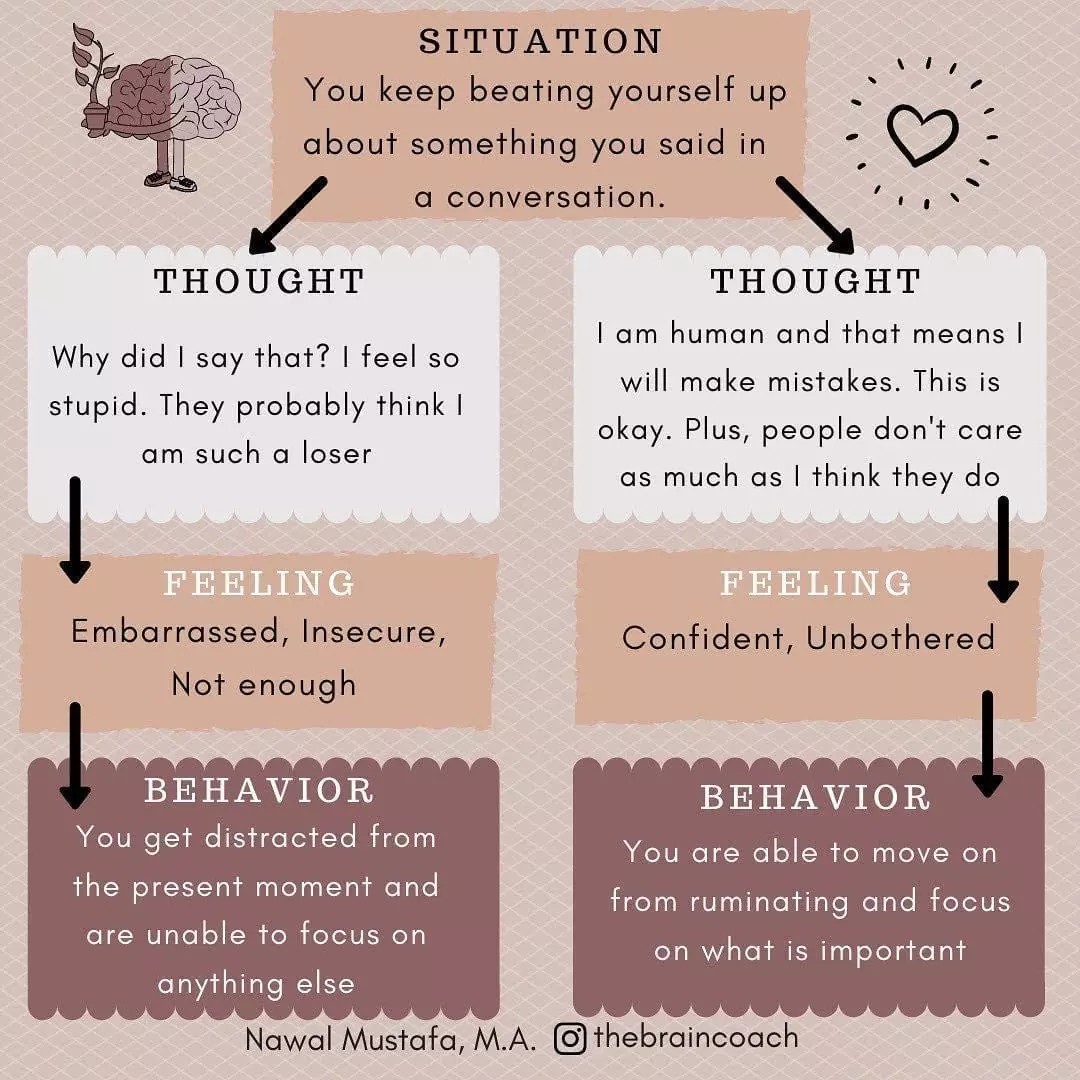
Before diving into relationship techniques, it's helpful to understand the core principle of CBT. At its heart,
CBT is based on the idea that our thoughts, feelings, and behaviors are all interconnected. This means that the way we think about a situation directly influences how we feel and, consequently, how we act.
For instance, consider a scenario where your partner doesn't reply to your text for several hours.
- Thought: "They're ignoring me. They must be angry with me."
- Feeling: Anxiety, hurt, or resentment.
- Behavior: Sending a series of increasingly anxious texts or giving them the "silent treatment" when they finally get home.
The thought triggered a cascade of negative emotions and behaviors that could easily escalate into a conflict. By learning to identify and change these automatic thoughts, you can change your emotional response and choose more productive behaviors.
Cognitive Distortions in Relationships
Many unhelpful thoughts are rooted in what CBT practitioners call "cognitive distortions"—patterns of thinking that are inaccurate and negatively biased.
Recognizing them is the first step to breaking free. Common examples include:
- Mind Reading: Assuming you know what someone is thinking without them telling you (e.g., "I know they don't value my opinion").
- Personalization: Taking things personally that are not directed at you (e.g., "My friend seemed down; it must be because I said something wrong").
- Catastrophizing: Automatically assuming the worst-case scenario will happen (e.g., "We had a small disagreement; our relationship is doomed").
- Should Statements: Holding others (or yourself) to rigid standards that lead to disappointment (e.g., "My partner should already know why I'm upset").
How to Improve Your Relationships with CBT: 5 Core Strategies
Here are five key CBT-informed strategies you can start using today to improve your relationships:
1. Master Intentional Communication
Communication is about more than just words. Before speaking, especially in a tense situation, ask yourself a two-part test: Is what I'm about to say valid (truthful) and useful (will it help the situation?)?
CBT expert Dr. Cory Newman notes that honesty doesn't have to be brutal—it can be compassionate and respectful. A comment might be truthful but lack utility, serving only to hurt the other person and damage the relationship.
Actionable Step: Before a difficult conversation, identify your positive intent. Is it to connect, to understand, or to solve a problem? Let that guide your words. This is a behavioral intervention that helps interrupt automatic patterns that lead to conflict.
Read: Psychiatrist in Noida: Finding Expert Mental Health Support
2. Identify and Reframe Unhelpful Thoughts
Learning to catch your automatic thoughts is a fundamental CBT skill. When you notice a surge of negative emotion, pause and ask yourself:
- "What was the thought that just went through my mind?"
- "Is this thought 100% fact, or is it an interpretation?"
- "What's a more balanced or alternative way to view this?"
For example, if you think, "My partner is always late because they don't care about me," challenge that thought. "My partner was late. There could be traffic, or their work meeting ran over. Assuming they don't care is an overgeneralization."
3. Distinguish Between Intent and Impact
A common source of relationship conflict is a mismatch between what someone intended and the impact their words had.
A partner might make a joke to lighten the mood, but the impact is that you feel hurt and invalidated. In a CBT approach, it's essential to address this gap directly without blaming.
Actionable Step: Use a phrase like, "I know you didn't mean to hurt me, but what you said made me feel...". This validates the other person's good intentions while still communicating your own experience. By doing this, you are navigating reality rather than assuming malicious intent, which is a form of cognitive restructuring.
4. Lead with Empathy and Validation
When someone you care about is distressed, your instinct might be to jump in and solve the problem.
However, CBT emphasizes the importance of validation first. Acknowledging someone's feelings without judgment builds trust and de-escalates tension.
Actionable Step: Before offering advice or solutions, say something like, "It's completely understandable that you feel that way. I would be upset too."
5. Turn Complaints into Requests
Dr. Newman suggests that "almost any complaint can be reframed as a request". Rather than saying, "You never help around the house," which is a complaint that often leads to defensiveness, you can say, "I'm feeling overwhelmed.
I'm requesting that you take over the dishes tonight." This small shift is a powerful behavioral technique that changes the dynamic from an attack to a collaborative discussion.
CBT for Couples: A Deeper Dive
Many of the principles above are central to Cognitive-Behavioral Couple Therapy (CBCT). This evidence-based approach is designed specifically to help couples reduce relationship distress.
CBCT expands on general CBT to address the unique dynamics of intimate relationships. It helps couples:
- Understand Their Cognitive Factors: Therapists help couples identify the unrealistic expectations and cognitive distortions that fuel conflict.
- Improve Behavioral Exchanges: Couples learn to increase positive behaviors and decrease negative, punishing interactions.
- Enhance Emotional Regulation: CBCT provides strategies for managing intense emotions, such as taking a "time-out" to cool down before a discussion escalates.
- Address the Broader Context: It acknowledges that individual issues (like depression) and environmental stressors (like work pressure) significantly impact the relationship.
According to the American Psychological Association, CBT is one of the most extensively researched forms of psychotherapy, with strong evidence supporting its effectiveness for a wide range of mental health concerns.
Conclusion: Building a Healthier Relationship Starts with You
Improving your relationships is an ongoing journey, not a destination. By applying the principles of CBT—identifying your thought patterns, communicating with intent, and leading with empathy—you can transform the way you connect with others.
These skills empower you to break negative cycles, foster greater understanding, and build the fulfilling, supportive relationships you deserve.
If you're finding it difficult to navigate relationship challenges on your own, connecting with a licensed therapist can be a meaningful first step.
Therapy provides a supportive space to learn these skills and apply them with professional guidance. You can access professional mental health support online through Psychologist2go, where licensed professionals are ready to help.
For those interested in exploring evidence-based therapeutic approaches, you can explore one-on-one online therapy sessions tailored to your specific needs.
Additionally, if you're curious about how CBT specifically addresses other mental health challenges, our detailed article on how CBT works for depression offers valuable insights that complement relationship-focused therapy.