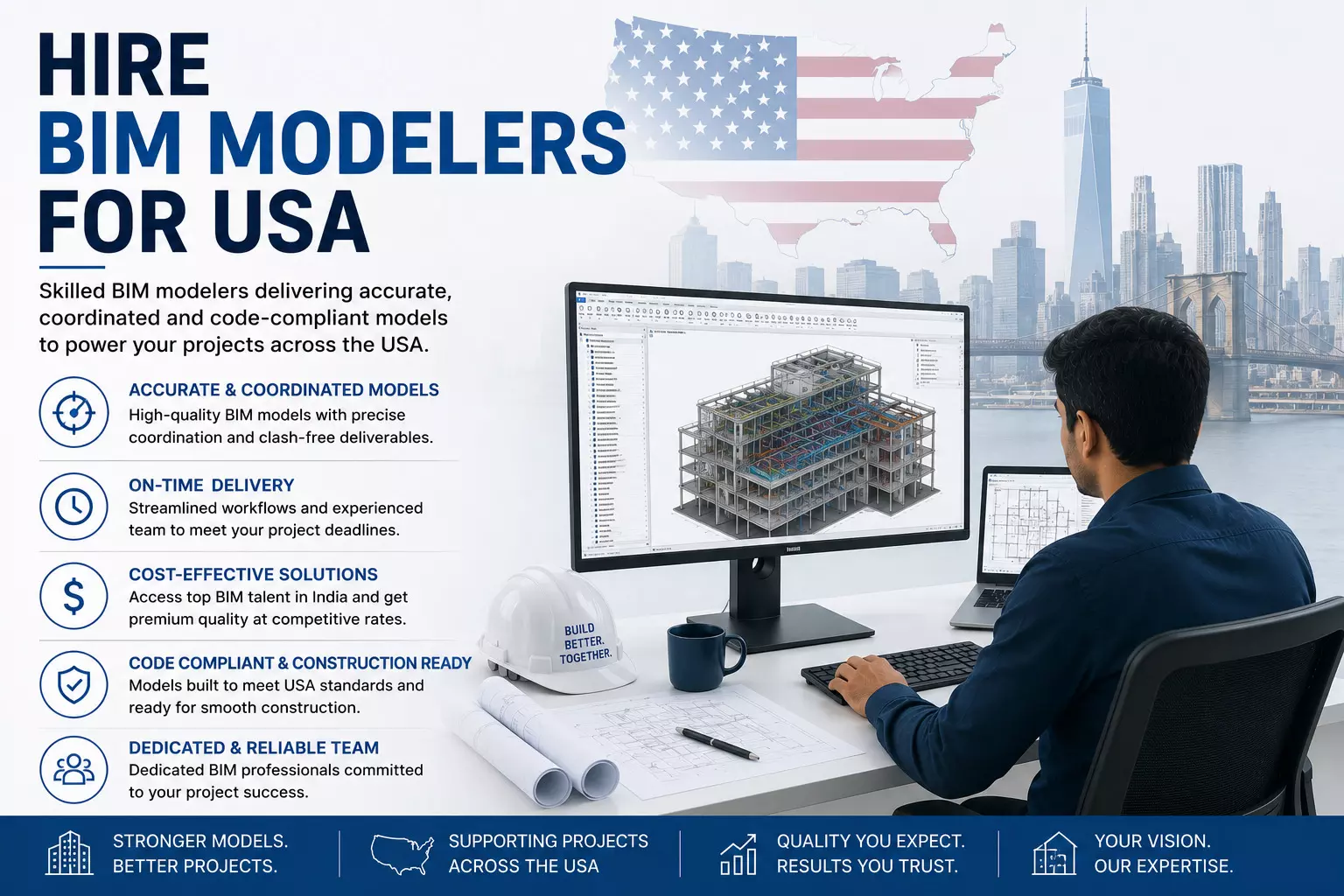
How to Hire BIM Modelers for USA-Based AEC Projects
To hire BIM modelers for USA-based AEC projects, define your project scope, verify software proficiency (Revit, Navisworks, AutoCAD), check LOD experience, and choose between in-house or remote talent. Remote BIM modelers from partners like Chudasama Outsourcing offer skilled support at lower costs while maintaining quality.
Building Information Modeling (BIM) has reshaped how architecture, engineering, and construction (AEC) teams plan, design, and deliver projects.
Instead of flat drawings, BIM creates intelligent 3D models packed with data—helping teams spot clashes, estimate costs, and coordinate trades long before anyone breaks ground.
But there's a catch. Skilled BIM talent is in short supply across the United States, and demand keeps climbing. Many firms struggle to find experienced modelers who can hit deadlines without inflating budgets.
This guide breaks down why BIM matters, the hurdles US firms face, and how to Hire BIM Modelers for USA projects the smart way. You'll learn what to look for, why remote talent often wins, and how to make a confident hiring decision.
Why BIM Matters for AEC Projects
BIM is more than 3D modeling software—it's a collaborative process that connects everyone on a project. Architects, engineers, contractors, and owners all work from the same data-rich model.
The results speak for themselves. According to a Dodge Data & Analytics report, firms using BIM consistently report fewer errors, reduced rework, and better project outcomes. Clash detection alone can save thousands of dollars by catching conflicts between mechanical, electrical, and plumbing systems before construction starts.
In short, BIM helps AEC teams build faster, smarter, and with fewer costly surprises.
What Challenges Do US-Based AEC Firms Face?
Even with strong demand for BIM, American firms run into several roadblocks:
- Talent shortage: Experienced BIM modelers are hard to find, and competition for them is fierce.
- High labor costs: Hiring full-time, in-house modelers in the US can strain budgets, especially for small and mid-sized firms.
- Project spikes: Workloads rise and fall. Keeping a full team busy year-round isn't always practical.
- Software keeping pace: Tools like Revit, Navisworks, and Tekla evolve fast, and not every team can stay current.
These pressures push many firms to look beyond traditional hiring models.
What Are the Benefits of Hiring BIM Modelers?
Bringing skilled BIM modelers onto your project—whether in-house or remote—delivers clear advantages:
- Faster project delivery: Dedicated modelers keep work moving and deadlines on track.
- Better coordination: Accurate models reduce clashes and miscommunication between trades.
- Cost savings: Catching errors early prevents expensive rework during construction.
- Scalability: You can add or reduce modelers based on project demand.
- Higher quality output: Experienced modelers produce cleaner, more reliable deliverables.
The right modeler doesn't just draw—they actively improve how your project runs.
Why Choose Remote BIM Modelers for USA Projects?
Remote BIM talent has become a practical solution for many AEC firms. Here's why it works so well.
Lower costs without lower quality
Hiring remote modelers from established outsourcing partners often costs far less than building a full in-house team. You skip overhead expenses like office space, equipment, and benefits—while still getting skilled professionals.
Access to a wider talent pool
When you're not limited by geography, you can tap into experienced modelers worldwide. Partners like Chudasama Outsourcing specialize in providing trained BIM professionals who understand US project standards, codes, and workflows.
Flexible scaling
Need five modelers this month and two the next? Remote teams make it easy to scale up or down without the burden of permanent hires.
Time-zone advantages
With the right setup, work can continue around the clock. Your team sleeps while modelers in another time zone keep the project moving—accelerating delivery.
Read: Revit Modeling Outsourcing for California AEC Firms
What Should You Consider When Hiring BIM Modelers?
Before you Hire BIM Modelers for USA projects, keep these key factors in mind:
Software proficiency
Confirm that candidates are skilled in the tools your project relies on. Common ones include:
- Autodesk Revit for modeling
- Navisworks for clash detection and coordination
- AutoCAD for drafting
- Tekla Structures for structural detailing
Level of Development (LOD) experience
Ask about experience with different LOD stages, from conceptual (LOD 100) to fabrication-ready (LOD 400). Matching the modeler's expertise to your project needs prevents costly gaps.
Knowledge of US standards
Modelers should understand American building codes, units (imperial), and documentation standards. This is where experienced outsourcing partners shine—they train teams specifically for US workflows.
Communication and collaboration
Strong communication matters, especially with remote teams. Look for modelers who respond clearly, share progress regularly, and integrate smoothly with your existing staff.
Portfolio and references
Review past projects similar to yours. A solid portfolio shows real-world capability, not just software knowledge.
How to Decide Between In-House and Remote BIM Modelers
Choosing the right hiring model depends on your firm's needs:
- Choose in-house if you have steady, year-round workloads and prefer staff physically present for daily collaboration.
- Choose remote modelers if cost savings, flexibility, and access to specialized talent matter more than physical presence.
For most small and mid-sized AEC firms managing variable workloads, remote modelers from a trusted partner like Chudasama Outsourcing offer the best balance of quality, cost, and flexibility.
The Future of BIM in AEC
BIM adoption continues to grow, and its role will only expand. Emerging trends—like integration with artificial intelligence, automated clash detection, and digital twins—are pushing the technology even further. Government mandates in several countries now require BIM on public projects, and similar momentum is building across the US market.
Firms that invest in skilled BIM talent today position themselves to win tomorrow's projects. Whether you build an in-house team or partner with remote experts, the goal stays the same: deliver better projects, faster and at lower cost.
If you're ready to Hire BIM Modelers for USA projects, partnering with an experienced provider like Chudasama Outsourcing can give you access to trained professionals who understand your standards and deadlines—without the overhead of full-time hires.
Frequently Asked Questions
How much does it cost to hire a BIM modeler in the USA?
Costs vary by experience and location. In-house US modelers typically command higher salaries plus benefits and overhead. Remote modelers from outsourcing partners often cost significantly less per hour while delivering comparable quality, making them a budget-friendly option for many firms.
What software should a BIM modeler know?
Most AEC projects require proficiency in Autodesk Revit, Navisworks, and AutoCAD. Structural projects may also need Tekla Structures. Always match the modeler's software skills to your specific project requirements.
Can remote BIM modelers work with US building codes?
Yes. Experienced outsourcing partners like Chudasama Outsourcing train their teams in US building codes, imperial units, and American documentation standards, so remote modelers can deliver compliant, project-ready work.
How quickly can I onboard a remote BIM modeler?
Onboarding is often fast with established partners, who already have trained professionals ready to start. Many firms can have a modeler contributing within days, depending on project complexity and scope.
Is outsourcing BIM work secure?
Reputable providers use secure file-sharing systems, sign confidentiality agreements, and follow strict data protection practices. Always confirm a partner's security measures before sharing sensitive project files.