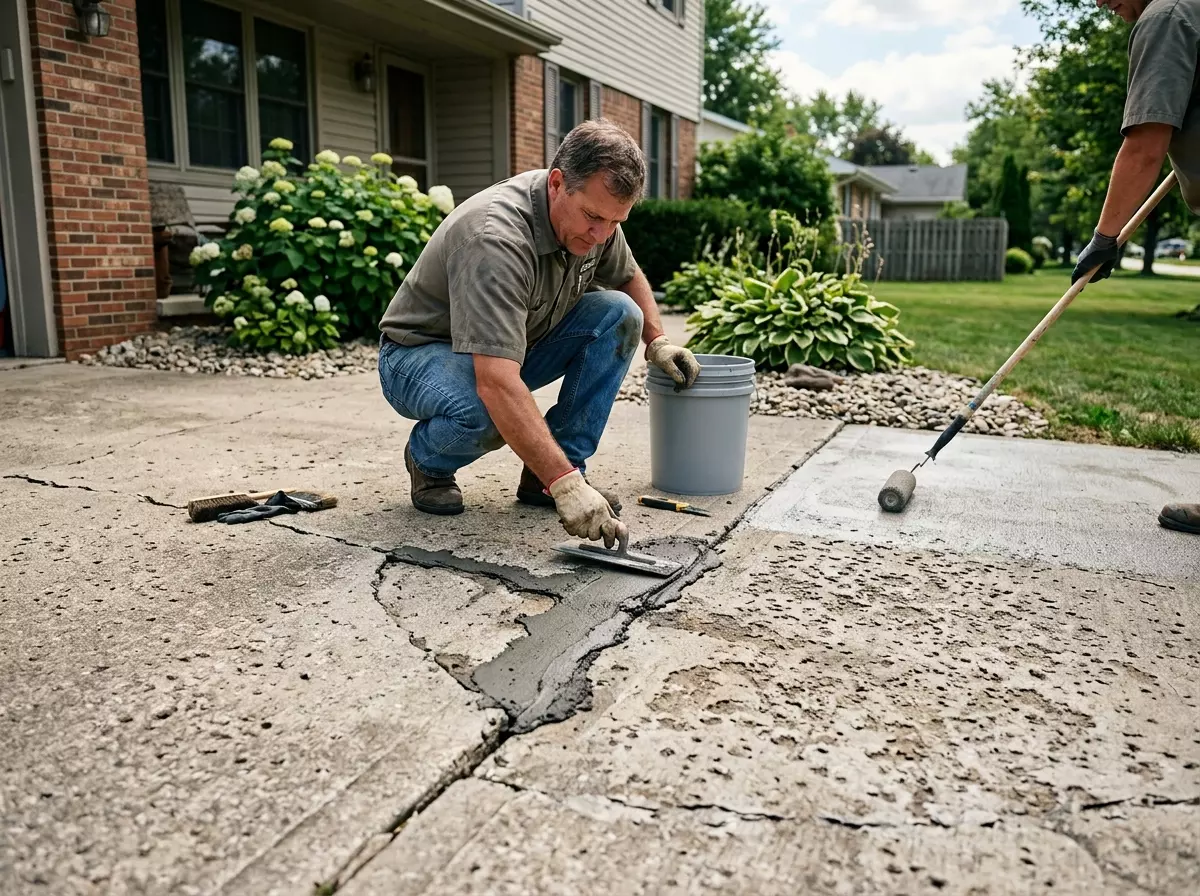
How to Handle Cracked and Worn Concrete Around Your Property
Concrete can remain functional for many years, but outdoor exposure and repeated use eventually create signs of wear.
Walkways may develop cracks, steps can lose their edges, patios may show surface deterioration, and basement-related concrete can become affected by moisture. These problems do not all require the same type of repair.
The first challenge is determining whether the damage is cosmetic, functional, or connected to a larger issue.
A small surface defect may be easy to address, while movement, recurring moisture, or widespread deterioration may require a broader evaluation. Understanding the condition before starting work can help homeowners choose a more appropriate repair strategy.
Look Beyond the Visible Crack
A crack is often the most obvious sign of concrete damage, but it may not explain why the concrete changed. Look around the damaged section for standing water, soil movement, drainage problems, nearby trees, erosion, or other environmental conditions.
The surrounding material can also provide clues. If adjacent sections are sinking, separating, or cracking in a similar pattern, the issue may involve movement below the surface. Treating only one visible crack without examining the surrounding concrete can lead to repeated repairs.
Check Whether the Damage Is Stable
Stable damage and active damage should not be treated exactly the same way. A crack that has remained unchanged for a long period may have different repair considerations from one that continues to widen or extend.
Homeowners can document visible damage by taking clear photographs and noting approximate dimensions. Rechecking the area over time can help identify changes.
However, monitoring should not replace professional evaluation when the damage affects a foundation, major structural component, or an area with significant movement.
Pay Attention to Water Entry
Water can move through concrete cracks, joints, and damaged areas. Around basement walls and floors, repeated water entry can contribute to damp conditions and damage nearby materials.
If concrete damage is located where water regularly appears, the repair should consider moisture management as well as the concrete itself. A crack may be the visible entry point, while outside drainage or groundwater conditions are contributing to the pressure behind it.
Why Repair Quality Matters
A repair can look good immediately after application but still fail when the underlying cause has not been addressed. Movement, moisture, thermal expansion, and poor surface preparation can all affect how long a repair lasts.
This is why professional concrete repair should be approached as more than applying a patch over visible damage.
The material should be prepared correctly, the repair product should suit the application, and the source of the deterioration should be considered before work begins.
Check Concrete Near Foundation Walls
Concrete around foundation walls deserves special attention because problems in these areas can affect basement moisture and the condition of the structure. Cracks, gaps, and deteriorated sections may allow water to move toward the interior.
Look for staining, efflorescence, damp patches, or repeated water marks near damaged areas.
Existing sitemap content includes multiple resources on foundation crack assessment and repair, which can support a more detailed review of how cracks should be evaluated.
Inspect Walkways and Steps
Walkways and steps experience repeated foot traffic and weather exposure. Small chips can become larger when water enters the damaged area or when repeated impact affects the same section.
Uneven surfaces deserve particular attention because they can affect safe movement. A repair should restore the surface to a usable condition rather than simply make the damaged area less noticeable.
Read: Retrofitting: The Smart Way to Extend Building Life
Look for Drainage Problems Around Exterior Concrete
Water that repeatedly collects around a concrete slab can contribute to deterioration and staining. Gutters, downspouts, grading, and surrounding soil influence where rainwater travels after it reaches the property.
Observe the area after rainfall when possible. If water consistently flows toward the same damaged section, improving drainage may be necessary alongside concrete repair. Otherwise, the same moisture conditions may continue affecting the repaired material.
Understand Surface Spalling
Surface spalling can leave concrete rough, chipped, or uneven. It may result from repeated moisture exposure, freeze-thaw action, corrosion, poor materials, or other causes depending on the location.
A professional evaluation can determine how deep the deterioration extends.
Surface preparation is important because a new repair material needs a suitable base. Simply placing new material over loose or weakened concrete may result in early failure.
Do Not Ignore Concrete That Keeps Moving
A slab or section that continues to shift may have an issue beneath it. Soil settlement, erosion, drainage changes, roots, or other conditions can affect the stability of concrete over time.
In these situations, a surface patch cannot correct the movement itself. The underlying cause needs to be considered before selecting a repair strategy.
This is particularly important for larger walkways, slabs, steps, and concrete adjacent to structural parts of a home.
Know When Repair Is Enough
Repair is often useful when the existing concrete remains generally stable and the damage is localized. Cracks, chips, worn edges, and limited surface deterioration may be candidates for targeted work.
The condition of the surrounding concrete matters. If most of the slab remains sound and the damaged area is limited, a focused repair may be practical. If deterioration is widespread or the surface has continued to move, a larger approach may be needed.
Think About Surface Preparation
Preparation affects the quality of many concrete repairs. Loose pieces, dirt, oil, dust, and other contaminants can interfere with bonding and make it more difficult for a repair material to adhere properly.
The repair area should therefore be prepared according to the chosen method.
Depending on the damage, that may involve cleaning, removing weak material, creating a suitable edge, or addressing moisture before the repair material is applied.
Protect Repaired Areas
Freshly repaired concrete may require time before normal traffic or exposure is resumed. The curing requirements depend on the product and the type of repair.
Keep vehicles, heavy equipment, and unnecessary foot traffic away from the repair until it is ready for use. Following the product's curing requirements can help prevent damage during the most vulnerable stage of the repair process.
Maintain Concrete After Repair
Repair should be followed by normal maintenance. Keep drainage paths clear, remove standing water where possible, and monitor newly repaired sections for changes.
Do not wait until a small new crack becomes a large damaged area.
Regular inspection gives homeowners an opportunity to address developing problems earlier and to determine whether environmental conditions are contributing to repeated deterioration.
Consider the Whole Property
Concrete is connected to the surrounding landscape and building. A damaged walkway may be affected by runoff from a roof, while basement concrete may be influenced by groundwater conditions or poor drainage outside.
Looking at the property as a complete water and surface-management system can reveal causes that are not visible from the damaged concrete alone. This broader perspective often produces more useful long-term solutions.
Final Thoughts
Professional concrete repair should begin with understanding the material, the damage, and the conditions that caused it. A repair that ignores movement or moisture may not remain effective even when the surface initially looks improved.
This is closely related to concrete durability, which describes a material's ability to resist deterioration while remaining suitable for its intended use. Good repair work should restore the surface while also considering the conditions that affect its future performance.