How to Create a Travel and Expense Policy That Actually Works
Quick question: if you asked five employees at your company what counts as a reimbursable meal expense, would you get five different answers?
For a lot of businesses, the honest answer is yes - and that's usually not because employees are careless, it's because the policy itself was never written down clearly, or it exists somewhere nobody actually reads.
A vague or outdated expense policy causes more friction than most business owners realise - confused employees, inconsistent approvals, and finance teams stuck making judgment calls on the fly.
The fix starts before you even think about software: it starts with a clear, well-designed policy that a proper travel and expense management system can then enforce automatically.
In this article, we'll walk through how to actually build a travel and expense policy that employees understand, finance can enforce consistently, and that scales as your business grows.
Why a Weak Policy Causes More Problems Than You'd Expect
It's tempting to think of an expense policy as a formality - a document you write once and file away. But a weak or unclear policy tends to create a chain reaction of problems:
- Employees submit claims that get rejected, creating frustration and delays
- Approvers make inconsistent decisions because there's no clear reference point
- Finance ends up negotiating exceptions case by case, which slows everything down
- Spending patterns become harder to predict, since there's no consistent baseline
- Trust erodes when similar claims get approved for one employee and rejected for another
A clear policy isn't about being restrictive - it's about giving everyone, from employees to approvers to finance, the same reference point so decisions are fast and consistent.
Start With the Basics: What Should Be Covered
A solid travel and expense policy typically needs to address these core categories, at minimum:
Travel Booking
Define how flights, trains, and other transport should be booked - economy versus business class thresholds, advance booking requirements, and preferred vendors if you have negotiated rates.
Accommodation
Set clear per-night limits, ideally adjusted by city tier, since a reasonable hotel budget in a metro city looks very different from one in a smaller town.
Meals and Per Diem
Decide whether you'll reimburse actual receipts or provide a fixed daily allowance, and specify if this changes for domestic versus international travel.
Local Transport
Clarify how cabs, autos, or personal vehicle usage get reimbursed - actual fare versus a fixed per-kilometre rate - and whether ride-hailing apps are preferred over traditional taxis.
Client Entertainment
If your teams regularly entertain clients, set clear limits and documentation requirements, since this category is often the most prone to ambiguity and inconsistent approval.
Miscellaneous and Incidentals
Cover smaller but common items - parking, tolls, Wi-Fi charges, laundry on extended trips - so employees aren't left guessing whether these are covered.
Read: Build a Powerful Daily Expense Tracker | PythonCodeVerse
Setting Limits That Actually Make Sense
Base Limits on Real Data, Not Guesswork
Rather than picking round numbers that feel reasonable, look at your actual historical spending data if you have it. If your system already tracks travel expenses, use that data to set limits that reflect real costs in the cities your employees actually visit.
Adjust for Location
A flat national limit for hotels or meals rarely makes sense in a country with wide cost-of-living differences between cities. Tiered limits - metro versus tier-2 versus tier-3 - tend to reflect reality far better and reduce the number of exception requests you'll field.
Consider Role and Seniority Thoughtfully
Some businesses set different limits by seniority level, which can make sense for certain categories like flight class. Just be careful this doesn't create policies so complex that nobody can remember which rule applies to whom - simplicity often beats precision here.
Build in Some Flexibility
Overly rigid policies tend to generate more exception requests, not fewer, because real-world travel doesn't always fit neatly into fixed categories.
Consider a small buffer or a clear escalation path for legitimate edge cases, rather than forcing every deviation through a lengthy approval process.
Making the Policy Easy to Actually Follow
Write It in Plain Language
Avoid legal or overly formal language that makes the document feel like something to be filed away rather than read. A policy employees can actually understand at a glance is one they're far more likely to follow correctly.
Use Examples, Not Just Rules
Instead of just stating limits, include a few real examples: "A two-night stay in Mumbai for a client meeting, including flights and meals, would typically total around ₹X." Concrete examples make abstract limits much easier to apply correctly.
Make It Accessible at the Point of Need
A policy buried in an onboarding email from two years ago won't get referenced when someone's booking a last-minute trip. Ideally, the policy should be visible directly within whatever tool employees use to submit expense claims, so the relevant rule shows up exactly when it's needed.
Keep It Updated
Costs change, cities grow more expensive, and business travel patterns shift. A policy that was accurate two years ago may already feel outdated to employees who know real prices have moved. Build in a habit of reviewing and updating limits at least once a year.
Turning Policy Into Practice With Automation
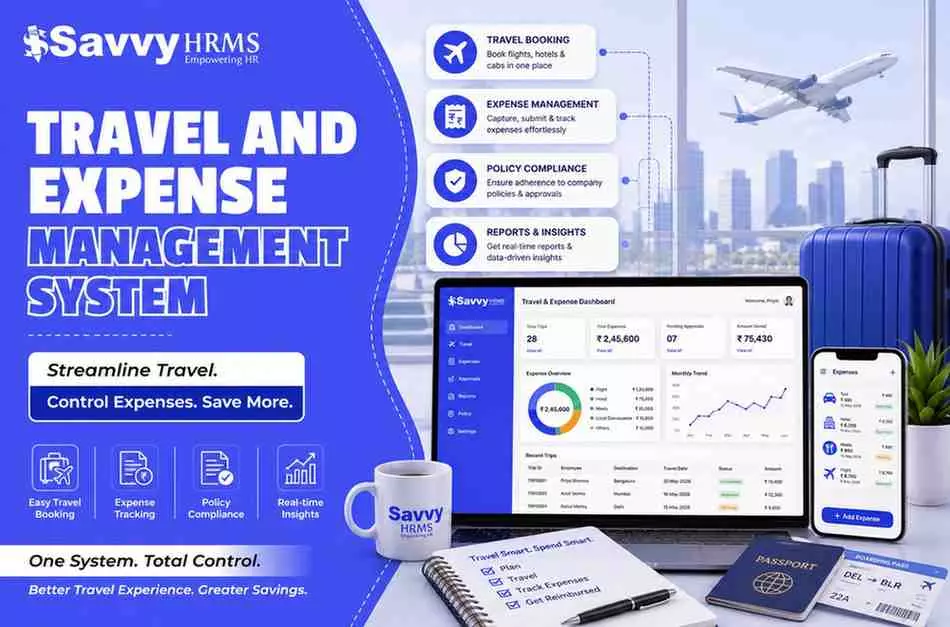
Writing a great policy is only half the job - the other half is making sure it's actually applied consistently. This is where a proper expense management system makes a real difference.
Automated Policy Checks
Rather than relying on approvers to remember every limit and rule, a good system checks each claim against policy automatically the moment it's submitted, flagging anything outside the approved range.
Consistent Application Across the Company
When policy is encoded into the system rather than left to individual judgement, every employee gets treated the same way - no more inconsistent approvals depending on which manager happens to review the claim.
Real Data for Policy Refinement
Once your policy is digitised, you get a clear picture of how often exceptions are requested, which categories generate the most disputes, and where your limits might be unrealistic - insight that's nearly impossible to gather from a paper-based process.
Fewer Awkward Conversations
When policy rules are visible and enforced automatically at submission, employees rarely get surprised by a rejected claim weeks later - because the system tells them immediately if something falls outside policy.
Common Policy Mistakes to Avoid
Making It Too Restrictive
An overly strict policy often backfires, pushing employees toward workarounds or discouraging them from submitting smaller, legitimate expenses altogether - which actually reduces visibility rather than improving control.
Making It Too Vague
On the other end, a policy with no clear limits or definitions leaves too much open to interpretation, leading to inconsistent decisions and constant back-and-forth over what qualifies.
Failing to Communicate Changes
If you update spending limits or categories, make sure employees actually know about it - a policy change that isn't communicated clearly just creates a new round of confusion and rejected claims.
Ignoring Employee Feedback
If a particular limit generates repeated pushback or exception requests, that's useful signal, not just noise. Policies that ignore this feedback tend to accumulate frustration over time.
A Simple Framework to Get Started
If you're building or revising a policy from scratch, this order tends to work well:
- Gather historical spending data, if available, to understand real costs
- Draft category-by-category limits, adjusted for location where relevant
- Write the policy in plain, example-driven language
- Review it with a few employees who travel frequently to catch unrealistic assumptions
- Encode the finalised policy into your expense management system
- Set a recurring review cycle, ideally annually, to keep limits realistic
Conclusion
A strong travel and expense policy isn't about restricting spending for its own sake - it's about giving employees, approvers, and finance a shared, clear reference point that makes the entire process faster and more consistent.
Vague or outdated policies create far more friction than most businesses realise, showing up as rejected claims, inconsistent approvals, and quiet frustration that builds up over time.
The businesses that get this right treat policy design and enforcement as connected, not separate. A well-written policy paired with a system that enforces it automatically removes almost all the guesswork - for employees submitting claims and for finance teams reviewing them.
If you're refining your policy or setting one up for the first time, SavvyHRMS lets you encode your policy directly into the claim submission process, so rules are applied consistently from day one, with everything connected to SavvyHRMS's broader HR and payroll suite.
Frequently Asked Questions
1. How often should a travel and expense policy be updated?
At minimum, once a year, since travel costs and business needs shift over time. Reviewing more frequently makes sense if your company is growing quickly or expanding into new cities.
2. Should expense limits be the same across all cities?
Generally, no. Tiered limits based on city cost-of-living tend to be more realistic and reduce the number of exception requests compared to a single flat national limit.
3. What's the biggest mistake companies make when writing an expense policy?
Either making it too restrictive, which discourages accurate claim submission, or too vague, which leads to inconsistent approvals - both extremes cause more friction than a balanced, clear policy.
4. How can I make sure employees actually read and follow the policy?
Write it in plain language with concrete examples, and make it visible directly within the tool employees use to submit claims, rather than as a standalone document they need to search for.
5. Should policy limits differ by employee seniority?
It can make sense for specific categories like flight class, but keep the overall structure simple enough that employees and approvers can easily remember which rules apply.
6. How does a travel and expense management system help enforce policy?
It applies your defined rules automatically the moment a claim is submitted, flagging or blocking anything outside policy immediately, rather than relying on manual review after the fact.
7. What should we do if employees keep requesting exceptions to the same rule?
Treat it as useful feedback rather than noise. Repeated exception requests usually mean the underlying limit doesn't reflect real costs and is worth revisiting.
8. Can policy rules be different for domestic versus international travel?
Yes, and they typically should be, since costs, currencies, and travel class considerations often differ significantly between domestic and international trips.