How to Choose the Right Calendering Machine for Industrial Laundry and Textile Finishing Operations
Industrial laundry and textile finishing operations require more than washing and drying equipment to deliver consistently professional results.
The final appearance, smoothness and presentation of linen and other textile products depend heavily on the finishing process.
This is where a calendering machine becomes an important investment for commercial laundries, hotels, hospitals, textile facilities and other businesses handling large quantities of fabric.
Modern industrial laundry equipment is designed to improve productivity, reduce repetitive manual work and maintain consistent finishing quality.
However, selecting the right machinery requires an understanding of production requirements, fabric types, heating systems, available space and long-term operating costs.
This guide explores how industrial calendering machines work, what features businesses should evaluate before purchasing one, and how complementary equipment such as cloth cutting machines and industrial boilers contributes to an efficient production environment.
Understanding the Role of a Calendering Machine
A calendering machine, in the industrial laundry context, is commonly known as a flatwork ironer or roller ironing machine. It is designed to dry and press large, flat textile items through a controlled combination of heat, pressure and mechanical movement.
Instead of relying entirely on manual ironing, the machine processes linen through heated rollers, producing a smooth and uniform finish.
Depending on the machine configuration, it can be used for:
- Hotel bedsheets and pillow covers
- Hospital linen and bedding
- Tablecloths and dining napkins
- Towels and bath linen
- Curtains and other flat textile products
- Home furnishing fabrics
For businesses handling substantial volumes of linen, this equipment can help streamline finishing operations and establish a more consistent production workflow.
It is important to distinguish laundry flatwork ironing from fabric calendering used in textile mills. Although both processes use rollers, textile-mill calendering can modify fabric surface characteristics, such as smoothness, lustre or embossing, while a laundry flatwork ironer primarily dries and presses finished linen.
How Does an Industrial Calendering Machine Work?
An industrial flatwork ironer generally operates by feeding damp linen into a roller-based heating and pressing system.
The process involves several stages:
1. Linen feeding
After washing and moisture extraction, suitable flat linen is introduced into the machine through its feeding section. Proper alignment helps ensure an even finish.
2. Heat application
The machine uses a selected heating arrangement to bring its ironing surface to the required operating temperature. The heating configuration depends on the machine model and facility infrastructure.
3. Roller pressure and ironing
The linen passes through the heated roller assembly. Controlled pressure and movement help smooth wrinkles and produce a consistent surface finish.
4. Moisture removal
Heat and controlled contact help remove remaining moisture while finishing the linen.
5. Finished linen collection
The processed items are collected for folding, stacking, storage or dispatch.
The overall result depends on several operating factors, including incoming moisture, fabric characteristics, roller speed, temperature and machine capacity.
Important Features to Consider Before Buying a Calendering Machine
Choosing industrial laundry equipment should be based on operational requirements rather than price alone. The following factors can help businesses make an informed decision.
1. Roller Configuration and Working Width
Roller configuration directly influences the machine's suitability for different production requirements.
Single-roller, double-roller and three-roller configurations can be considered depending on the required throughput, available space and finishing requirements.
Working width is equally important. A machine should accommodate the dimensions of the linen being processed without unnecessary handling or inefficient feeding.
For example, hotels processing large bedsheets may require a different working width from smaller commercial laundries handling towels and table linen.
2. Heating Technology
Heating arrangements influence operating costs, installation requirements and overall production efficiency.
Depending on the machine design, industrial ironers may use steam, gas or electrical heating.
Businesses should evaluate:
- Availability of the required energy source
- Heating consistency
- Energy consumption
- Temperature control
- Maintenance requirements
- Compatibility with existing infrastructure
A suitable heating arrangement should support the required production volume without creating unnecessary operating expenses.
3. Variable Speed Control
Different textile materials and moisture levels may require different operating speeds.
Variable-speed control allows operators to adjust machine performance according to the material being processed and the required finishing result.
It also helps businesses manage production more effectively when handling different types of linen throughout the day.
4. Safety and Operator Convenience
Industrial machinery should be designed with operator safety in mind.
Important considerations include emergency stop systems, protective guards, travel switches, overload protection and accessible controls.
A user-friendly operating panel can also simplify routine operation and reduce the chances of operational errors.
5. Maintenance and Durability
Rollers, belts, bearings, drive systems and heating components require appropriate maintenance.
Before purchasing, businesses should examine the availability of spare parts, technical assistance, maintenance requirements and after-sales support.
Equipment that is easier to maintain can help reduce unexpected downtime and support long-term operational continuity.
Why Industrial Laundries Need an Integrated Equipment Setup
A calendering machine does not operate independently of the rest of the production environment. Its performance depends on the efficiency of the preceding washing, extraction and drying stages, as well as the availability of appropriate utilities.
An integrated equipment setup helps businesses organize their production activities more effectively.
For example, an industrial laundry may require:
- Industrial washing machines for cleaning linen.
- Washer extractors for removing excess moisture.
- Tumble dryers for suitable drying applications.
- Calendering machines for flatwork finishing.
- Folding machines for organized linen preparation.
- Boilers and steam systems for compatible equipment.
When these machines are selected according to actual production requirements, businesses can develop a more organized workflow and reduce unnecessary manual handling.
The Importance of a Cloth Cutting Machine in Garment Manufacturing
While industrial laundry finishing focuses on washing, drying and pressing, garment manufacturing involves a different production workflow.
Fabric preparation and cutting are essential stages in apparel production. Accurate cutting helps ensure that garment components are prepared according to the required patterns and dimensions.
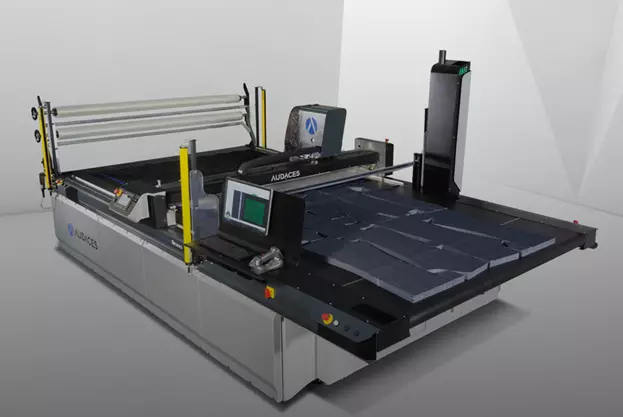
An industrial Cloth Cutting Machine can support garment manufacturers by improving cutting consistency and helping operators manage fabric efficiently.
Depending on the application, manufacturers may consider band knife cutting machines, automatic fabric cutting systems and other specialized cutting equipment.
Some important selection factors include:
- Fabric type and thickness
- Cutting height and working capacity
- Blade speed and adjustment
- Operator safety features
- Fabric movement and handling
- Production volume
Businesses looking for specialized garment manufacturing equipment can explore the Cloth Cutting Machine range offered by Welco Garment Machinery.
Although cutting and laundry finishing serve different purposes, both processes demonstrate why selecting machinery according to specific production requirements is essential for industrial productivity.
How Diesel Fired Boilers Support Industrial Operations
Heating and steam generation are important considerations in many industrial laundry and garment finishing environments.
Where compatible equipment requires steam, a properly selected industrial boiler can support the facility's utility requirements.
Diesel Fired boilers may be considered by businesses evaluating fuel-based steam generation systems, depending on their operational requirements, installation conditions and available energy infrastructure.
Before selecting a boiler, businesses should consider:
- Required steam generation capacity
- Operating pressure requirements
- Fuel availability and consumption
- Energy efficiency
- Installation and ventilation requirements
- Safety systems and maintenance support
The boiler should be selected according to the combined steam demand of the equipment that actually uses steam. Not every calendering machine requires a separate steam supply, as some models use electrical or other heating arrangements.
A correctly planned steam generation system can help maintain consistent utility availability and support compatible finishing equipment.
Businesses can explore Diesel Fired boilers and industrial boiler solutions to understand the available equipment options.
Common Mistakes to Avoid When Purchasing Industrial Laundry Machinery
An equipment purchase can affect business productivity for many years. Avoiding a few common mistakes can make the investment more practical.
- Selecting machinery without evaluating production volume: A machine that is too small may create production bottlenecks, while unnecessarily large equipment can increase initial and operating costs.
- Ignoring incoming moisture levels: Flatwork ironer performance depends on the moisture content of the linen entering the machine. Businesses should evaluate their extraction and drying processes before deciding on a suitable model.
- Overlooking working space: The installation area should accommodate the machine, feeding and collection areas, operator movement and maintenance access.
- Focusing only on purchase price: Electricity, fuel, steam, spare parts, servicing and downtime should all be considered when estimating the total cost of ownership.
- Ignoring after-sales support: Reliable technical assistance and access to spare parts are important for maintaining continuous industrial operations.
Why Choose an Experienced Industrial Machinery Supplier?
Industrial equipment selection involves more than comparing product specifications. Businesses need to understand how different machines fit into their existing production processes.
An experienced supplier can help evaluate the application, recommend suitable machinery configurations and provide technical guidance regarding installation, operation and maintenance.
Welco Garment Machinery Pvt. Ltd. (WGM) has been working in garment finishing, home furnishing, leather finishing and industrial and commercial laundry machinery since 1994.
Its product range includes flatwork ironing and calendering equipment, industrial cutting machines, garment finishing machinery, industrial laundry equipment and boiler solutions.
The company provides equipment options for businesses looking to develop or upgrade their manufacturing and laundry operations.
You can explore its industrial calendering machine and flatwork ironer solutions to review the available configurations and product features.
Conclusion
Choosing the right calendering machine is an important decision for businesses involved in commercial laundry and textile finishing.
Roller configuration, working width, heating technology, production capacity, operator safety and maintenance requirements should all be considered before making an investment.
A well-planned equipment setup can help businesses improve finishing consistency, organize their production workflow and manage operational requirements more effectively.
Whether a business is upgrading an existing laundry facility or planning a new garment manufacturing setup, selecting appropriate machinery and working with an experienced equipment supplier can make a meaningful difference to long-term performance.
For businesses exploring industrial laundry, garment manufacturing and finishing solutions, Welco Garment Machinery offers a range of equipment designed to address different industrial applications.