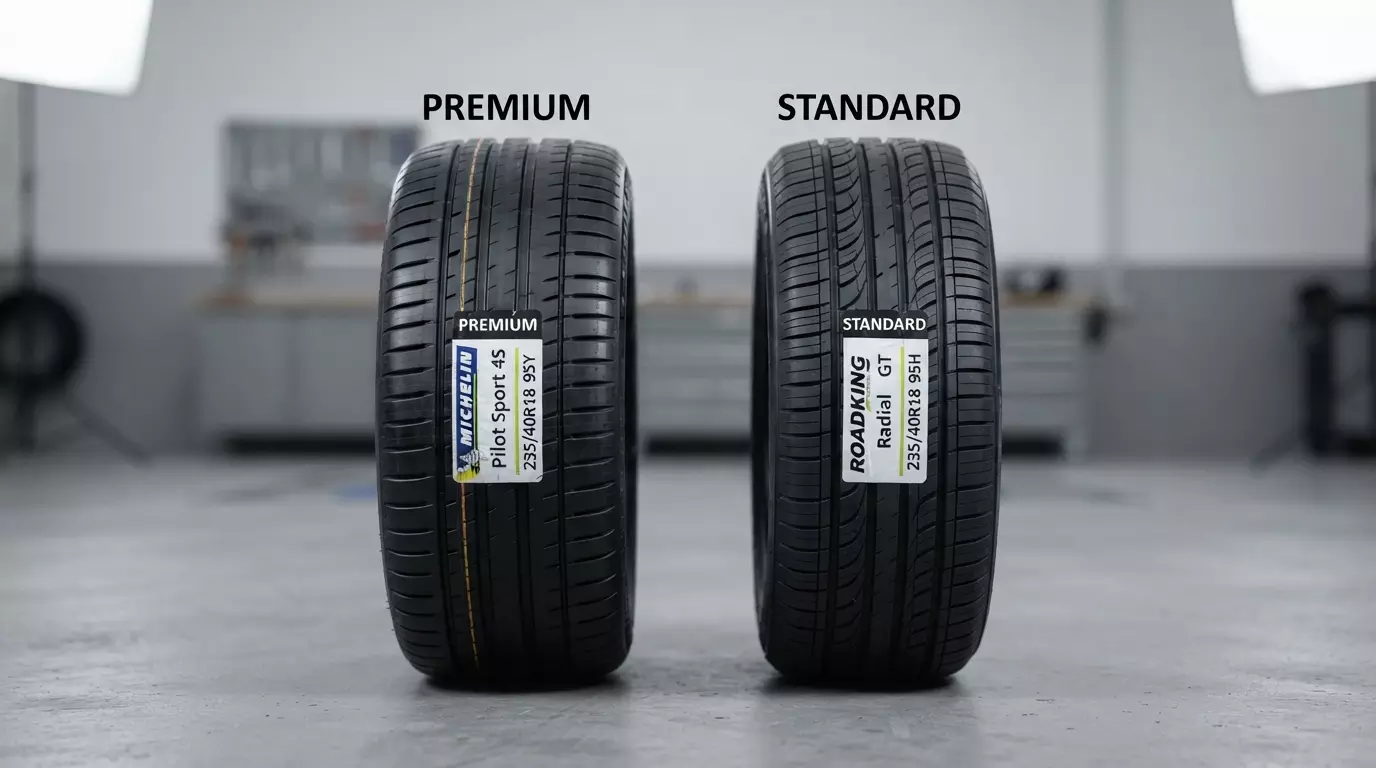
How to Choose Between Premium and Budget Tyres
Walk into any tyre shop in Abu Dhabi and you'll notice the price gap almost immediately.
A budget tyre might cost a fraction of what a premium brand does for the exact same size, and it's natural to wonder whether that price difference is actually justified — or whether you're simply paying extra for a logo.
The truth sits somewhere in between.
Premium and budget tyres genuinely differ in materials, engineering, and performance, but that doesn't automatically mean premium is the right choice for every driver.
The best decision depends on your vehicle, your driving habits, and how you weigh upfront cost against long-term value. This guide breaks down exactly what separates the two categories so you can make a decision that suits your situation, not just your budget.
What Actually Separates Premium and Budget Tyres
The price difference between tyre tiers isn't arbitrary — it usually comes down to a few core factors.
Rubber compound quality – Premium tyres typically use more advanced rubber compounds engineered for better grip, heat resistance, and longevity. Budget tyres often use simpler compounds that perform adequately but degrade faster, particularly under intense heat.
Manufacturing precision – Established premium brands generally invest more in quality control, tighter manufacturing tolerances, and advanced tread technology. This affects things like even wear, noise levels, and consistency across the tyre's lifespan.
Research and testing – Premium manufacturers typically run more extensive testing across different climates, road conditions, and driving scenarios, which shows up in real-world performance — braking distance, wet grip, and stability at higher speeds.
Brand reputation and warranty support – Premium brands often back their tyres with stronger warranties and wider availability of genuine replacement parts and service support.
None of this means budget tyres are unsafe or poorly made — reputable budget brands still meet required safety standards. The difference is more about performance margins, durability, and how the tyre behaves in more demanding conditions.
Read: Mercedes Benz GLC Workshop Near Me in Dubai (2025 Edition)
When Budget Tyres Make Sense
Budget tyres aren't automatically the wrong choice. They can be a genuinely sensible option in certain situations:
- Older vehicles nearing the end of their usable life, where investing heavily in premium tyres doesn't make financial sense
- Low-mileage drivers who mostly do short city trips and won't put significant wear on tyres regardless of brand
- Temporary or short-term ownership, such as a car you plan to sell or replace within a year or two
- Tight budgets, where a functional, safety-compliant tyre now is more practical than delaying replacement to save for a premium option
If you fall into one of these categories, a reputable budget or mid-tier brand can serve you perfectly well, as long as you stay on top of regular checks and don't neglect maintenance simply because the tyre was cheaper.
When Premium Tyres Are Worth the Investment
On the other hand, premium tyres tend to justify their cost in situations like:
- High-mileage or daily long-distance driving, such as regular inter-emirate commutes, where durability and consistent performance matter more over time
- Performance or luxury vehicles, where the car's handling and safety systems are calibrated to work with higher-quality tyres
- Families prioritising safety margins, particularly for braking distance and wet-weather grip during the rare but intense rain Abu Dhabi does experience
- Drivers who keep their car for many years, since the better durability of premium tyres often balances out the higher upfront cost over the tyre's full lifespan
In many cases, a premium tyre that lasts noticeably longer and performs more consistently ends up costing a similar amount per kilometre driven compared to replacing budget tyres more frequently — it just requires a larger payment upfront rather than spread out.
Consider Abu Dhabi's Climate in Your Decision
Heat plays a bigger role in this decision than most drivers realise. Abu Dhabi's summer road temperatures accelerate rubber degradation regardless of brand, but the effect is usually more pronounced on lower-quality compounds.
Budget tyres in extreme heat may show cracking, faster tread wear, or reduced grip sooner than their rated lifespan would suggest.
If you drive frequently during peak summer months or take regular highway trips at higher speeds, this is one of the strongest arguments in favour of investing in a better-quality tyre, since the performance gap becomes more noticeable under sustained heat and speed.
Don't Forget Wheel Alignment and Maintenance
Regardless of which tyre tier you choose, proper maintenance has a huge impact on how long your tyres actually last — sometimes more than the brand itself.
Poor wheel alignment causes uneven tyre wear, reduces fuel efficiency, and can shorten the lifespan of even the most expensive premium tyre significantly.
It's worth getting your alignment checked whenever you fit new tyres, and periodically afterward, especially if you've hit a significant pothole or kerb.
Many drivers are surprised to learn how affordable this service actually is relative to the tyre damage it prevents — checking the wheel alignment price in Abu Dhabi at a few different garages is a worthwhile step whenever you invest in new tyres, since it protects that investment regardless of whether you chose budget or premium.
Combined with regular tyre rotation and correct inflation, proper alignment helps close much of the performance and longevity gap between tyre tiers, making your choice of budget versus premium slightly less critical than it might initially seem — though the difference in raw performance and safety margin still remains.
A Simple Way to Decide
If you're still unsure which way to go, ask yourself these questions:
- How many kilometres do I drive per year? High mileage generally favours premium tyres for durability.
- How long do I plan to keep this car? Longer ownership makes premium tyres more cost-effective over time.
- What's my driving environment? Frequent highway driving or performance vehicles benefit more from premium tyres.
- What's my budget right now? If premium tyres aren't financially realistic today, a reputable mid-range or budget tyre with proper maintenance is a perfectly safe interim choice.
- Am I keeping up with maintenance either way? Good alignment, rotation, and pressure checks matter regardless of tyre tier and significantly affect how long any tyre lasts.
There's rarely a single universally "correct" answer — the right choice depends on matching the tyre to your actual driving needs rather than assuming premium is always better or budget is always a compromise.
Final Thoughts
Choosing between premium and budget tyres in Abu Dhabi isn't just about price — it's about matching the tyre to your vehicle, your driving habits, and how long you plan to keep the car.
Premium tyres generally offer better durability, grip, and heat resistance, which can be well worth the investment for high-mileage or long-term drivers. Budget tyres, meanwhile, remain a sensible and safe option for shorter-term needs or lighter use, provided you stay consistent with maintenance.
Whichever tier you choose, pairing your tyres with regular checks — proper inflation, rotation, and alignment — will always get you more value and more safety out of your investment, regardless of the badge on the sidewall.