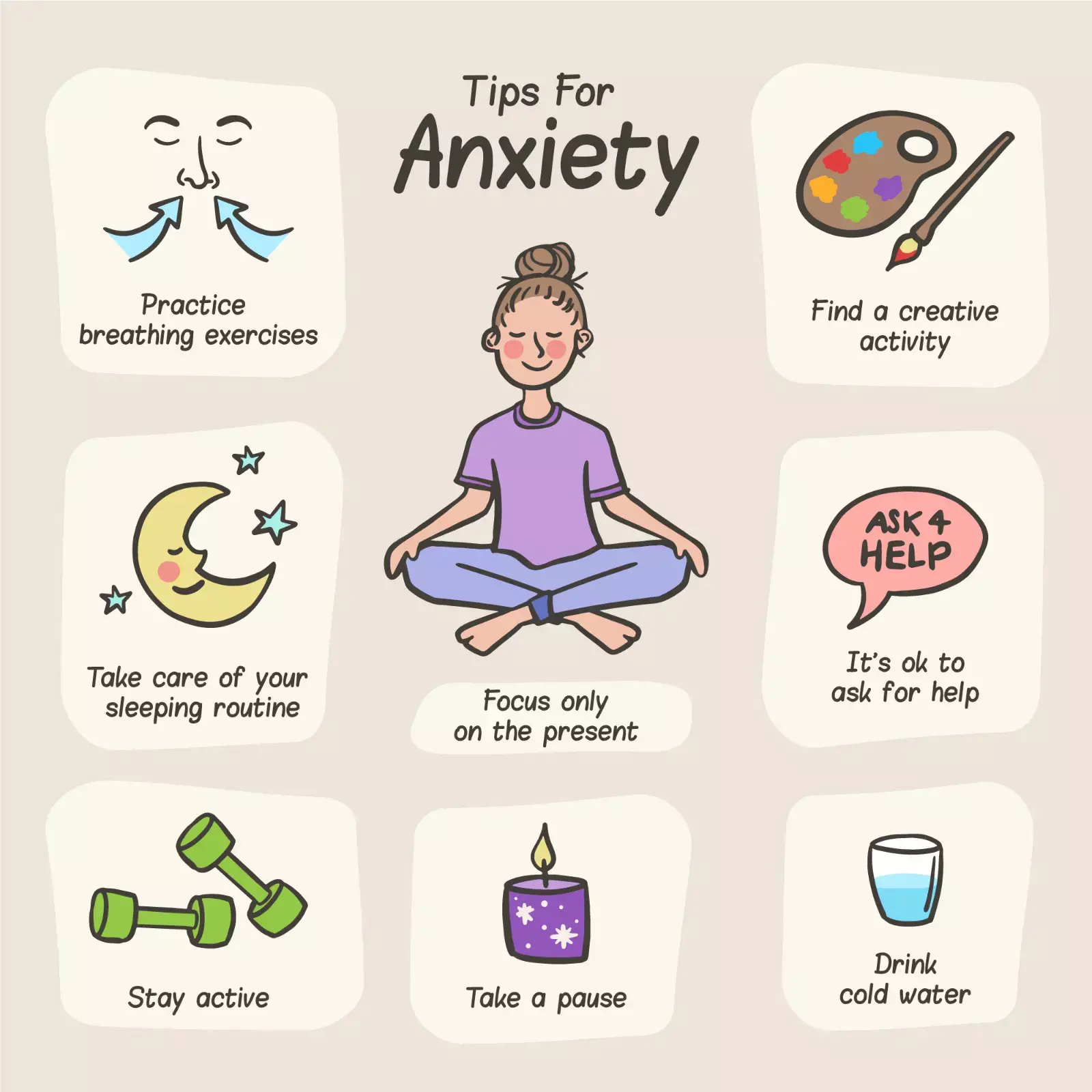
How to Calm an Anxiety Attack: 7 Grounding Steps That Can Help
Feeling suddenly overwhelmed by racing thoughts, a pounding heart, or a sense that something terrible is about to happen can be frightening.
Learning how to calm an anxiety attack can help you feel safer and more in control in the moment—even when the feelings are intense.
Anxiety attacks can look different for everyone. The steps below are not a replacement for professional care, but they can help you lower the immediate intensity and reconnect with the present.
What is an anxiety attack?
An anxiety attack is a period of intense fear, worry, or physical distress that can build gradually or feel sudden and overwhelming. It can involve rapid breathing, chest tightness, shaking, dizziness, nausea, or a feeling of losing control.
People often use “anxiety attack” and “panic attack” interchangeably, although panic attacks are a clinical term and tend to reach a peak quickly. Either way, the sensations are real and distressing—but they are not a personal failure.
If symptoms such as chest pain, fainting, severe breathing difficulty, or new physical symptoms concern you, seek urgent medical care. It is always appropriate to rule out a medical emergency.
How to calm an anxiety attack now
Start with one technique rather than trying to “fix” every feeling at once. Your goal is not to force anxiety away immediately; it is to signal safety to your body and ride out the wave.
1. Name what is happening
Say to yourself: “I am feeling anxious. This is uncomfortable, but I can get through this.”
Naming the experience can create a little distance between you and the fear. Instead of treating each sensation as proof that danger is present, remind yourself that anxiety activates the body’s alarm system.
Try a short grounding statement:
- “This feeling will pass.”
- “I am safe in this moment.”
- “My body is stressed, not broken.”
- “I only need to focus on the next breath.”
Avoid arguing with every anxious thought. Acknowledge it, then return your attention to the next small step.
Read: 10 Common Mental Health Services and How They Help
2. Slow your breathing gently
When anxiety rises, breathing often becomes fast or shallow. Slowing the breath—especially making the exhale longer—can help reduce the physical sense of alarm.
Try this simple pattern:
- Breathe in gently through your nose for four counts.
- Breathe out slowly through your mouth for six counts.
- Repeat for one to two minutes, without forcing a deep breath.
Keep your shoulders relaxed and place one hand on your stomach if that feels comfortable. Deep breathing and other relaxation practices are commonly recommended as part of managing panic symptoms.
Mayo Clinic also notes that stress-management techniques, including breathing and progressive muscle relaxation, may help.mayoclinic
If counting makes you more anxious, skip the numbers. Simply focus on a soft inhale and a slower exhale.
3. Use the 5-4-3-2-1 grounding technique
Grounding moves your focus away from frightening internal sensations and toward what is actually around you. The 5-4-3-2-1 method is a practical way to do that.
Notice:
- 5 things you can see
- 4 things you can feel or touch
- 3 things you can hear
- 2 things you can smell
- 1 thing you can taste
For example, you may notice the texture of your clothing, a fan humming, light through a window, or the taste of water. You do not need to do this perfectly. The point is to anchor your attention in the present.
4. Relax one part of your body
Anxiety often creates muscle tension without you noticing it. Choose one area—your jaw, hands, shoulders, or feet—and deliberately release it.
You can also try progressive muscle relaxation:
- Tense your hands for about five seconds.
- Release them slowly.
- Notice the contrast between tension and relaxation.
- Repeat with your shoulders, legs, or face.
Relaxation and muscle-release exercises can help interrupt the cycle in which physical tension increases anxious thoughts and anxious thoughts increase physical tension.mayoclinic
5. Give your mind one neutral focus
During an anxiety attack, your mind may search for danger. Give it a simple, neutral task instead.
Try one of these:
- Describe an object near you in detail.
- Count backward from 100 by threes.
- Repeat the lyrics of a familiar song.
- Hold a cool glass of water and notice its temperature.
- Look for five objects of the same color.
Harvard Health recommends redirecting attention toward an object or mental task and using a calming image, alongside slow breathing, to help manage panic symptoms.harvard
What not to do during an anxiety attack
When you are distressed, it is understandable to want immediate certainty. However, some common reactions can keep the anxiety cycle going.
Try to avoid:
- Repeatedly checking your pulse, breathing, or body for reassurance.
- Searching alarming symptoms online while you are in the peak of anxiety.
- Leaving every situation that causes discomfort, if you can safely stay for a moment.
- Using alcohol, nicotine, or recreational drugs to numb the feeling.
- Criticizing yourself for having anxiety.
Caffeine, alcohol, smoking, and recreational drugs can trigger or worsen panic symptoms for some people. Choose a supportive action instead: sip water, text someone you trust, sit somewhere quieter, or return to your breathing.mayoclinic
After the anxiety starts to pass
Once the most intense moment eases, be kind to yourself. Your nervous system has been working hard.
You may find it helpful to:
- Eat something gentle if you have not eaten for a while.
- Drink water and rest in a calm space.
- Write down what happened, including triggers, thoughts, sensations, and what helped.
- Take a short walk or do gentle stretching.
- Return to your usual routine gradually rather than treating the experience as a setback.
If physical signs are a frequent part of your experience, read about physical symptoms of anxiety and the ways anxiety can show up in the body.
When anxiety attacks need professional support
Occasional anxiety can happen during stressful periods. But it is worth speaking with a licensed mental health professional if anxiety attacks are frequent, feel unpredictable, lead you to avoid daily activities, disrupt sleep, or make work, study, relationships, or health harder to manage.
A therapist can help you understand patterns behind your anxiety and develop tools that fit your life. Cognitive behavioral therapy (CBT), for example, helps people identify unhelpful thought patterns and practice new responses to anxiety.
You can connect with compassionate mental health support when you are ready to take that next step.
For ongoing anxiety, one-on-one online therapy sessions can offer a private space to discuss triggers, learn coping skills, and build a plan for preventing future episodes.
A quick anxiety-attack plan
Save this short plan in your phone or write it on a card:
- Name it: “This is anxiety. It will pass.”
- Exhale slowly for longer than you inhale.
- Ground yourself with five things you can see.
- Relax your jaw, hands, and shoulders.
- Contact a trusted person or move to a quieter space.
- Seek urgent medical help if symptoms feel medically serious or unfamiliar.
Learning how to calm an anxiety attack takes practice, and no single technique works for everyone. Start with slow breathing and grounding, then notice which tools leave you feeling more settled.
If anxiety is repeatedly taking over your life, speaking with a licensed psychologist is a meaningful, supported next step.