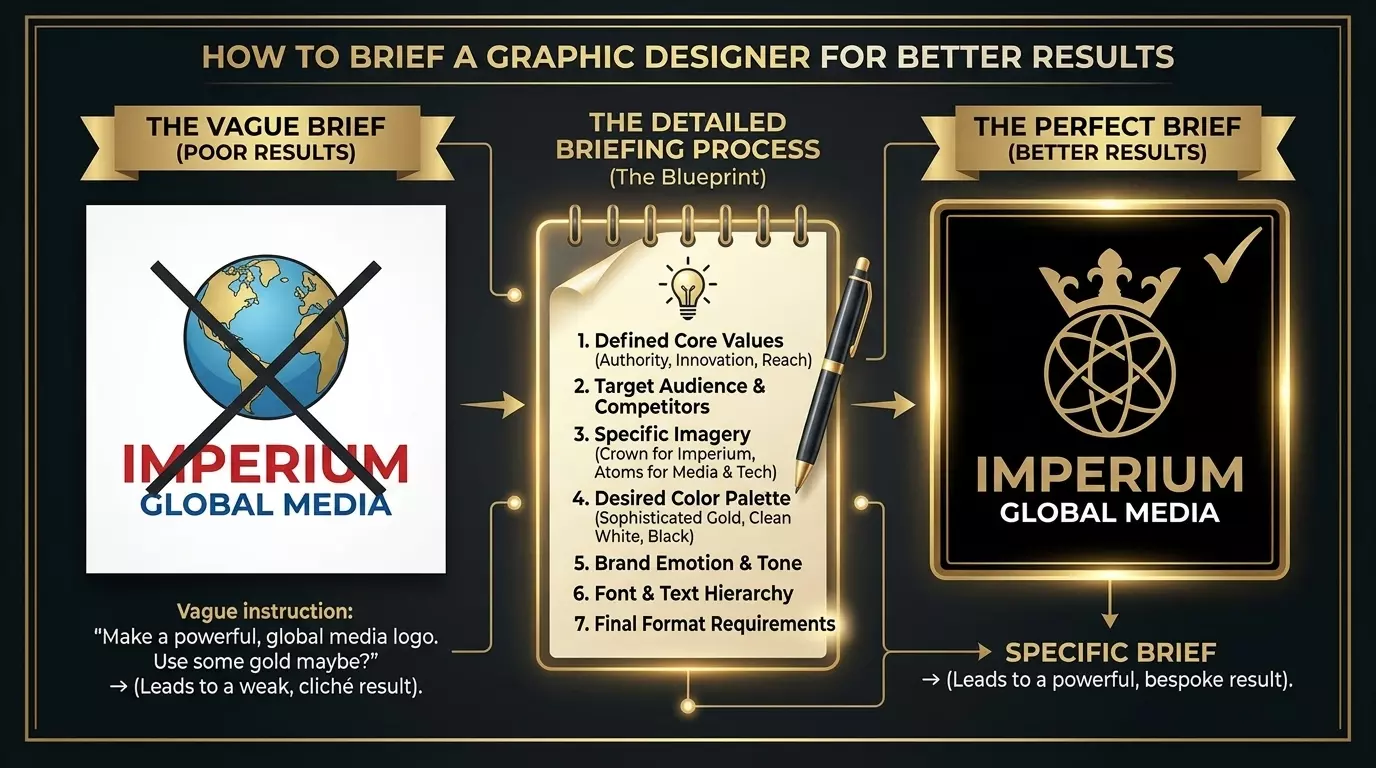
How to Brief a Graphic Designer for Better Results
You handed over a vague description, "make it look modern and professional," and got back a design that technically fits the words but misses what you actually wanted entirely.
Round after round of revisions follows, eating time and budget on both sides. The problem usually isn't the designer's skill; it's the brief. Here's how to write one that actually gets you the result you're after.
A Weak Brief Guarantees Weak Revisions
Designers can only build on what they're given. A vague brief forces them to guess at your intent, and guesses are rarely exactly right the first time.
Every round of "not quite what I meant" traces back to information that was never actually shared upfront.
A strong brief isn't extra effort; it's the effort that saves far more time later.
Start With the Actual Purpose
Before describing how something should look, explain what it needs to do: sell a product, build trust, communicate information clearly.
Purpose should drive every subsequent design decision, and a designer who understands the "why" makes far better calls on the "how."
Skipping this and jumping straight to aesthetic preferences is where briefs most often go wrong.
Define Your Actual Audience
"Everyone" isn't a real audience. Describe specifically who will see and use this design, their age range, their taste, and what appeals to them.
A design that resonates with one audience can completely miss another, even if it's objectively well-crafted.
The more specifically you can describe your audience, the more precisely a designer can target the work toward them.
Give Concrete Examples, Not Just Adjectives
"Modern and professional" means something different to every person who hears it. Concrete visual references remove that ambiguity entirely.
Share two or three examples of designs you genuinely like, and explain specifically what you like about each one.
Examples communicate taste far more precisely and quickly than adjectives ever can.
Be Just as Clear About What You Dislike
Knowing what to avoid is often as useful as knowing what to aim for.
If certain colours, styles, or approaches feel wrong for your brand, say so directly and specifically.
This prevents a designer from confidently heading down a direction you were always going to reject anyway.
Provide Brand Guidelines If They Exist
If you already have brand colours, fonts, or logo usage rules, share them clearly upfront rather than letting the designer discover misalignment after a full draft.
Consistent brand application across every piece strengthens overall recognition, and missing this step often means a first draft technically works but needs a full colour and font correction pass.
This single document can save significant back-and-forth.
Read: Motion Graphic Designer + Best Web Development Course
Specify Practical Constraints Early
Dimensions, file formats, print versus digital use, and any technical requirements should be clear before design work begins, not discovered afterward.
A beautifully designed piece that doesn't fit the intended print size or digital platform means real rework, entirely avoidable with upfront clarity.
These practical details feel minor, but their absence causes some of the most frustrating revision cycles.
Set a Realistic Timeline and Budget
Rushed timelines and unclear budgets both quietly compress design quality, since designers make trade-offs when either constraint is unrealistic.
Being upfront about both allows a designer to scope the work properly and manage the process realistically from the start.
Surprises about timeline or budget mid-project rarely improve the final result.
Structure Feedback Constructively
When reviewing drafts, be specific about what isn't working and, where possible, why, rather than a vague "I don't love it."
Specific, structured feedback ("the logo feels too small relative to the headline") gets you a far more useful revision than a vague reaction does.
Clear feedback is as much a skill as a clear brief, and both compound to speed up the entire process.
The Payoff of a Genuinely Good Brief
A thorough brief typically means fewer revision rounds, a faster overall timeline, and a result that's actually aligned with what you needed from the start.
A skilled graphic design agency in Dubai will often help shape a strong brief with you if you're unsure how to write one yourself, since it's genuinely in both parties' interest.
The quality of what you get back rarely exceeds the quality of what you put in upfront. Invest a little extra time in the brief, and the entire design process runs faster, cheaper, and closer to exactly what you had in mind.