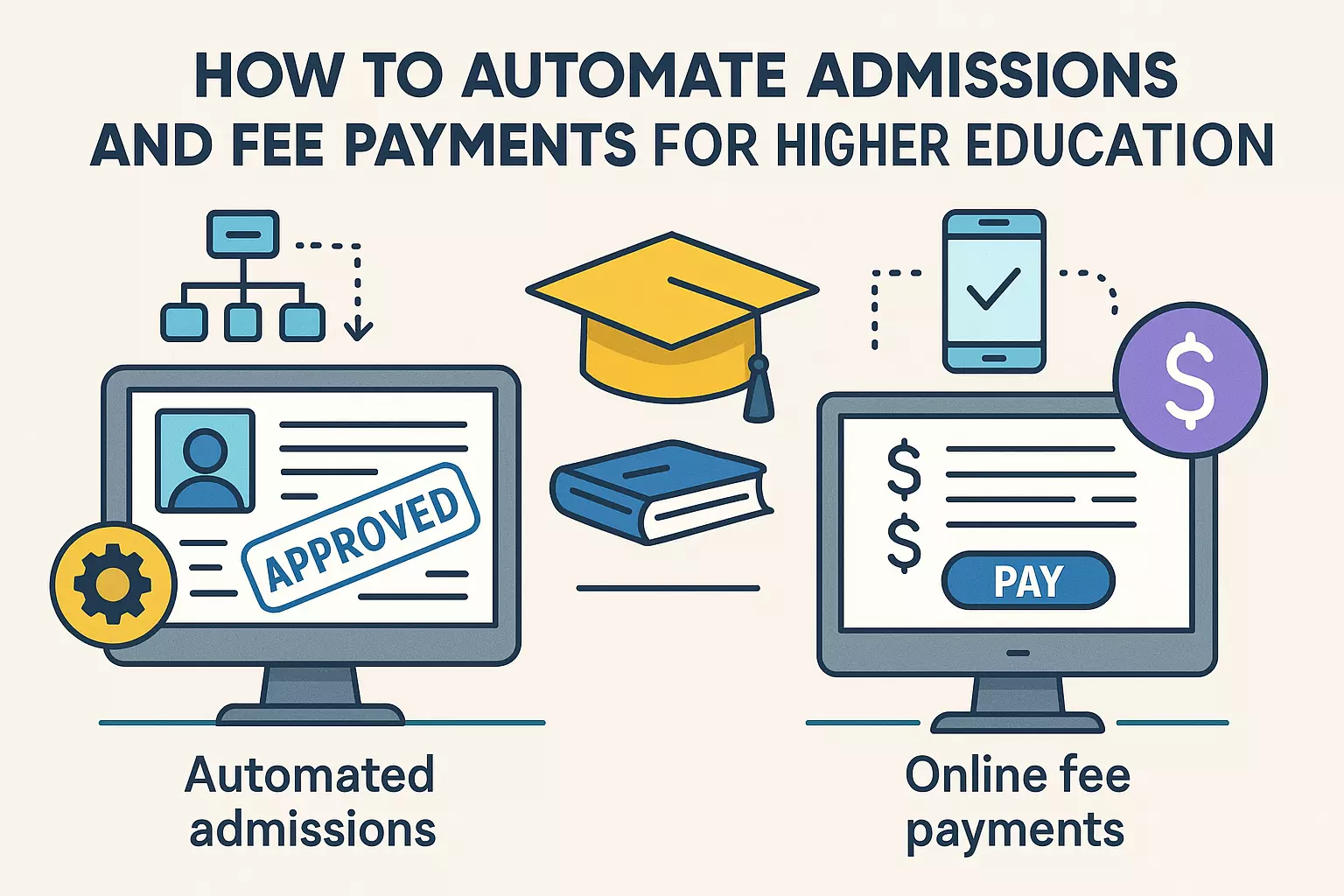
How to Automate Admissions and Fee Payments for Higher Education
In the competitive market of higher education, colleges and universities are always on the lookout for improving operational efficiencies and enhancing the student experience. Perhaps the best way to achieve this is by automating their admissions and fee collection process. Through the integration of technology, colleges and universities can streamline their processes, reduce administrator workload, and provide a smooth experience to prospective students.
This blog shall discuss new concepts for automating fee payments and admissions in higher education, and shall also be pragmatic in suggesting insights and ideas on how the processes can actually be automated.
Understanding the Need for Automation
The admissions process can be intricate with many steps from application to enrollment. Manual operations tend to result in delays, mistakes, and frustration for both staff and applicants. Automation eliminates these issues by:
- Improving Efficiency: Automating recurring tasks enables staff to devote their time to more strategic endeavors, including student retention and engagement programs.
- Enhancing Accuracy: Automation reduces the likelihood of making errors in applicant data processing and inputting, ensuring that applicant data is accurate and up-to-date.
- Improving Transparency: Computerized systems provide real-time updates on application status and fee payments, informing the students along the way.
Implementing an Automated Admissions System
There should be an automatic admissions system to make the application process easier. Here is how such a system can be implemented effectively by institutions:
A. Capture Inquiries from Various Sources
- Harness a unified platform that collects applications from various sources such as social media, website forms, and email campaigns in a bid to leave no potential applicant behind.
- Lead Management Tools: Utilize tools to track questions and segment them based on level of interest so that individual follow-up can be conducted.
B. Streamlined Application Process
- Automate the process of applying by having an online portal through which students can apply, upload their documents, and follow the status.
- Intuitive Interface: Modify the application portal to be mobile-friendly and user-against for all users.
- Save Your Progress feature: Allow students to save their progress during their application process and return to complete and submit later.
C. Automated Communication
- Utilize automated communication tools to keep applicants informed of their application process and deadlines.
- Email Alerts: Automatically send emails acknowledging their application, reminders of impending deadlines, and application status updates.
- Chatbots: Utilize AI chatbots on your website to provide immediate answers to frequently asked questions and guide applicants through the process.
Utilizing Predictive Analytics
Predictive analytics has a significant impact on improving decision-making in the admissions process. By analyzing historical data, organizations can identify patterns and use collected data to make decisions about recruitment strategies.
A. Finding At-Risk Applicants
- Apply predictive analytics to determine which applicants are likely not to finish their applications or enroll.
- Behavioral Tracking: Track candidate interactions with your site and communications to determine engagement levels.
- Targeted Interventions: Adopt measures to engage with risk-facing applicants through tailored assistance or incentives.
B. Maximizing Recruitment Strategies
- Review historical enrollment patterns in data to further hone recruitment strategies for upcoming admissions cycles.
- Demographic Intelligence: Know who the most likely enrolling demographics are and adapt marketing efforts accordingly.
- Resource Allocation: Leverage data insights to effectively distribute resources during busy admission periods.
Automating Fee Payment Processes
Another highly important area where automation will help majorly in terms of efficiency is the process of fee payment. This is how institutions can make this part more streamlined:
A. Web Portals for Payment
- Use secure web payment interfaces through which students can pay fees easily via different methods (credit/debit cards, bank transfers).
- User-Friendly Interface: Create an easy-to-use payment gateway that can be accessed on mobile devices.
- Multiple Payment Channels: Provide choices for payments to accommodate personal preferences.
B. Automated Billing Notifications
- Provide automated billing notifications informing students of upcoming fees or future balances that may be due.
- Email Notifications: Send a timely notification of the due date, in addition to providing instructions when a payment may not be made.
- Payment Confirmation Receipts: Automatically issue a receipt upon successful payment to prompt immediate confirmation for the student.
Ensuring Data Security
As there is more automation, there is also the responsibility of protecting sensitive student data. Educational institutions must have strong security measures in place to safeguard information throughout the admissions process, and payment of fees.
A. Secure Payment Processing
- Use secure payment gateways that comply with industry standards (e.g. PCI DSS) for the secure processing of credit card payments.
- Encryption Protocols: Ensure all sensitive information is encrypted in transit and at rest.
B. Data Privacy Policies
- Create clear data privacy policies that state how student data will be collected, stored, and used.
- Transparency: Share these policies explicitly with students in the application process.
- Regulatory Compliance: Adhere to relevant regulations such as FERPA (Family Educational Rights and Privacy Act).
Continuous Improvement Through Feedback
To continually optimize user experiences with automated fee payment and enrollment processes, institutions must seek feedback from users, administrative personnel, and students on using these types of technologies.
A. Surveys and Feedback Questionnaires
- Conduct periodic surveys or feedback sessions with students and applicants regarding their experience with using the admissions process.
- Identify Pain Points: Identify areas for improvement or additional support based on applicant or student feedback.
- Iterate over Processes: Make proper adjustments based on customer feedback to increase overall satisfaction levels.
Leveraging AI for Improved Decision-Making
AI has the potential to enhance decision-making in both the admissions process and in fee management systems by providing valuable information based on data analysis.
A. AI-Based Application Review
- Use AI algorithms that review applications against given criteria, enabling admissions teams to properly prioritize candidates.
- Holistic Evaluation: AI can vet multiple facets of an applicant's profile academic performance, extracurricular activities, personal statement to make a full evaluation.
- Minimizing Biases: Through the standardization of assessments using AI algorithms, institutions can reduce biases in decision-making but maintain fairness in candidate evaluations.
B. Financial Aid Optimization
AI can also be used to forecast financial aid requirements based on the financial histories of applicants to make scholarship and grant distribution fair.
Conclusion
Higher education admissions and fee payment automation is not only a trend; it's a must for institutions that want to become more efficient while delivering an outstanding experience to prospective students. By utilizing automated inquiry management systems, streamlining application processes, secure payment systems, data protection, predictive analytics, AI assessments, and continuous feedback for change, higher education institutions can lead the way in educational management innovation.
The deployment of these technologies simplifies administrative services and provides a more engaging environment that helps students succeed from the start.