How Is Sperm Retrieved for IVF When a Man Has Zero Sperm in Semen?
Learning that your semen sample contains zero sperm can feel like a dead end right before starting IVF. It isn't. Sperm can often still be retrieved directly from the body and used successfully for fertilisation.
At a best fertility centre in Trichy, this exact scenario is managed regularly, with a clear process guiding couples through what comes next.
When Zero Sperm in Semen Doesn't Mean Zero Sperm in the Body
A semen analysis showing no sperm confirms azoospermia, but it doesn't rule out sperm existing elsewhere, within the testicle or epididymis, simply unable to reach the ejaculate through natural means.
This is precisely why surgical retrieval becomes the next step rather than the end of the fertility journey.
How Retrieval Fits Into Your IVF Timeline
Sperm retrieval is typically scheduled to align closely with the female partner's egg retrieval, either performed on the same day or, more commonly today, done in advance with the retrieved sperm frozen for use whenever needed.
This flexibility reduces pressure and avoids the need for perfect timing between two separate procedures happening simultaneously.
What Actually Happens on Retrieval Day
The specific procedure used, TESA, PESA, or micro-TESE, depends on the underlying diagnosis, but the general experience follows a similar pattern.
The man arrives at the clinic, receives local or general anaesthesia depending on the procedure's complexity, and the retrieval itself typically takes 30 minutes to a few hours for more involved cases like micro-TESE.
Most men go home the same day, with mild discomfort managed through simple pain relief over the following day or two.
Read: IVF Treatment in India: A Journey of Hope and Possibilit
The Embryology Team's Role During Retrieval
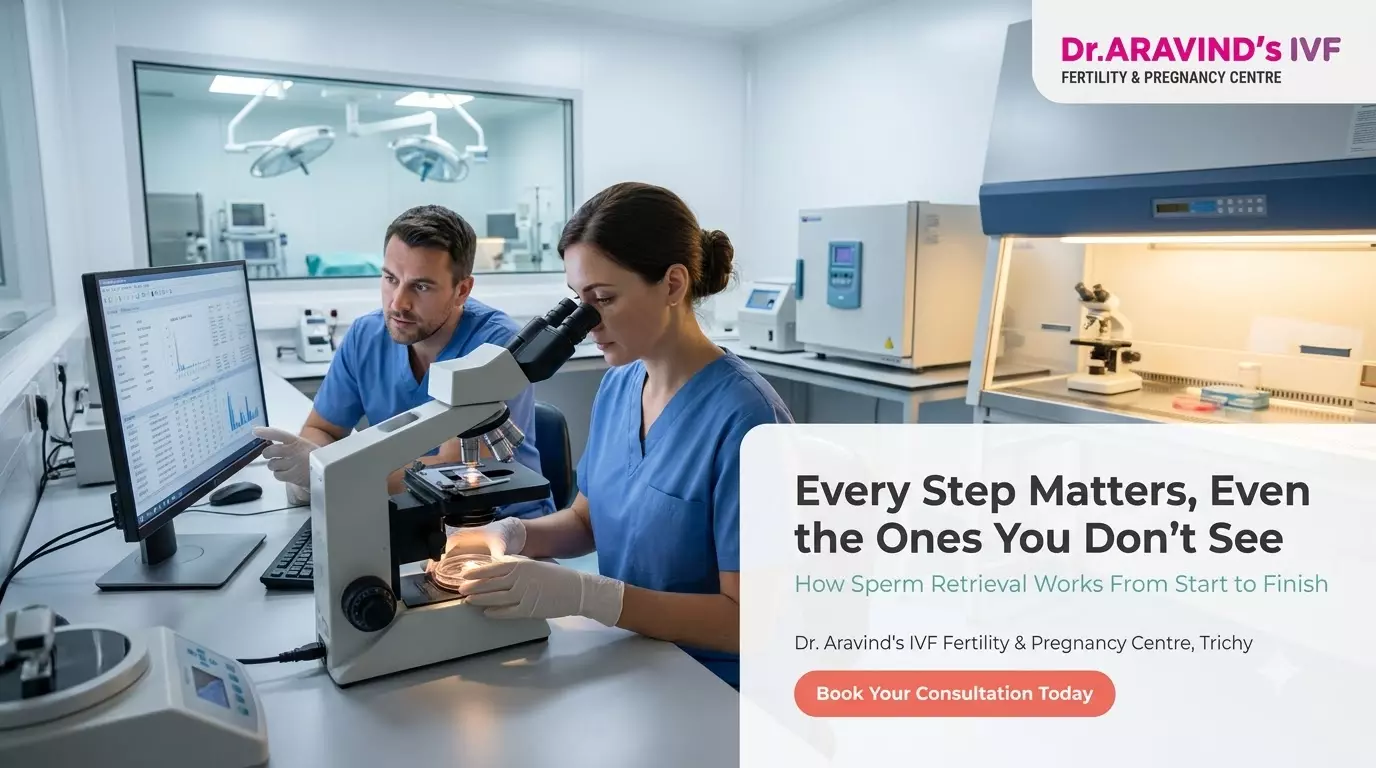
While the surgical team performs the retrieval, an embryologist works in real time, examining extracted tissue under a microscope to check for viable sperm immediately.
This collaborative process means the surgical team often knows within the procedure itself whether sperm has been found, allowing adjustments to the extraction approach if needed before the procedure concludes.
What Happens With the Retrieved Sperm
Once viable sperm are identified, they're prepared for immediate use with ICSI, where a single sperm is injected directly into an egg, since retrieval yields far fewer sperm than natural ejaculation.
If more sperm than immediately needed are retrieved, the surplus is typically frozen, providing a valuable backup for future treatment cycles without requiring another surgical procedure.
When No Sperm Is Found
In some non-obstructive cases, even micro-TESE doesn't locate viable sperm, an outcome that's understandably difficult to hear. In these situations, couples typically discuss alternative paths forward with their fertility team, including options like donor sperm, depending on their preferences and circumstances.
This possibility is always discussed honestly beforehand, so couples enter the procedure with realistic expectations rather than false certainty.
Recovery and Next Steps
Recovery from TESA or PESA is usually quick, with most men resuming normal activity within a day or two. Micro-TESE, being more surgically involved, may require a few additional days of rest. Either way, the retrieved sperm, once secured, becomes part of the broader IVF process moving forward, with the female partner's egg retrieval and subsequent fertilisation proceeding according to the couple's overall treatment plan.
A zero sperm result on a semen analysis is a starting point for a different approach, not a closed door.
Dr. Aravind's IVF Fertility & Pregnancy Centre, a best fertility centre in Trichy, coordinates sperm retrieval procedures seamlessly within each couple's overall IVF timeline, guided by experienced specialists and embryologists working together.
Couples in Trichy receive clear, honest guidance through every step of this process, from diagnosis to retrieval to fertilisation.