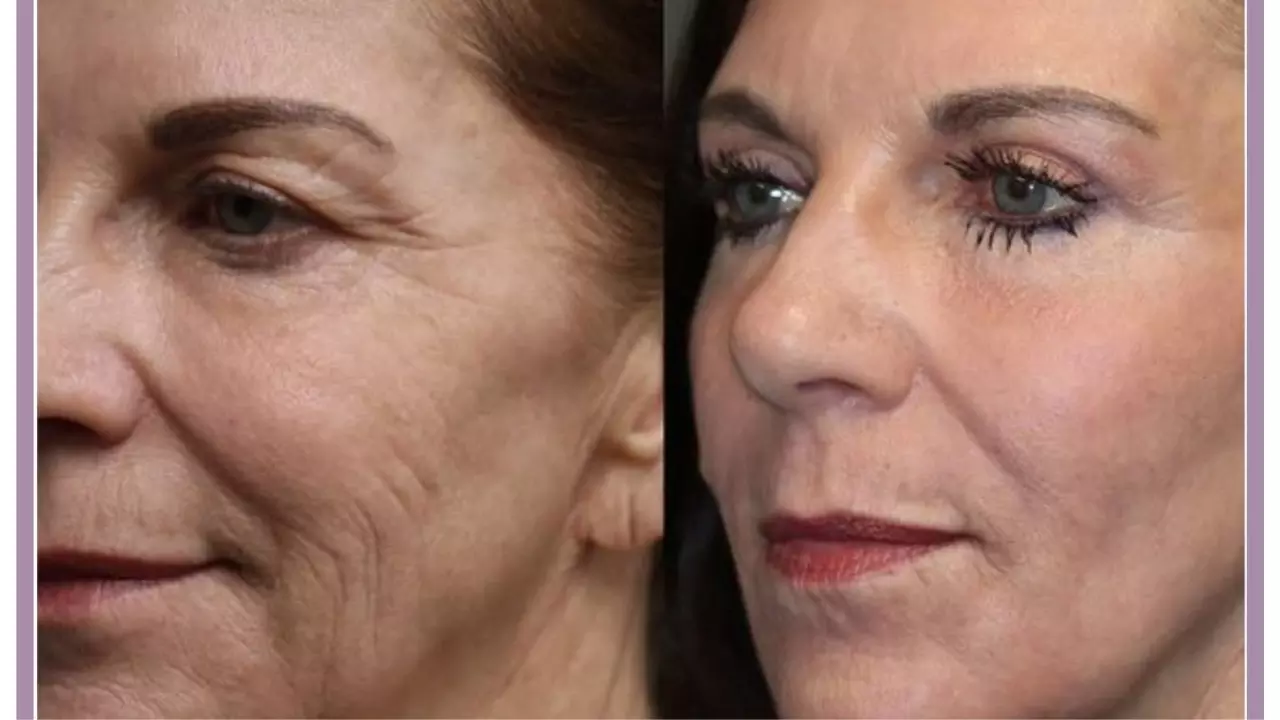
How Sculptra Treatment Stimulates Collagen in Women Over 50 with Age-Related Volume Loss
A clinical case published in dermatology literature described a 55-year-old woman who came in with a concern that felt hard to explain. She said her face did not look like her anymore.
Not older in a typical way, but flatter, more tired, and less defined. Her cheeks had lost volume, her skin felt thinner, and even simple expressions looked different in the mirror.
The doctor did not start with wrinkles or surface treatments. He explained something deeper. After menopause, the skin does not just age. It loses collagen rapidly, and with it, the structure that holds the face in place.
This is exactly where a sculptra behandeling becomes relevant. It does not just treat what you see. It works on what has changed underneath.
Why Collagen Loss Accelerates After 50
After menopause, estrogen levels drop sharply. This hormone plays a key role in maintaining collagen production. Once it declines, the skin begins to change faster.
According to the American Academy of Dermatology, women lose up to 30 percent of their collagen within the first five years after menopause. After that, collagen continues to decrease by around 2 percent each year.
This is why many women over 50 notice:
- Cheeks becoming hollow
- Skin losing firmness
- Facial contours becoming less defined
It is not just aging. It is structural depletion.
What Actually Happens Inside Aging Skin
To understand why Sculptra works, you need to understand what is happening under the skin.
Collagen is produced by cells called fibroblasts. These cells slow down with age, especially after menopause. When fibroblast activity drops, the skin produces less collagen type I and III, which are responsible for strength and elasticity.
As collagen declines:
- Skin becomes thinner
- Support layers weaken
- Fat pads shift and shrink
This leads to volume loss and sagging.
So the real problem is not empty space. It is reduced collagen production at the cellular level.
How Sculptra Stimulates Collagen at a Biological Level
A sculptra behandeling uses poly-L-lactic acid (PLLA), which acts as a biostimulator.
When injected into the deeper layers of the skin, PLLA creates a controlled micro-response in the tissue. This is not damage. It is a signal.
The body reacts by activating fibroblasts. These cells begin producing new collagen over time. Studies referenced by the National Institutes of Health confirm that this process leads to gradual collagen formation and improved skin structure.
Here is what happens in simple terms:
The injection signals the skin to repair itself. Fibroblasts become active again. New collagen forms around the treated area. Over weeks and months, the skin becomes thicker, firmer, and more supported.
This is why the result does not appear instantly. It develops naturally.
Why This Approach Works Better for Women Over 50
For younger skin, adding volume may be enough. But for women over 50, the issue is deeper.
The American Society of Plastic Surgeons explains that mature skin benefits more from treatments that rebuild internal support rather than simply filling space.
Sculptra works because it:
- Reactivates collagen production
- Strengthens the skin from within
- Restores volume gradually
This makes it especially effective for:
- Hollow cheeks
- Thinning skin
- Early sagging
Instead of masking aging, it addresses the cause.
What Clinical Data Reveals About Real Results
Real data gives a clearer picture than marketing claims. According to the U.S. Food and Drug Administration:
More than 85 percent of patients reported natural-looking results, and about 80 percent said the gradual improvement was worth the wait. Nearly 90 percent would recommend the treatment.
Another key point is longevity. Many patients maintained results for up to 24 months, which is longer than most traditional fillers.
For women aged 55 and above, results were still strong, although the timeline for visible improvement was sometimes slower. This is expected because collagen production naturally declines with age.
Real Patient Experiences That Reflect the Science
During hours of research across patient platforms and clinical discussions, a consistent pattern appears.
A 61-year-old patient shared that her results became visible after several months. She said the biggest change was not in how she looked, but in how others reacted. People did not ask what she had done. They simply said she looked well-rested.
Another woman in her early 50s described how her cheeks and temples slowly regained structure over time. Even after a year, the results were still noticeable.
There are also realistic experiences where patients reported temporary swelling or tenderness in the first few days. These effects are part of the process and usually settle quickly.
These stories reinforce one important idea. Sculptra is a gradual transformation, not an instant fix.
What the Treatment Journey Looks Like in Practice
A sculptra behandeling is usually performed over multiple sessions rather than a single visit.
Most patients need:
- Two to three sessions
- A gap of a few weeks between treatments
After each session, collagen production continues. The slight fullness seen immediately after treatment fades, and the real results appear slowly over time.
Doctors typically wait at least four weeks before evaluating progress. This is because collagen formation takes time and early changes can be misleading.
Safety, History, and Medical Trust
Sculptra has a strong medical background. It was introduced in Europe in 1999 and is now used globally.
PLLA, the main component, has been used in medical applications such as dissolvable sutures for decades. According to the European Medicines Agency, it is biocompatible and safely broken down by the body.
Common side effects include mild swelling, redness, or bruising. These are temporary and usually resolve within a few days.
The safety and outcome depend heavily on the expertise of the practitioner.
Why Technique and Clinical Approach Matter
Sculptra is not just about the product. It is about how it is used.
Proper injection depth and placement ensure that collagen forms evenly and supports natural facial contours. Poor technique can lead to uneven results.
In clinical settings such as Titula Kliniek, the focus is often on gradual improvement and personalized planning rather than quick correction. This aligns with how Sculptra is designed to work.
If you want to understand how this treatment is approached in practice, you can explore this detailed explanation of a sculptra behandeling.
This kind of careful approach helps maintain natural balance and avoids overcorrection.
Why the Results Look Natural and Not Artificial
One of the biggest advantages of Sculptra is how natural the results appear.
Since the treatment stimulates your own collagen, the changes blend with your existing facial structure. There is no sudden volume increase. Instead, the face gradually regains its shape.
This leads to:
- Softer facial contours
- Improved skin texture
- A more rested appearance
Most people will not notice a procedure. They will notice that you look better.
Read: Navigating the Future of Health: A Look at AI and Medical
Why Sculptra Is a Long-Term Solution for Women Over 50
Aging after 50 is not just about surface changes. It is about the gradual loss of structure and support within the skin.
A sculptra behandeling addresses this at its source by stimulating collagen production. Clinical data, biological research, and real patient experiences all point in the same direction.
Gradual collagen rebuilding leads to natural volume restoration and longer-lasting results.
For women over 50, this approach makes sense because it works with the body’s natural processes. It does not try to force change. It supports recovery.
The result is not a different face. It is a face that feels stronger, more balanced, and closer to how it once looked, built over time in a way that feels real.
Frequently Asked Questions
1- What is a sculptra behandeling and how is it different from fillers?
A sculptra behandeling is a collagen-stimulating treatment that uses poly-L-lactic acid to help the skin rebuild its own support structure over time. Unlike fillers, it does not create instant volume. Instead, it works gradually, which often gives a more natural look.
2- How long does it take to see results from Sculptra?
Sculptra does not give instant results. Most people start noticing changes after 4 to 6 weeks, while fuller results usually appear after 2 to 3 months as collagen production increases.
3- How long do Sculptra results last?
Results can last up to 2 years in many cases. The exact duration depends on age, skin condition, treatment plan, and how the body responds to collagen stimulation.
4- How many Sculptra sessions are usually needed?
Most people need 2 to 3 sessions spaced a few weeks apart. This gradual plan helps the skin build collagen naturally and improves facial volume step by step.
5- Is Sculptra a good option for women over 50?
Yes, Sculptra is often a strong option for women over 50 because it targets age-related collagen loss and facial volume loss. It is especially useful for women who want subtle, natural-looking improvement instead of an overfilled result.