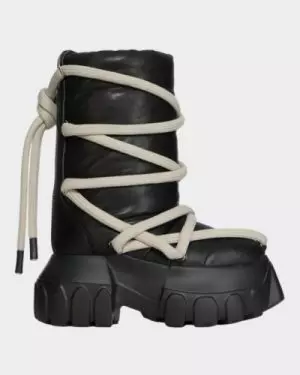
How Rick Owens shoes fit different foot shapes
Rick Owens footwear has received success through its unique designs and style of construction. The fashion designer released shoes, which question the sizing concepts of the traditional fashion industries in the international market.
Knowledge on the fit of these shoes to various foot shapes is useful in assisting the purchasers make good decisions. His designs have architectural influence which impacts on the manner in which shoes cover feet.
This paper describes how to fit behavior, history and influence on different foot structures.
The history and development of Rick Owens footwear.
Experimental ideas Rick Owens started his career in fashion in the late 90s. Shoes incorporated themselves in his collections
as shapes became more pronounced.
The initial designs had exaggerated soles and extended toe box design that had an impact on the perception of fit. With time, production methods became better and thus there was consistency in sizing releases.
This development determined the interaction between the feet and his distinctive shoe forms.
Basic design construction and its impact on foot shapes.
Rick Owens shoes are quite characteristic in size and shape of their toe box and the structural soles that are underneath them are firm. This shoe gives more space to the longer toes though can be awkward sideways.
Narrow-footed people are likely to have a safer grip as a result of slim interiors. Wider feet may however observe pressure around the midfoot depending on the model. The high-top styles cover the ankle, affecting the balance and movement in general.
Fit experience in skinny feet shapes.
Owens Rick shoes are compatible with the shape of people with narrow feet. The internal construction does not allow too much movement to occur and thus contributes to a consistent and stable feel.
Lace closures and zip closures also provide the means of slimming foot shape adjustment. Narrow-footed users also complain of reduced slipping with the use of the as opposed to the normal globally-available footwear.
This suggests that a lot of Rick Owens models can be used by buyers interested in a tight fit.
Fit factor for wide and flat feet.
The narrow midfoot and formed sides can cause problems to the wide feet. Other models are somewhat wider but designs are rather slim inside. Depending on the sole construction to be used flat feet may experience limited arch support.
In some cases, a size that is a bit larger may be selected to make things tighter rather than the whole construction. The experimenting with wearing various silhouettes allows identifying which design fits more to wider foot shapes.
Product variations and the way this affects the sizing.
The types of shoes produced at Rick Owens include sneakers, boots and slipping footwear. Every category has minor variations in width, shape of toes, distribution of spaces internally.
Sneakers are more flexible and boots might be firmer in the arches and ankles. Seasonal releases, in some cases, have little changes, which affect how the shoes fit a particular type of foot.
The knowledge of such variations contributes to the ability of buyers to choose such models that fit their unique foot structure.
Partnerships and the effect they have on changing the fit.
Alliances have helped in the perfecting of Rick Owens shoe making methods. There were also some partnered release that brought about a slight modifications of the materials and internal shaping methods.
This progress occasionally enhanced flexibility or caused changes in the distribution of pressure that occurs in the foot. Consequently, some collaborative models can be somehow different than the normal releases.
These differences are those that should be considered by buyers when comparing the sizing in different collections.
Read: Custom Shoe Tags That Define Footwear Branding
Fit diversity is aware of the market and consumers.
Rick Owens shoes have affected the consumer thought process concerning sizing and shoe construction. Most consumers have started to choose designer footwear based on the size in addition to the foot shape.
The strategy adopted by the brand has promoted the debate of fit diversity within contemporary fashion venues.
Such awareness can enable the users to make better buying choices with regard to the personal foot characteristics. With the rise in demand, the differences in fit have to be known to be satisfied on the long run.
FAQs
Are Rick Owens shoes true to size?
They tend to be almost the size they should be, nonetheless, the shape is significant in the overall fit.
Do Rick owens shoes fit wide feet?
There are some models that can be narrow, and it is better to size it up or test another model.
Are these shoes arch supporting flat feet?
Designs may be light-weight on supporting, and a few models are found to be lowly on flat arches.
What is the most suitable style of narrow feet?
Narrow fit is normally more secure in high-top and structured sneakers.
Do collaborative releases differ with regard to fit?
Yes, not all of them fit materials and internal construction exactly the same way.