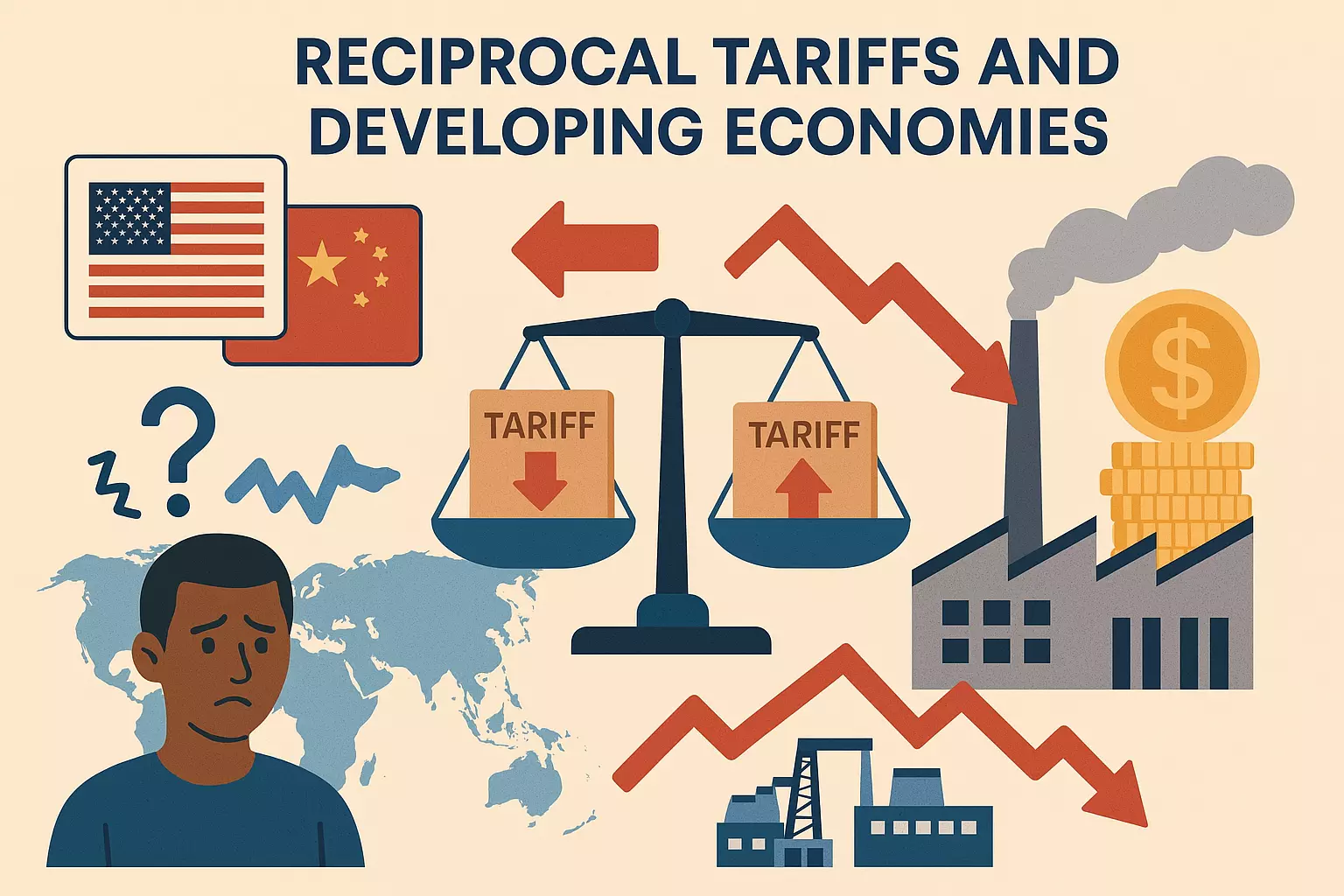
How Reciprocal Tariffs Impact Developing Economies: A Double-Edged Deal
Trade has long been a cornerstone of global economic integration, with policies and agreements shaping how goods and services cross borders. Among the most debated tools in this realm is the reciprocal tariff system. Though originally intended to promote fairness and mutual benefit, the real-world effects of such policies—especially on developing economies—are far more complex.
In this blog, we’ll explore what reciprocal tariffs are, how they’ve been used historically, their intended versus actual impacts, and most importantly, the challenges they pose for developing nations in today’s rapidly evolving global economy.
🔍 What Are Reciprocal Tariffs?
At its core, a reciprocal tariff system means that Country A imposes tariffs on imports from Country B that are equal to the tariffs Country B imposes on Country A's exports. Think of it as a tit-for-tat strategy in international trade.
For example:
- If Country B places a 10% tariff on steel imported from Country A, then Country A responds by placing a 10% tariff on steel from Country B. 📦
The logic? Fairness. The belief is that reciprocity ensures a level playing field and encourages countries to lower tariffs collectively.
But does it really work that way?
🕰️ A Brief History of Reciprocal Tariff Policies
Tariffs have been a part of trade since ancient times, but reciprocal tariffs rose to prominence in the 20th century. Notably:
- 🧾 Smoot-Hawley Tariff Act (1930) in the U.S. raised tariffs on thousands of imports, triggering retaliatory tariffs globally.
- 🤝 Reciprocal Trade Agreements Act (1934) marked a shift toward negotiated tariff reductions through reciprocal agreements.
Fast-forward to the 21st century, reciprocal tariffs made headlines again during the U.S.-China trade tensions, where tariff-for-tariff escalations disrupted global supply chains.
🧭 The Ideal Behind Reciprocity: Fair Trade or Protectionism?
In theory, reciprocal tariffs can level the playing field:
✅ Encourage countries to negotiate fairer terms
✅ Discourage exploitation of low-tariff markets
✅ Incentivize tariff reduction to avoid mutual harm
But in practice, they often result in:
❌ Escalating trade wars
❌ Market distortions
❌ Increased uncertainty for investors and businesses
And for developing economies, the consequences can be even more severe.
🌍 The Ripple Effects on Developing Economies
Let’s dive into how reciprocal tariffs affect the most vulnerable players in the global economy.
1. 💔 Unequal Bargaining Power
Developing countries often lack the leverage to negotiate equitable trade terms.
- A reciprocal tariff from a small African economy may barely dent exports of a major power like the U.S. or China.
- But when the larger country imposes a tariff, it can cripple the developing nation's export-dependent industries.
📉 Example: When the U.S. increased tariffs on textiles, countries like Bangladesh, which rely heavily on apparel exports, felt disproportionate pain.
2. 🏭 Industrial Growth Gets Stunted
Tariffs can disrupt the delicate process of industrialization in developing nations.
- Countries trying to move up the value chain—from raw materials to manufacturing—are discouraged when access to larger markets becomes uncertain.
- The cost of imported capital goods (machinery, tech) rises when retaliatory tariffs are involved, slowing productivity gains.
🧯Result: The dream of becoming a manufacturing hub burns out before it catches fire.
3. 🌪️ Increased Volatility and Vulnerability
When two large economies slap tariffs on each other, developing economies caught in between often suffer collateral damage.
- 🌾 A Latin American country exporting soybeans to China might see demand dry up if China starts sourcing from alternative partners in response to U.S. tariffs.
- 📦 Supply chains may reroute, excluding smaller nations altogether.
Uncertainty leads to lower FDI, a rise in unemployment, and a decline in export revenues.
4. 🎯 Narrow Policy Options
Reciprocal tariffs often limit the policy space of developing countries:
- Governments face pressure to retaliate even when it's not in their best interest.
- International trade organizations and agreements may penalize non-compliance or force conformity to standards they had little say in shaping.
This rigidity hampers innovation, experimentation, and domestic economic reform.
5. 💡 Talent Drain and Brain Waste
Tariff wars and economic instability reduce job opportunities in export-driven industries.
- Skilled workers often migrate in search of stability, causing a brain drain.
- Educated youth may end up underemployed, working jobs unrelated to their expertise.
🧠 It's not just capital that flees—human capital does too.
🌈 Is There a Way Forward?
Despite the challenges, developing economies are not powerless. Some strategies they can employ include:
1. Regional Trade Agreements (RTAs) 🌍
- Strengthen regional blocs like the African Continental Free Trade Area (AfCFTA).
- Boost intra-regional trade to reduce dependence on developed economies.
2. Tariff Diversification 🔁
- Use flexible tariffs that vary by sector and partner, rather than blanket reciprocity.
- Strategic protectionism to nurture key industries while staying globally competitive.
3. Trade Facilitation and Infrastructure 🏗️
- Invest in ports, roads, and customs systems to improve competitiveness.
- Focus on reducing non-tariff barriers like bureaucracy and corruption.
4. Leverage the WTO and Other Platforms 🏛️
- Push for asymmetric trade policies that recognize different development stages.
- Advocate for special and differential treatment (SDT) under international trade laws.
🤝 A Call for Smarter Reciprocity
Reciprocity doesn’t have to be rigid or punitive. A smarter model of trade can:
🔄 Recognize asymmetry in development
📉 Use tariffs judiciously, not as blunt weapons
🌱 Provide room for growth and experimentation
🌏 Encourage inclusive globalization
After all, the goal of trade shouldn’t just be tit-for-tat—it should be mutual prosperity.
📚 Final Thoughts: Beyond the Tariff Trap
While reciprocal tariffs might look like fair play on the surface, their impacts run much deeper—especially for nations still climbing the economic ladder. For developing economies, the cost of compliance is often higher than the gains from retaliation.
🤔 Instead of mirroring what others do, maybe it’s time these countries rewrite the script, leveraging innovation, cooperation, and strategic diplomacy to build a resilient, equitable, and prosperous future.