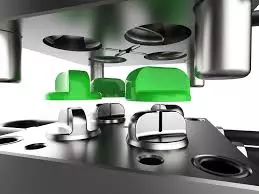
How Prototype Plastic Injection Molding Enhances Design Validation
Design validation is a critical phase in product development, ensuring that a concept performs as intended before full-scale manufacturing begins. One of the most effective ways to validate product designs today is through prototype plastic injection molding, a process that allows manufacturers to create functional, production-quality prototypes efficiently.
By closely replicating final parts, this method reduces uncertainty, saves costs, and improves overall product quality.
As industries demand faster time-to-market and higher precision, prototype plastic injection molding has become a preferred solution for engineers and designers. It bridges the gap between digital designs and mass production, enabling real-world testing, feedback, and refinement. Below, we explore how this process significantly enhances design validation across multiple dimensions.
Read: Pattern Makers: The Pillars of Precision in Design and
Accelerating the Design Validation Process
Prototype plastic injection molding significantly shortens the design validation timeline by enabling rapid production of physical parts. Unlike traditional prototyping methods that may require extensive manual labor or tooling adjustments, this process uses molds similar to those used in mass production.
As a result, manufacturers can quickly produce accurate prototypes that reflect the final product’s geometry and performance.
This speed allows design teams to test, analyze, and iterate designs in shorter cycles. Early identification of design flaws—such as weak structural areas or improper tolerances—helps prevent costly redesigns later. By accelerating validation, prototype plastic injection molding supports agile development and helps businesses stay competitive in fast-moving markets.
Ensuring Accurate Material and Performance Testing
One of the key advantages of prototype plastic injection molding is the ability to test parts using the same materials intended for full-scale production.
This ensures that mechanical properties such as strength, flexibility, heat resistance, and chemical durability are accurately evaluated during design validation. Other prototyping methods may use substitute materials, leading to misleading results.
Using real production-grade plastics allows engineers to observe how the part behaves under real-world conditions. This includes stress testing, load-bearing analysis, and environmental exposure. As a result, prototype plastic injection molding provides reliable data that supports confident decision-making before committing to mass manufacturing.
Improving Dimensional Accuracy and Tolerance Validation
Dimensional accuracy is crucial for parts that must fit or function within complex assemblies. Prototype plastic injection molding delivers high-precision components that closely match final production specifications. This allows designers to validate dimensions, wall thicknesses, and tolerances with exceptional accuracy.
By working with near-production molds, manufacturers can identify issues such as warping, shrinkage, or improper fit early in the process. These insights help refine CAD models and tooling designs before scaling up. Ultimately, prototype plastic injection molding minimizes assembly issues and ensures smoother transitions into full production.
Reducing Manufacturing Risks and Costs
Design validation errors discovered late in the manufacturing process can be extremely costly. Prototype plastic injection molding reduces these risks by allowing potential issues to be identified and resolved early. This proactive approach helps avoid expensive tooling modifications and production delays.
Additionally, validating designs before mass production leads to better forecasting and planning. Businesses can confidently invest in final tooling, knowing that the design has been thoroughly tested and optimized. By reducing waste, rework, and unexpected failures, prototype plastic injection molding delivers long-term cost savings and improved project efficiency.
Enhancing Stakeholder Feedback and Market Readiness
Physical prototypes created through prototype plastic injection molding provide a tangible product that stakeholders can evaluate. Engineers, marketing teams, investors, and end users can all assess the prototype for aesthetics, ergonomics, and functionality. This hands-on feedback is far more valuable than digital simulations alone.
Early user and stakeholder input allows design teams to make informed improvements before launching the product. Whether adjusting surface finishes or refining usability features, prototype plastic injection molding ensures that the final product aligns with market expectations. This leads to higher customer satisfaction and a stronger product launch.
Conclusion
Prototype plastic injection molding plays a vital role in enhancing design validation by delivering speed, accuracy, and reliability. From material testing and dimensional precision to cost reduction and stakeholder engagement, it offers a comprehensive solution for validating product designs before mass production.
By integrating this process into product development workflows, manufacturers can reduce risks, improve quality, and accelerate time-to-market.
As competition increases across industries, companies that leverage prototype plastic injection molding gain a strategic advantage.
It not only strengthens design confidence but also lays the foundation for successful, scalable manufacturing. Investing in this approach ultimately leads to better products and more efficient development cycles.