How Proper TV Placement Improves Viewing Comfort at Home
Designing a home theater or a simple living room media center in 2026 requires more than just buying the largest screen available. The physical location of the screen within a room dictates the long term health of your neck, the quality of the image, and the overall enjoyment of your media.
Many homeowners in middle Georgia fail to account for the geometry of their seating and the ingress of natural light, leading to eye strain and physical discomfort. Selecting expert Tv Mounting Services in Warner Robins GA allows you to leverage spatial planning that transforms a standard room into a professional level viewing environment.
Managing Eye Level and Neck Strain
The most critical factor in viewing comfort is the relationship between your eyes and the center of the screen. Ideally, when you are seated in your primary viewing chair, your eyes should be level with the bottom third of the display. This ensures that your neck remains in a neutral, relaxed position.
If a screen is mounted too high, such as above a fireplace without a tilting mechanism, you are forced to tilt your head back constantly. This leads to a condition often called 'tech neck,' which results in chronic stiffness and headaches.
In Warner Robins homes, where open floor plans are common, the distance between the sofa and the wall must be measured accurately. A screen that is too close requires your eyes to move constantly to track action, while one that is too far leads to squinting.
By calculating the perfect 'focal point,' a technician ensures that the screen fills your field of vision without causing ocular fatigue. This balance is the primary goal of any ergonomic residential media installation.
Dealing with Natural Light and Screen Glare
Georgia is known for its bright, sunny days, and while large windows are beautiful, they are the enemy of screen clarity. Proper placement involves analyzing the path of the sun throughout the day. If a TV is placed directly opposite a window, the resulting glare can wash out the colors and make dark scenes in movies impossible to see.
This often leads viewers to turn up the brightness to maximum levels, which accelerates eye strain and shortens the lifespan of the display panel.
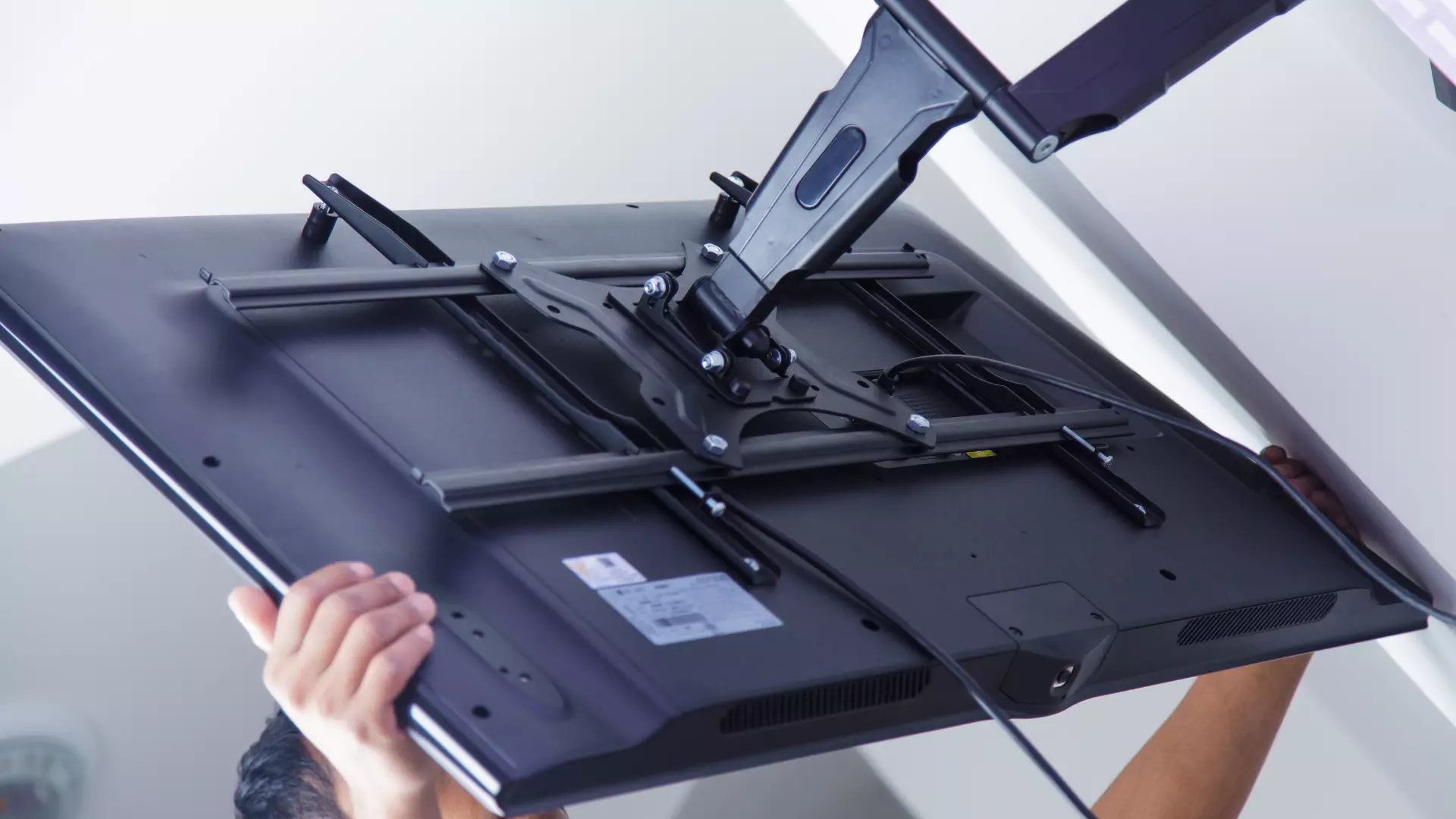
Strategic placement might involve using a 'full motion' arm that allows the screen to be angled away from windows during the afternoon. Alternatively, placing the screen on a wall that is perpendicular to the window can minimize direct reflections.
Understanding the 'reflectivity' of your specific screen type, whether it is an OLED or a high brightness QLED, is a vital step in choosing the right wall for the job.
Creating the Ideal Viewing Angle for Multiple Seats
In a family room, there is rarely just one person watching. The challenge of placement is ensuring that every seat in the room has a 'quality' view. When a screen is viewed from an extreme side angle, the colors often shift and the contrast drops. This is especially true for older LED panels. A well planned layout accounts for the 'viewing cone' of the display.
If your room has a wide seating arrangement, the placement should be centered on the largest seating group. For rooms with sectional sofas, a 'corner mount' or a swivel bracket can be used to ensure the screen can be reoriented depending on who is in the room.
This flexibility is a hallmark of modern home design, allowing a space to transition from a casual social area to a focused movie theater at the touch of a button.
Integrating Sound and Acoustics with Visual Placement
A common mistake in TV placement is ignoring the audio. The height and position of the screen should ideally allow for the placement of a soundbar or speakers at ear level.
If a TV is tucked into a tight alcove, the sound can become 'boxy' and muffled as audio waves bounce off the surrounding cabinetry. Proper placement ensures there is enough 'breathing room' for sound to travel naturally through the space.
Furthermore, the materials of the wall behind the screen affect the acoustics. A hard drywall surface reflects sound differently than a textured stone fireplace.
Technicians often suggest minor adjustments in placement to avoid 'acoustic dead zones' where dialogue becomes hard to hear. By syncing the visual placement with the audio output, you create a cohesive sensory experience that feels natural and immersive.
Read: How do I know if my Samsung TV needs repair or replacement?
Aesthetic Harmony and Room Flow
Beyond the technical aspects, proper placement is about how the room 'feels.' A TV should not dominate a room like a giant black void when it is turned off. Strategic placement involves integrating the screen into the existing decor, perhaps by surrounding it with artwork or placing it within a custom entertainment center.
In 2026, many homeowners prefer 'recessed' mounts that allow the screen to sit flush with the wall, making it look like a built in part of the architecture.
The 'flow' of the room is also important. You do not want a TV placed in a location where people are constantly walking in front of the screen to reach the kitchen or the hallway.
By analyzing the 'traffic patterns' of your Warner Robins home, an installer can find a location that is both comfortable for the viewer and practical for the daily life of the family. This thoughtful approach ensures that your technology serves your lifestyle rather than dictating it.