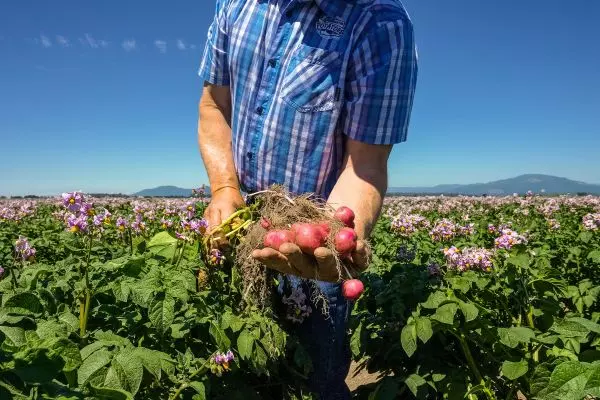
How Potatoes Grow Makes Them Ideal for Worldwide Food Access
As we near the end of 2025, the world population currently sits at more than 8.2 billion people and counting, with the total number of humans on the planet expected to reach 9 billion by 2037, according to the United Nations.
At this time, our species is also facing unprecedented environmental challenges, with the increasing population placing an ever greater strain on our scarce resources.
In fact, the UN’s Food and Agriculture Organization estimates that a quarter of the world now faces food insecurity, meaning an inability to access sufficient food to meet their nutritional needs.
The unprecedented demand for high-quality, nutritious food has forced worldwide populations to seek low-cost, easily prepared sources of crucial micro- and macronutrients. For this reason, farmers worldwide are turning to one of the most adaptable crops in history: the potato.
By learning how potatoes grow, farmers can confront the problem of food insecurity on a greater level.
The nutritional profile of potatoes means that they can meet many of the human body’s healthy requirements, while their versatility in the kitchen means they can be served day after day without becoming boring.
The most important feature of this critical staple crop, however, is its ability to grow in a wide variety of climates and environments, which is crucial for meeting the demands of an ever-changing world.
More Bang for Your Buck
Improving food access means first coming to a clear understanding of what the term “food access” actually means, because just being able to find food to eat isn’t necessarily enough. The food that is eaten must be of high quality and provide enough nutrition to optimize health.
Vitamin deficiencies caused by malnutrition are extremely common across the world and can cause serious health concerns or even death in those who suffer from them. A nutritionally dense food like the potato could offer a viable solution.
For example, poverty-stricken areas experience a prevalence of vitamin C deficiency, which causes a potentially life-threatening condition known as scurvy, largely due to the lack of access to foods containing this vital nutrient.
Potatoes, however, contain not only vitamin C (a single spud holds about 45 percent of the recommended daily value), but a nearly complete nutritional profile, providing not only an array of vitamins and minerals (such as potassium and folate), but also protein, carbohydrates, and fiber. All that from the humble potato!
In addition to their high nutritional value, potatoes are quite cost-effective to grow. They can be seeded from the previous year’s crop, eliminating the need for purchasing new seeds.
The fact that they can be grown so cheaply and contain all these critical nutrients means that potatoes are one of the absolute best foods in terms of “bang for your buck.” That is, they are an inexpensive way to access the basic nutrition the body requires.
Potatoes Can Adapt to Many Different Growing Conditions
Finding a food source that can meet the world’s needs means finding one that can adapt to many different climates and environmental conditions. Potatoes are just such a crop. Their growing cycles can be timed to align with the more temperate growing conditions they prefer.
That means that they can be adapted to hot climates if grown in the cooler part of the year, and adapted to cold climates if timed to avoid the deepest winter frosts.
Potatoes can also be adapted to a wide variety of environments, meaning that they are equally at home in cool, high-altitude areas, subtropical forests, and dry, wind-swept plains. They can grow effectively in many soil types as well, as long as they have access to enough oxygen for their roots to thrive.
Another key advantage when discussing how potatoes grow is their resilience. They can withstand changes in temperature and weather more effectively than many other crops.
While farmers still must make an effort to ensure their crops are protected from severe heatwaves or freezes, potatoes can handle condition shifts that would cause other crops to fail entirely.
Fast Growth, High Yield
Feeding the world population means being able to provide a great deal of highly nutritious food in a relatively short amount of time. Potatoes happen to be excellent for this, as they boast a relatively short growth cycle: usually around 90 to 100 days. This allows for multiple harvests per year.
The already high yield of a potato crop is increased further by its easy cultivation. Potatoes grow at a shallow depth in the soil and lack complex root systems, which allows them to be harvested much more efficiently than many other types of produce.
This can also be aided by modern technology and other techniques, including the use of automated harvesters.
Combined with the potato’s long shelf life—longer than many other vegetables—this means that a staggering amount of food can be produced and shipped to populations both near to and far from the farms that supply them.
For example, potatoes grown in the United States are shipped worldwide, reaching grocery stores in countries as far away as China and Japan.
Keep Eating Potatoes
The versatility of potatoes in cuisine also helps to contribute to their importance in the battle against food insecurity. Potatoes can be served for breakfast, lunch, and dinner, and can be adapted into dozens of different meals and snacks.
They can be the main course, a side dish, and even dessert! This means that any geographical region with access to potatoes can have access to an incredible variety in its day-to-day diet.
Ultimately, potatoes stand as a pillar of sustainability for a future with ever-increasing food demands. This is why potato farms are forming leagues like the Washington State Potato Commission, an organization dedicated to promoting sustainability and improving food access.
Coalitions like this strive to teach people more about this critical crop and help support farmers in their ongoing efforts to combat food insecurity across the world.