How MedTech Trauma Shears Outperform Standard EMT Shears
The field of emergency medicine demands tools that operate with absolute reliability under the most strenuous conditions.
High-performance instruments like the 7.5" titanium coated trauma shears and the stainless steel trauma shears are specifically designed to meet these rigorous clinical standards.
Advanced metallurgy allows these shears to maintain a sharp edge while navigating the diverse textures of tactical and medical fabrics.
This focus on material strength ensures that every cut is efficient, preventing delays during life-saving interventions.
Engineers have meticulously refined the pivot mechanics and blade geometry to maximize the user's manual leverage.
These design choices provide the foundational strength necessary to explore the complex engineering behind modern emergency cutting tools.
The Engineering Behind Emergency Cutting Tools
The design of emergency cutting emt tools represents a sophisticated intersection of mechanical leverage and material science.
These instruments are engineered to perform under extreme pressure, providing first responders with the ability to navigate complex rescue environments efficiently.
A deep understanding of physics is required to create a tool capable of shearing through diverse textures ranging from delicate gauze to industrial-grade nylon.
Engineers focus on the pivot point and handle length to optimize the user's manual output, reducing hand fatigue during prolonged use.
The MedTechKits Approach to Clinical Readiness
MedTechKits operates with a singular focus on providing caliberated instruments that serve as the backbone of every professional medkit.
By prioritizing the practical needs of EMTs and paramedics, the organization ensures that clinical gear remains resilient during the most demanding shifts.
The motive behind every product is to eliminate equipment failure as a variable in emergency care. This dedication to quality helps first responders maintain their focus on patient outcomes rather than the limitations of their tools.
The Core of the 7.5" Stainless Steel Trauma Shears
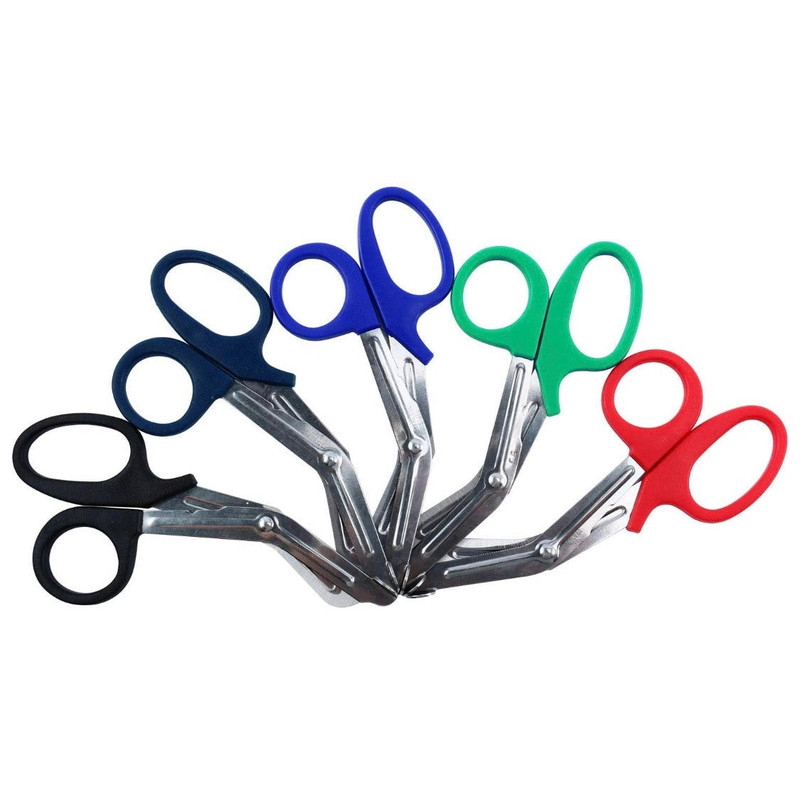
The stainless steel emt shears from MedTechKits serve as the fundamental substrate for reliable medical cutting instruments due to thier inherent structural rigidity.
This alloy is selected for its ability to maintain a sharp edge while resisting the corrosive effects of moisture and bodily fluids.
The specific metallurgical properties of these 7.5-inch shears allow for a balance between hardness and ductility.
This ensures that while the metal is tough enough to slice through thick materials, it remains resilient enough to avoid brittle fracturing under stress.
The Science of the Serrated Edge on Stainless Steel Blades
Serration engineering involves the creation of micro-peaks and valleys along the cutting surface to increase the total surface area of the blade.
This design choice allows the stainless steel shears to bite into slippery or rounded materials that might otherwise slide off a smooth edge.
Beyond simple cutting, the serrated pattern functions as a specialized saw that excels at disrupting the fibers of heavy-duty straps and seatbelts.
The rhythmic interaction between the blade’s teeth and the material ensures a consistent feed rate through the cut.
Understanding Titanium Coating: Beyond the Surface
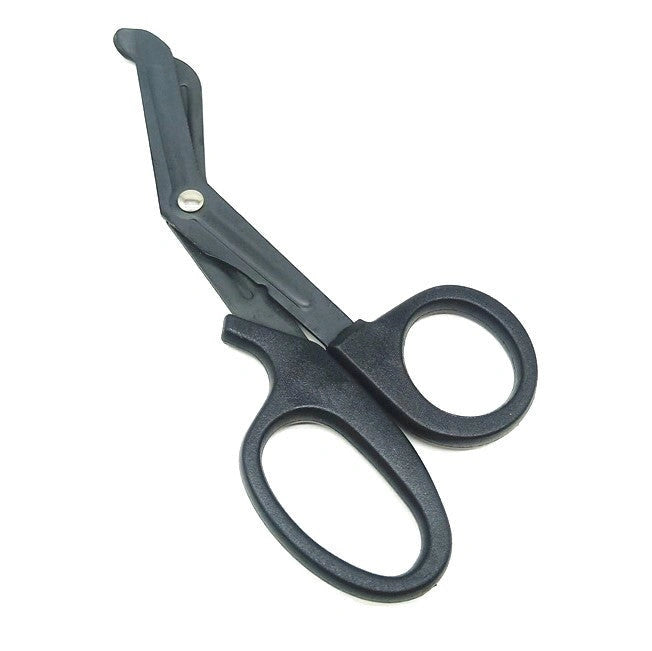
The application of a titanium coating onto a stainless steel base represents a significant leap in instrument longevity and surface hardness.
By integrating this molecularly bonded layer into MedTech titanium coated trauma shears, manufacturers create a protective barrier that is significantly harder and more corrosion-resistant than the underlying steel.
Titanium’s unique properties also offer an additional layer of protection against the oxidative stress typically found in maritime or high-humidity settings.
By shielding the stainless steel core, the coating prevents the micro-pitting that can eventually lead to structural failure.
Comparative Friction: Why Titanium Excels with Adhesives
One of the primary challenges in emergency medicine involves cutting through bandages and tapes coated with aggressive adhesives. Standard stainless steel often suffers from tape-drag, where sticky residues bond to the blade and hinder the cutting motion.
By maintaining a non-stick interface, the titanium-coated shears allow the user to transition between different types of medical dressings without cleaning the blades mid-procedure.
This reduction in friction ensures that the cutting stroke remains fluid and uninterrupted by the buildup of tacky debris.
Patient Safety Engineering: The Role of the Blunt Tip
At the distal end of the shears, a specialized blunt tip serves as a critical safety feature to prevent accidental puncture wounds.
This rounded protrusion is designed to slide smoothly between the patient’s skin and their clothing, lifting the fabric away from the body.
The geometry of the safety tip is carefully calibrated to ensure it does not snag on irregular surfaces or anatomical landmarks.
This design allows the operator to maintain a high speed of movement with the confidence that the patient remains protected from the cutting action.
Thermal and Chemical Resistance of the Titanium Coating
Medical instruments must frequently undergo intense sterilization processes to ensure they do not become vectors for cross-contamination.
The titanium coating is specifically engineered to withstand high-temperature autoclaving without losing its structural bond or aesthetic finish.
Furthermore, the coating acts as a chemical shield against the caustic agents found in many hospital-grade disinfectants. While standard metals might tarnish or weaken over time due to chemical exposure, the titanium layer remains inert and non-reactive.
Weight to Performance Ratio: Portability vs. Power
Selecting an emergency tool involves a careful assessment of its mass relative to its mechanical capabilities.
The stainless steel model offers a lightweight profile that is ideal for professionals who prioritize mobility and a minimal equipment footprint.
In contrast, the titanium-coated version provides a slightly more substantial feel that many users associate with increased stability and power.
The added density of the coating and the reinforced steel core offer a sense of confidence when tackling the most demanding materials.
Final Verdict: Selecting the Best Tool for Your Clinical Loadout
The choice between these two instruments ultimately depends on the specific demands of the operator's clinical environment.
For those in critical trauma settings where adhesives and harsh weather are constant factors, the titanium-coated shears offer superior resilience.
Conversely, the standard stainless steel shears remain an excellent choice for those seeking a reliable tool for general medical applications.
While students often ask how long does it take to become an emt, choosing durable equipment early in that training ensures they are prepared for the transition to the field.
These shears provide all the essential safety features and mechanical advantages required for effective patient care in a more streamlined package.
Read: Get Best EMT Clinical Kits for EMS Students at
Frequently Asked Questions
Q1. Is the tension screw adjustable if the blades become loose after heavy field use?
The pivot pin is engineered as a high-torque, fixed rivet to ensure the blades maintain precise alignment under heavy lateral pressure.
This design prevents the shears from spreading when cutting through thick layers, which is a common failure point in adjustable-screw models.
Q2. Will the polymer handles crack or become brittle when stored in a vehicle during extreme winter temperatures?
The handles are constructed from high-density, impact-resistant polymers tested to maintain structural integrity across a wide thermal range.
They are designed to remain tactile and shatter-proof even in sub-zero conditions common in many EMS service areas.
Q3. Do these shears fit securely in a standard folding shears holster or a uniform cargo pocket?
Yes, the 7.5-inch profile is the industry standard size, ensuring compatibility with most utility holsters, MOLLE attachments, and tactical pant pockets. The flat-profile rivet design ensures they can be drawn quickly without snagging on the edges of a pouch.
Q4. Is there a risk of the titanium coating flaking off into a wound during a procedure?
The coating is applied via physical vapor deposition , which bonds the titanium to the steel at a molecular level rather than acting like a paint.
This prevents flaking or peeling, ensuring the tool remains clean and safe for clinical use near open trauma sites.