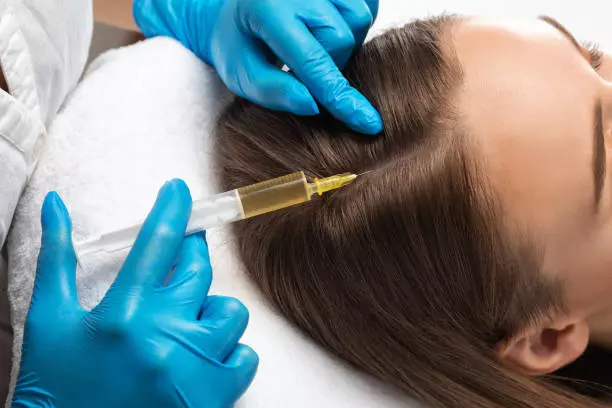
How many PRP Hair Treatment sessions are needed
Hair thinning and excessive shedding can affect hair density, scalp coverage, and personal confidence.
Platelet-rich plasma (PRP) therapy is a treatment option that uses a concentrated portion of a person's own blood to support hair growth in suitable candidates.
People researching PRP Hair Treatment in Abu Dhabi often want to know how many sessions are necessary to achieve noticeable improvements.
The answer depends on the cause of hair loss, its severity, the condition of the hair follicles, and the individual's response to treatment. Although many treatment plans begin with several sessions spaced over a few weeks, the ideal schedule should be tailored to each person's hair restoration goals.
What Is PRP Hair Treatment?
PRP hair treatment is a nonsurgical procedure that uses platelet-rich plasma prepared from a small blood sample.
The sample is processed to concentrate platelets within the plasma, which contains signaling proteins involved in the body's natural repair processes. The prepared plasma is then administered into selected areas of the scalp according to the treatment plan.
Platelets release growth factors that participate in tissue repair and cellular signaling. In hair restoration, PRP is used to support the activity of existing hair follicles and may help improve hair thickness and density in some individuals.
Its purpose is not to create entirely new follicles but to encourage a more favorable environment for follicles that remain capable of producing hair.
The treatment is commonly considered for certain types of hair thinning, particularly androgenetic alopecia, which is associated with hereditary hair loss. Results vary, and PRP is not equally effective for every cause or pattern of hair loss.
How Many PRP Hair Treatment Sessions Are Usually Needed?
Many PRP hair treatment plans begin with an initial series of approximately three sessions, often scheduled around four to six weeks apart. Some individuals may be advised to undergo additional initial sessions depending on their hair condition, treatment goals, and response.
This initial phase gives the treatment plan a structured starting point while allowing time between sessions for the scalp and hair follicles to respond.
However, three sessions are not a universal requirement, and the ideal number cannot be determined by a standard schedule alone.
People with early hair thinning may have different needs from those experiencing more established hair loss.
The treatment approach should account for the underlying diagnosis, the amount of existing hair, and whether other therapies are being used. A personalized assessment helps establish a realistic schedule rather than relying on a fixed number of appointments.
Why Are Multiple PRP Hair Treatment Sessions Necessary?
Hair growth follows a natural cycle consisting of growth, transition, and resting phases. Individual follicles do not all progress through these phases at the same time, so changes in hair density are rarely immediate.
Multiple PRP sessions are intended to provide repeated stimulation over a period of time.
Rather than expecting a single session to produce a dramatic change, the initial treatment series allows progress to be assessed gradually. This approach may help suitable follicles respond to the treatment over successive appointments.
Hair growth is also influenced by genetics, hormones, nutritional status, age, and general health. Consequently, repeated sessions do not guarantee a particular result. The number of treatments should be based on an individual's progress and the likely cause of hair loss.
Read: Which One Is Better for Hair Restoration? FUE vs FUT
When Can You Expect Results From PRP Hair Treatment?
PRP hair treatment does not usually produce immediate visible growth. Hair follicles require time to respond, and the natural hair cycle means that changes may take several months to become noticeable.
Some individuals may observe reduced shedding or improvements in hair texture during the first few months.
Changes in hair thickness and density can take longer, with progress often assessed around three to six months after starting treatment. The timing varies according to the person's condition and response.
Photographs taken under consistent lighting and from the same angles can help make gradual changes easier to assess. A professional evaluation can also help distinguish genuine improvements from normal fluctuations in shedding and growth.
It is important to remember that results differ between individuals. Some people may experience a noticeable improvement, while others may see only modest changes. The number of sessions completed does not independently determine the outcome.
What Factors Affect the Number of PRP Sessions Needed?
The cause of hair loss is one of the most important factors in determining the number of PRP sessions.
Hereditary hair thinning may respond differently from temporary shedding associated with illness, nutritional deficiencies, hormonal changes, or other underlying conditions. Identifying the cause helps establish whether PRP is an appropriate treatment option in the first place.
The severity and duration of hair loss also matter. Individuals with early thinning and active follicles may have different treatment needs from those with extensive hair loss or areas where follicles no longer produce hair. PRP cannot reliably restore hair in completely inactive or permanently lost follicles.
Individual biological responses, the preparation method used for PRP, and the consistency of the treatment schedule may also influence outcomes.
For these reasons, the recommended number of sessions should be adjusted according to clinical findings rather than applied identically to everyone.
Are Maintenance Sessions Needed After the Initial Treatment?
Some individuals choose maintenance sessions after completing their initial PRP treatment series. These appointments are intended to help sustain improvements that have developed during the first phase of treatment.
Maintenance schedules vary considerably. Depending on the individual's response and treatment goals, sessions may be considered every few months or at other intervals recommended during follow-up.
There is no single maintenance schedule that suits everyone, and ongoing treatment is not guaranteed to preserve the same degree of improvement indefinitely.
Hair loss may continue to progress because of hereditary and hormonal influences even when PRP produces a positive response. Follow-up assessments can help determine whether further sessions are worthwhile or whether a different treatment strategy should be considered.
How Can You Tell Whether More PRP Sessions Are Needed?
Deciding whether to continue treatment involves evaluating changes in shedding, hair thickness, scalp coverage, and overall density.
Since these changes occur gradually, a lack of dramatic improvement after one or two sessions does not necessarily mean the treatment has been unsuccessful.
At the same time, undergoing additional sessions without evaluating progress may not be beneficial. If there is little or no improvement after an appropriate treatment period, the original diagnosis and treatment plan may need to be reviewed.
A qualified professional can assess the scalp, review the pattern of hair loss, and determine whether additional PRP sessions are reasonable. This evaluation may also identify other factors affecting hair growth that require separate attention.
Is PRP Hair Treatment Enough on Its Own?
PRP may be useful as an individual treatment or as part of a broader hair restoration plan, depending on the cause of hair loss.
For some people, it may help improve hair density, while others may benefit from combining it with established treatments recommended for their particular condition.
The best approach depends on the diagnosis, the individual's medical history, and the expected benefits of each option. PRP should not be viewed as a universal solution for all forms of hair loss, and it cannot guarantee complete hair restoration.
Understanding its potential and limitations makes it easier to set realistic goals and decide whether the recommended number of sessions is appropriate.
Final Thoughts
The number of PRP hair treatment sessions needed depends on the individual's hair loss pattern, follicle condition, treatment response, and restoration goals.
An initial series of around three sessions, spaced several weeks apart, is a common starting point, although some people may require a different schedule. Visible improvements often take several months because hair growth follows a gradual natural cycle.
Maintenance sessions may be considered when appropriate, but they are not automatically necessary for everyone.
A personalized assessment and regular progress reviews are the best ways to determine how many sessions are suitable and whether continuing treatment is likely to provide meaningful benefits.
FAQs
How many PRP hair treatment sessions are usually required?
Many treatment plans begin with around three sessions, although the recommended number varies according to individual needs.
How far apart should PRP hair sessions be?
Initial sessions are often spaced approximately four to six weeks apart, depending on the treatment plan.
When do PRP hair treatment results become visible?
Some changes may appear within a few months, while improvements in hair thickness and density can take three to six months or longer.
Are maintenance sessions necessary after PRP treatment?
Some individuals may benefit from periodic maintenance, but the schedule depends on their response and ongoing hair loss.
Can PRP restore hair in completely bald areas?
PRP is generally more suitable for supporting existing, active hair follicles and cannot reliably restore hair where follicles have been permanently lost.