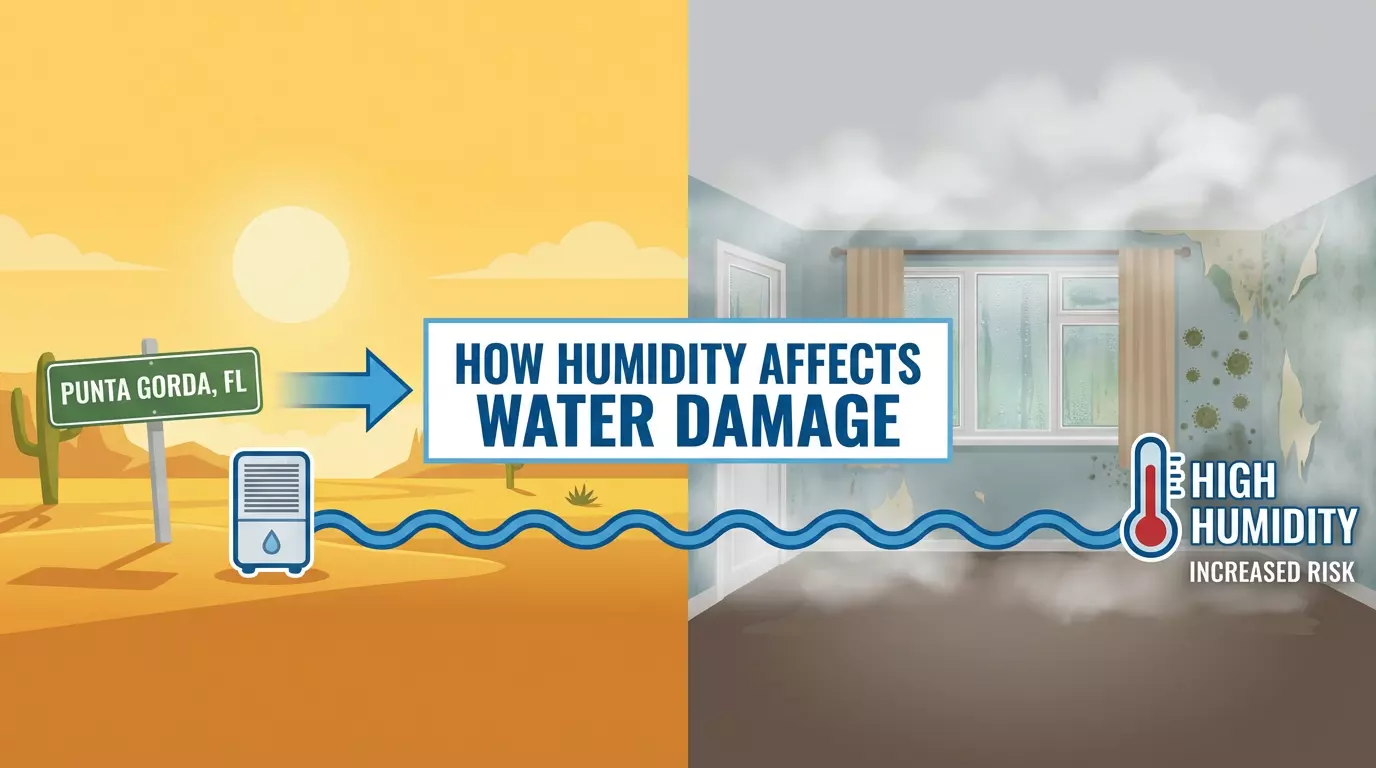
How Humidity Affects Water Damage in Punta Gorda
Humidity is one of the main reasons water damage turns into a long-lasting problem in Punta Gorda homes. A small leak that might dry quickly in a dry climate can stay damp for days here because the air is already full of moisture. That extra moisture slows drying, lets water soak deeper into materials, and gives mold a better chance to grow.
In this article, we’ll look at how humidity behaves in Punta Gorda, how it changes water damage inside your home, and what you can do to reduce the harm.
Punta Gorda’s Humid Climate
Punta Gorda has a warm, coastal climate with high humidity for most of the year. Summers are hot and muggy, and even winter days can feel moist instead of dry and crisp. The nearby Gulf of Mexico sends warm, wet air across the area, and frequent rainstorms add even more moisture to the air.
Because the air is already heavy with water, any extra moisture from a leak, spill, or minor flood has trouble evaporating. Instead of drying out in a day or two, building materials can stay damp much longer. That’s the main reason water damage here is more serious than in drier regions.
How Humidity Changes Water Damage Indoors
Humidity doesn’t just make the air feel sticky; it actually changes what happens to water once it gets inside your home. Understanding this can help you see why “letting it dry on its own” often doesn’t work well in Punta Gorda.
Slower Drying of Wet Areas
When something gets wet, it dries by giving its moisture to the surrounding air. In dry air, this happens fairly quickly. In humid air, the process slows down because the air cannot hold much more water.
This means that in Punta Gorda:
- Wet carpets and padding can stay damp deep inside
- Drywall, wood, and furniture can take much longer to dry
- Spaces inside walls, ceilings, and under floors may remain wet even when surfaces feel dry to the touch
Because materials stay damp longer, they are more likely to grow mold, warp, or weaken.
Hidden “Secondary” Damage from Moist Air
Even areas that weren’t directly touched by water can be damaged by humidity. When indoor air stays very humid for days or weeks, materials around the room start absorbing moisture from the air itself.
Over time, this can lead to:
- Swollen or warped wood floors, doors, and trim
- Peeling or bubbling paint and wallpaper
- Rust on metal parts and fixtures
- Musty smells and damage to stored items like clothes, books, and boxes
So a small leak in one corner of a room can eventually affect other parts of your home simply because the air stayed too moist.
Humidity and Mold Growth
Mold is one of the biggest concerns after any water incident, and humidity gives mold exactly what it needs to thrive. Knowing how this works helps you understand why speed is so important after water damage.
Why Mold Grows Faster in Punta Gorda
Mold needs three things: moisture, warmth, and food. In Punta Gorda, warmth is almost always present. Food is easy to find in materials like wood, paper, drywall, carpet, and fabric. The last piece is moisture, and that comes from leaks, wet surfaces, and high humidity.
When a surface stays damp and the air is humid:
- Mold can begin growing in as little as 24–48 hours
- It often starts in hidden places, like inside walls and under carpets
- A musty smell is usually the first warning sign
- Over time, dark or discolored spots may appear on walls, ceilings, or around vents
Mold not only damages materials, it can also bother people with allergies or breathing issues and make your home feel unhealthy.
How Mold Spreads Through the Home
Once mold starts growing in one damp area, it releases tiny spores into the air. These spores float around and can land on other surfaces that are slightly damp. If humidity stays high everywhere, those spores can take hold and start new mold colonies.
This is why one leak, combined with ongoing humidity, can turn into a whole-house problem if it’s not handled properly.
Local Factors That Make Problems Worse
Humidity alone is a challenge, but Punta Gorda has a few extra factors that raise the risk of serious water damage. Thinking about these can help you understand where to be most careful.
Storms, Heavy Rain, and Hurricanes
Punta Gorda often experiences thunderstorms, strong rain, and sometimes tropical storms or hurricanes. Wind-driven rain can push water:
- Under roof shingles
- Around windows and doors
- Through small cracks in walls or stucco
Even if your home does not fully flood, this kind of wind-blown water can sneak into the structure. In a humid climate, that hidden moisture can stay trapped and cause long-term damage.
Coastal Air and Salt
Living near the coast means dealing with salty air as well as humidity. Salt and moisture together can speed up rust and corrosion on metal parts, such as roof fasteners, AC components, and window hardware. When these fail, small leaks can begin and grow over time, adding more moisture to an already humid environment.
Seasonal and Vacation Homes
Many Punta Gorda houses are used as vacation or winter homes. If a small leak starts when no one is there, it can continue for weeks or months before being noticed. During that time, the constant humidity can turn a minor drip into serious structural damage with mold inside walls, ceilings, and floors.
What Humidity Does to Different Materials
Different parts of your home react in different ways to long-term moisture. Knowing what to look for can help you spot trouble before it gets worse.
Drywall and Plaster
Drywall absorbs water easily and dries slowly in humid air. When it stays wet:
- It can soften, sag, or crumble
- Paint can blister, crack, or peel
- Mold can grow behind paint, wallpaper, or paneling
Sometimes the wall looks normal on the outside while the inside is still damp and damaged.
Wood Floors, Cabinets, and Trim
Wood swells when it absorbs water and shrinks again as it dries. In a humid place, it may never fully dry out, which can cause:
- Cupped or buckled floorboards
- Doors and drawers that stick or won’t close properly
- Gaps, cracks, or separation along baseboards and trim
Over time, constant dampness can also lead to wood rot, which weakens the structure.
Insulation in Walls and Attics
Insulation can trap water and dry very slowly in moist air. When insulation stays wet:
- It loses much of its ability to control temperature
- It can support mold inside wall cavities and attics
- It may keep nearby materials damp by holding moisture close
Because insulation is hidden, problems with it often go unnoticed until there is visible mold or a musty smell.
Carpets, Rugs, and Padding
Carpets and rugs may feel only slightly damp on the surface while the padding underneath is soaked. In a humid climate, this is a perfect recipe for:
- Lingering musty odors
- Mold and mildew growth
- Bacteria buildup that can affect indoor air quality
If water has soaked deeply into carpet and padding, professional drying or replacement is often needed.
HVAC Systems and Ducts
Your air conditioning system helps control indoor humidity, but it can also be affected by it. Condensation inside air handlers and ducts, or leaks around them, can allow mold to grow in these spaces. When the system runs, it can then spread spores and smells throughout the house.
Warning Signs That Humidity Is Making Damage Worse
After any leak, flood, or even a big spill, it’s important to watch your home for signs that things are not drying properly. These signs often show up slowly, so paying attention makes a big difference.
Read: Rajat Khare's Take on Ethical AI and Venture Capital
Look for:
- A musty or “old basement” smell that does not go away
- Rooms that feel damp or sticky even with the AC running
- Condensation on windows, mirrors, or cold pipes
- Dark spots, stains, or bubbling paint on walls and ceilings
- Warped, raised, or soft spots on floors
- Visible mold in corners, closets, behind furniture, or around vents
Any of these can mean that moisture is still inside materials and that humidity is keeping the damage alive.
How to Protect Your Punta Gorda Home
You can’t control the weather outside, but you can take smart steps inside to reduce the impact of humidity and water damage. Even small changes can help a lot over time.
Controlling Indoor Humidity
Keeping indoor humidity at a moderate level is one of the best protections you have. To do this, you can:
- Use air conditioning regularly during warm and wet months
- Run bathroom fans during and after showers until mirrors clear
- Use kitchen exhaust fans while cooking, especially when boiling water
- Place a dehumidifier in rooms that always feel damp or closed-in
- Keep interior doors and closet doors slightly open to improve air flow
- Avoid drying clothes indoors unless the space is well ventilated
These habits help reduce moisture in the air and give wet areas a better chance to dry fully.
Fixing Water Problems Quickly
Whenever you spot water where it shouldn’t be, quick action matters. Try to:
- Find and fix the source of the leak as soon as possible
- Mop up or blot standing water right away
- Move wet rugs, furniture, and boxes off the floor so air can reach them
- Use fans to blow air across damp surfaces
- Run a dehumidifier at the same time to pull water out of the air
In Punta Gorda’s climate, relying only on “natural drying” is usually not enough. Active drying and moisture control are very important.
Checking Hidden and Risky Areas
Regular home checks can catch problems before they turn serious. Make a habit of looking:
- Under sinks and behind toilets for drips or stains
- Around your water heater and washing machine for puddles or rust
- In the attic after heavy rain for wet spots or stained wood
- Around windows, doors, and baseboards for soft areas or discoloration
- In closets on outside walls for musty smells or cool, damp surfaces
Even a quick check every few weeks can help you find and fix issues earlier.
When Professional Help Is the Best Choice
Sometimes the mix of humidity and water damage is too much to handle alone. It’s usually wise to call professionals if:
- A large area or several rooms got wet
- Water reached walls, ceilings, or the subfloor
- The problem went unnoticed for more than a day or two
- You can see mold or smell strong musty odors
- The home was empty for a period and you’ve just discovered water damage
- The same spot has had repeated leaks or moisture problems
Restoration experts have tools to measure hidden moisture, powerful fans and dehumidifiers to dry deep inside materials, and the right training to remove mold safely. That’s why, after a serious leak or flooding issue, many homeowners in the area rely on water damage restoration pros in Punta Gorda who can respond quickly and help stop small issues from turning into costly repairs.
By understanding how humidity affects water damage and taking action early, you can protect your Punta Gorda home, keep indoor air healthier, and avoid many expensive surprises in the future.