How High-Voltage Substation Engineering Supports Grid Expansion
As electricity demand continues to grow, utilities and energy developers face a major challenge: expanding power networks without compromising reliability, safety, or long-term performance.
New generation projects, renewable energy integration, industrial development, and growing urban demand all require stronger electrical infrastructure.
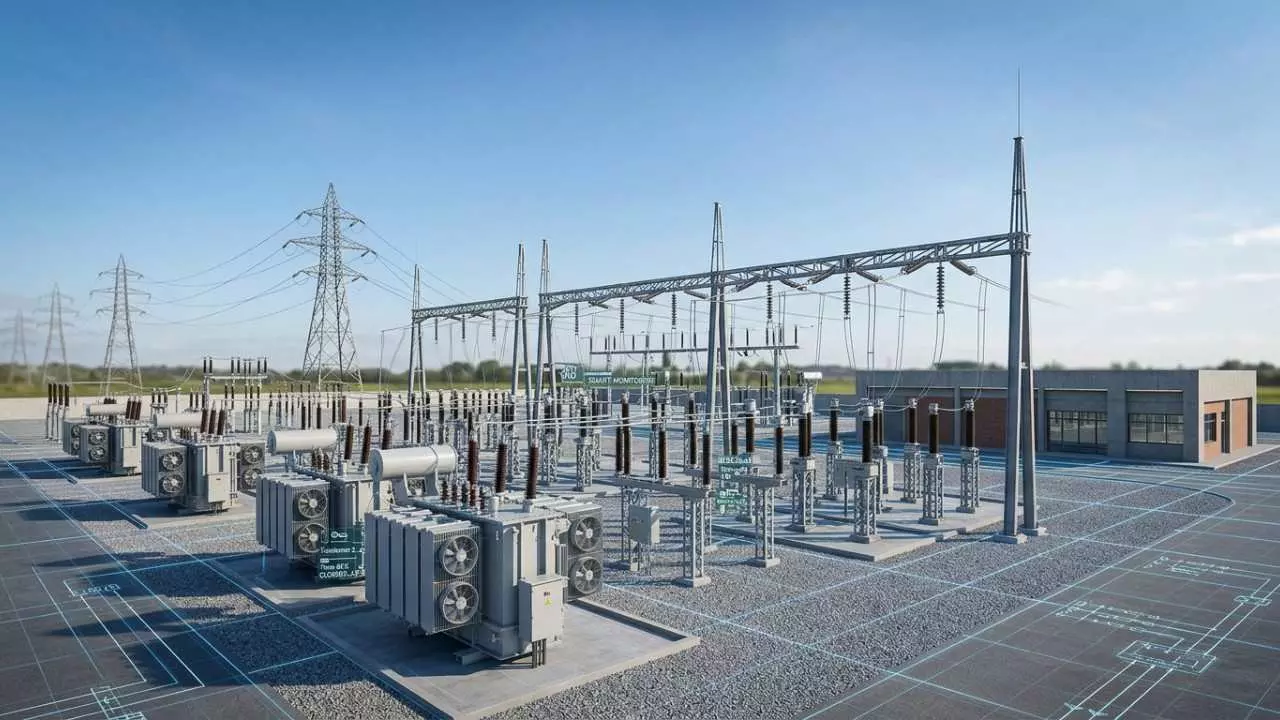
At the center of this expansion are high voltage substations. These facilities connect generation, transmission, and distribution networks while controlling voltage levels and providing essential protection and switching functions.
However, building an effective substation requires much more than installing transformers and switchgear. It involves careful electrical planning, structural design, civil works, protection systems, and compliance with applicable standards.
Professional high-voltage substation engineering provides the foundation needed to expand the grid efficiently and reliably.
1. High-Voltage Substations Are Critical to Grid Expansion
A growing power grid needs strategically located substations to transfer electricity safely between different voltage levels and network sections.
A high-voltage substation may receive power from generating facilities, step voltage up or down, and distribute electricity to transmission or distribution circuits.
During grid expansion, engineers must determine where new substations are required and how they should connect with existing infrastructure.
This involves studying load growth, power flows, fault levels, voltage performance, system stability, and future network requirements.
Good engineering ensures that a new substation does not simply solve today's capacity problem but also supports future expansion.
Equipment ratings, bus configurations, transformer capacity, transmission connections, and available space should be considered with long-term growth in mind.
This forward-looking approach helps utilities avoid expensive redesigns and minimizes disruptions when additional circuits or equipment are eventually required.
2. Electrical Engineering Creates a Reliable Substation Foundation
The electrical design of a high-voltage substation determines how effectively it can operate under normal and abnormal system conditions. Engineers evaluate the complete electrical system before selecting equipment and developing the final layout.
Important studies can include load flow analysis, short-circuit studies, protection coordination, grounding analysis, transient stability assessments, and insulation coordination. These studies help identify potential problems before construction begins.
Equipment such as power transformers, circuit breakers, disconnect switches, current transformers, voltage transformers, surge arresters, busbars, and protection systems must be properly rated and coordinated.
For example, fault-current calculations help engineers determine the required interrupting capacity of circuit breakers. Similarly, grounding studies help establish an effective grounding system that protects personnel and equipment during fault conditions.
By combining engineering studies with detailed equipment selection, high-voltage electrical substation projects can achieve greater reliability and operational flexibility.
Read: The Role of Power System Studies in Grid Reliability
3. High-Voltage Civil Engineering Supports Safe Infrastructure
Electrical equipment cannot operate effectively without a properly designed physical environment. This is where high voltage civil engineering becomes an essential part of substation development.
Civil engineers are responsible for designing foundations, equipment support structures, control buildings, cable trenches, drainage systems, roads, fencing, retaining structures, and other site infrastructure.
Site conditions must be carefully evaluated before construction. Soil characteristics, topography, groundwater, seismic considerations, flood risks, and environmental conditions can all influence the civil design.
For example, heavy transformers require foundations capable of supporting significant loads. Proper drainage is also essential because standing water can damage infrastructure and create additional safety risks.
Civil and electrical teams must coordinate closely. Cable trenches need to align with electrical equipment locations, equipment foundations must match manufacturer requirements, and access roads must allow safe movement of heavy equipment.
This integrated approach reduces construction conflicts and helps ensure that the completed facility operates safely for decades.
4. Substation Design Must Anticipate Future Capacity
Grid expansion rarely ends with the first phase of construction. Electricity demand can continue increasing, while new generation resources may require additional transmission connections.
For this reason, modern substation engineering should consider future capacity from the beginning.
Engineers may reserve space for additional transformers, transmission bays, feeders, breakers, or bus sections. The initial substation layout can also be designed to accommodate future equipment without requiring major changes to operating systems.
This concept is particularly valuable for renewable energy projects. Solar and wind generation can be developed in stages, meaning the associated transmission infrastructure may also need to expand progressively.
A scalable substation design gives utilities greater flexibility while controlling future construction costs and reducing operational interruptions.
5. Protection, Automation, and Safety Improve Grid Performance
Reliable grid expansion depends not only on physical infrastructure but also on intelligent control and protection.
Protection systems detect abnormal conditions such as short circuits, equipment failures, and other electrical faults. High-speed protection can isolate affected sections quickly, reducing the risk of widespread outages and equipment damage.
Modern substations may also incorporate digital relays, supervisory control and data acquisition (SCADA), automation systems, communication networks, and condition-monitoring technologies.
These systems provide operators with valuable information about equipment status and network conditions.
Safety must remain a fundamental engineering priority. Substation designs need appropriate clearances, grounding systems, fencing, fire protection, access controls, and equipment arrangements.
When protection, automation, and safety systems are integrated into the engineering process, substations become more responsive and easier to monitor and maintain.
6. Professional Engineering Enables Sustainable Grid Growth
The expansion of electrical networks requires engineering decisions that balance performance, cost, safety, and future requirements.
A well-designed substation can support increased power transfer while improving network reliability and creating opportunities for future development.
Professional engineering teams bring together electrical, civil, structural, protection, control, and project disciplines to develop coordinated solutions.
This multidisciplinary approach is particularly important for complex high-voltage projects where small design decisions can have significant long-term consequences.
As power systems become more interconnected and renewable generation continues to grow, the role of high voltage substations will become even more important. Utilities need infrastructure that can handle changing power flows, increasing demand, and evolving grid technologies.
Conclusion
Grid expansion is not simply about adding more transmission lines or generation capacity. It requires strategically designed infrastructure capable of moving electricity safely and reliably across an increasingly complex network.
High-voltage substation engineering provides the technical foundation for this growth.
Through detailed electrical studies, effective equipment selection, robust high voltage civil engineering, scalable layouts, advanced protection, and careful safety planning, engineers can create substations prepared for both current and future demands.
For utilities, renewable energy developers, industrial projects, and other power-sector organizations, investing in professional substation engineering can help reduce project risks, improve reliability, and support sustainable grid expansion.
Keentel Engineering provides specialized engineering solutions for modern power infrastructure, helping projects move from technical requirements to practical, reliable designs.