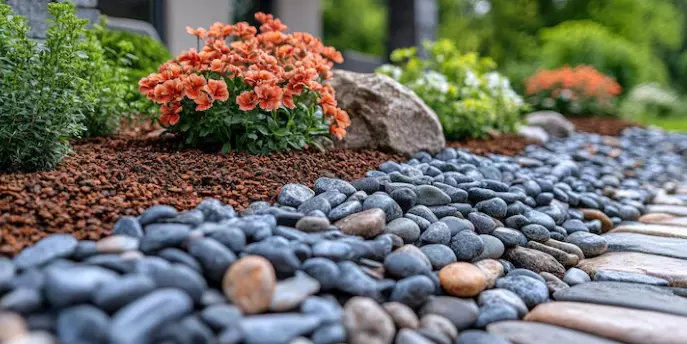
How Heavy Are Decorative Landscaping Rocks Per Cubic Yard?
We usually start a yard project thinking about the fun stuff… colors, textures, how nice everything will look once it is done. And then… reality taps us on the shoulder.
“Wait… how heavy are these decorative landscaping rocks going to be?”
Yeah. That moment.
Because once the rocks show up, it is not just about looks anymore… it is about lifting, spreading, and figuring out why our arms are suddenly sore.
So let us talk it through like we normally would… simple, honest, no overthinking.
So… What Are We Dealing With?
Alright, straight up… a cubic yard of decorative rock is heavy. Like, “you are not moving this in one go” heavy.
Most rocks land somewhere between 2,000 to 3,000 pounds per cubic yard.
That is a big range, and honestly, it depends on what kind of rock we are choosing. Some feel surprisingly light. Others… yeah, they mean business.
And just so we are clear, a cubic yard might not sound huge. But once it is sitting in your driveway? It suddenly feels very real.
Not All Rocks Feel the Same
This is where things get interesting. Different rocks do not just look different… they behave differently too.
Light and Easygoing
Lava rock is kind of the chill option. It has tiny air pockets, so it feels lighter when we pick it up.
If we are doing a project where we do not want to struggle too much… this one is a lifesaver. Still not “light” light… but manageable.
Smooth and In Between
River rock sits somewhere in the middle. It has that nice rounded look… clean, natural, easy on the eyes.
Weight-wise, it is heavier than lava rock but not overwhelming. We can work with it without feeling completely drained halfway through.
The Heavy Lifters
Crushed stone or granite… these are solid. Dense. They stay exactly where we put them.
Which is great… until we have to move them.
Spreading these can feel like a full workout session. But once they are down, they do not budge easily. That is why we often use them in areas that get a lot of foot traffic.
Why Weight Sneaks Up on Us
At first, we might think… “Okay, we will just spread it out. No big deal.”
Then the pile arrives.
And suddenly we are like… “Alright, maybe this is a bit of a deal.”
Weight affects more than we expect:
- Carrying and spreading takes time and energy
- Heavier rock can press down on soft soil
- Delivery trucks might need proper space
- Even the cost can shift depending on how heavy the load is
We have all had that moment… halfway through a project, realizing we should have planned just a little better. Happens.
How Much Do We Actually Need?
This part trips people up all the time.
We think we need “just a little”… and then we run out. Or we order too much and end up with leftovers sitting in a corner.
Here is a simple way to think about it:
- Thin layer… covers more space, looks subtle
- Thicker layer… covers less space, but looks richer and more finished
So yeah… the thicker we go, the more rock we need. And more rock means more weight. It adds up quickly.
A Small Pause Before Ordering
- Before we hit that “order” button, it helps to ask ourselves a few quick questions:
- Can we actually move this ourselves?
- Do we need tools… or maybe an extra pair of hands?
- Is there enough space for a delivery truck to unload?
- It sounds basic, but skipping this step can turn a simple project into a long day.
Read: Ground Cover Fabric: The Best Weed Membrane UK for
Choosing What Works Best
- When we look at different options, it helps to think beyond just looks.
- Where are we using the rock?
- Do we want something easy to spread… or something that stays locked in place?
- If we are exploring the types of landscaping rocks and their uses, it becomes much easier to match the right material to the right job. That is where everything starts to make sense.
- Because honestly… the “best” rock is not always the prettiest one. It is the one that works well for the space.
Final Thoughts
- Decorative rocks seem simple at first. Just stones… nothing complicated.
- But once we actually start working with them, we realize there is more going on. Weight, handling, planning… it all matters.
- The good news? Once everything is laid out and in place, it looks amazing. Clean, low maintenance, and super satisfying to step back and look at.
- Even if we needed a few breaks along the way.
FAQs
1. How much does one cubic yard of decorative landscaping rocks weigh?
Most fall between 2,000 and 3,000 pounds, depending on the type of rock.
2. Are lighter rocks easier to work with?
Yes, they are easier to carry and spread. But heavier rocks stay in place better.
3. Can we move a cubic yard by ourselves?
It is possible… but not easy. Breaking it into smaller loads makes things more manageable.
4. Do heavier rocks increase delivery cost?
They can. Heavier loads sometimes need larger trucks or extra trips.
5. How do we choose the right rock?
Think about the area. For busy spots, heavier rocks work better. For decorative areas, lighter ones are easier to handle.