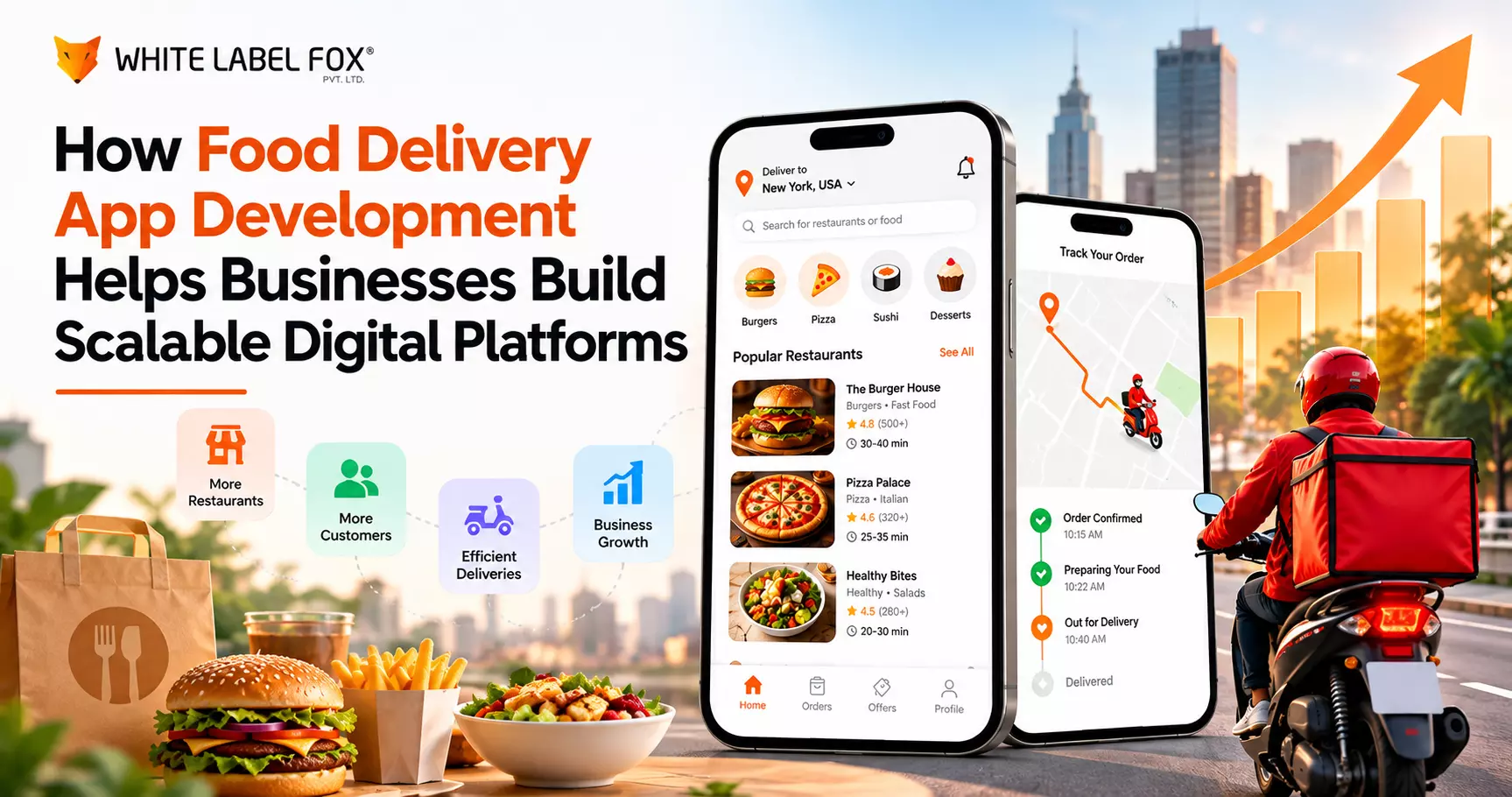
How Food Delivery App Development Helps Businesses Build Scalable Digital Platforms
The food delivery industry continues to create opportunities for startups, restaurant chains, entrepreneurs, and established businesses.
Customers increasingly expect convenient ways to discover restaurants, order meals, make digital payments, and receive deliveries without visiting physical locations. For businesses, this shift creates opportunities to reach new customers and establish sustainable digital operations.
However, launching a food delivery business requires more than creating an application that accepts orders.
Companies must consider restaurant onboarding, delivery management, customer experience, payment processing, order tracking, and business expansion. A well-planned digital platform can bring these activities together and make daily operations easier to manage.
Food delivery app development helps businesses establish a branded platform that connects customers, restaurants, and delivery partners. Depending on the business model, the platform can support a single restaurant, a multi-vendor marketplace, or a delivery network serving multiple locations.
For startups and enterprises, the right solution can provide a foundation for business growth while allowing them to adapt to changing customer expectations.
This article explains how food delivery platforms work, which features businesses should consider, and how the right development approach can support long-term scalability.
What Is Food Delivery App Development?
Food delivery app development involves creating a digital platform that enables customers to order food from restaurants and receive it at their preferred locations. The solution may serve a single restaurant or connect multiple food vendors through a shared marketplace.
Businesses can choose a platform that matches their operational requirements, target audience, and expansion plans. Some companies operate their own delivery fleets, while others work with independent delivery partners or allow customers to collect orders directly.
A typical food delivery platform includes four main components:
- Customer App: Allows users to browse restaurants, explore menus, place orders, make payments, and track deliveries.
- Restaurant Panel: Helps restaurant owners manage menus, update availability, accept orders, and monitor preparation.
- Delivery Partner App: Enables delivery partners to receive assignments, view delivery details, and update order statuses.
- Admin Panel: Allows business owners to manage customers, restaurants, delivery partners, commissions, promotions, and platform operations.
These components work together to provide a consistent ordering experience. Businesses can customize the platform to suit their brand identity, service areas, and operational needs.
How Does a Food Delivery App Work?
Understanding the ordering process helps businesses identify the features and workflows required for their platform.
1. Customers Browse Restaurants
Customers open the application and explore restaurants based on cuisine, location, ratings, availability, or other filters. Detailed menus help them compare dishes and select suitable options.
2. Customers Place Orders
After choosing their meals, customers add items to the cart, provide delivery details, apply available promotional offers, and select a supported payment method.
3. Restaurants Accept and Prepare Orders
The restaurant receives an order notification and confirms whether it can fulfill the request. Once accepted, the kitchen prepares the selected items and updates the order status.
4. Delivery Partners Complete Deliveries
For delivery orders, the platform assigns an available delivery partner according to its configured rules. The delivery partner collects the order and transports it to the customer.
5. Administrators Monitor Operations
The admin panel provides visibility into order activity, restaurant performance, customer concerns, and delivery operations. Businesses can use this information to identify recurring problems and improve their processes.
A streamlined process helps reduce confusion between customers, restaurants, and delivery partners while supporting efficient order fulfillment.
Key Features of a Scalable Food Delivery Platform
A successful platform should offer features that improve the customer experience and help businesses manage their daily operations.
1. Simple Registration and User Profiles
Customers should be able to register, manage their profiles, save delivery addresses, and access previous orders. A straightforward onboarding process makes it easier for new users to start ordering.
2. Restaurant and Menu Management
Restaurant listings should display menus, item descriptions, operating hours, ratings, and availability. Restaurant owners should be able to update menus and mark unavailable items without unnecessary delays.
Accurate information helps customers make informed decisions and reduces avoidable order cancellations.
3. Multiple Payment Options
Different customers prefer different payment methods. Depending on the target market, businesses can support cards, digital wallets, online payments, and cash on delivery.
Offering relevant payment options can improve checkout convenience and accommodate local customer preferences.
4. Live Order Tracking
Order tracking allows customers to monitor progress from confirmation to delivery. Notifications can communicate important updates, such as order acceptance, food preparation, pickup, and delivery.
Clear updates also help reduce customer inquiries about order status.
Read: Build a Successful Food Delivery App with Team For Sure
5. Delivery Partner Management
Businesses need tools to manage delivery partner availability, assignments, and delivery statuses. Depending on the operating model, the platform may support automatic assignment or manual allocation.
These capabilities help businesses coordinate deliveries and maintain visibility over fulfillment activities.
6. Promotions and Loyalty Programs
Discount codes, referral rewards, loyalty points, and special offers can encourage customers to place repeat orders.
Businesses should design these campaigns around their customer segments and business objectives instead of relying entirely on discounts to generate demand.
7. Ratings and Customer Feedback
Customer reviews help businesses understand satisfaction levels and identify service problems. Restaurants can use feedback to improve food quality, order accuracy, and service consistency.
A transparent feedback process can also help customers make better purchasing decisions.
8. Admin Dashboard and Business Reports
A centralized dashboard helps administrators manage users, restaurants, orders, promotional campaigns, and platform settings.
Useful reports may cover order volume, cancellation rates, popular menu items, and customer activity. These insights support informed operational decisions.
Business Models Supported by Food Delivery Apps
Choosing the right business model is an important part of launching a food delivery platform. The model determines how the business serves customers, works with restaurants, and generates revenue.
1. Multi-Restaurant Marketplace
A multi-restaurant marketplace connects customers with several food vendors through one application. The platform operator manages the marketplace while participating restaurants prepare orders.
This model suits startups and entrepreneurs who want to build a restaurant network within a city, region, or broader market.
Potential revenue sources include restaurant commissions, delivery charges, promotional placements, and subscription-based services.
2. Restaurant-Owned Delivery App
Restaurant chains and independent food businesses can launch their own branded ordering applications.
This approach gives them greater control over customer communication, menu presentation, loyalty programs, and ordering policies. It can also help them establish direct customer relationships.
3. Cloud Kitchen Platform
Cloud kitchens prepare meals primarily for delivery or pickup rather than traditional dine-in service.
A digital platform can help operators manage multiple virtual restaurant brands, coordinate orders, and serve customers across selected locations.
4. Corporate Meal Delivery
Businesses can develop food ordering solutions for offices, corporate campuses, and organizations that arrange recurring employee meals.
Features such as group ordering, scheduled deliveries, digital receipts, and centralized account management can simplify corporate meal coordination.
5. Specialized Food Delivery Services
Entrepreneurs can focus on specific customer needs, including healthy meals, bakery products, regional cuisine, prepared meal subscriptions, or late-night food delivery.
A specialized platform can help businesses serve a defined audience with relevant menus and operational processes.
How Food Delivery App Development Supports Business Growth
A digital platform can support business expansion when its features and operating model align with the company's long-term objectives.
Faster Market Entry
Ready-made and white-label solutions can provide a starting point for businesses that want to launch without creating every standard feature from scratch.
With appropriate customization, businesses can introduce their own branding, configure essential workflows, and prepare the platform for their target market.
Stronger Brand Ownership
A branded application allows businesses to maintain a consistent identity across customer interactions. Companies can control their menus, promotional campaigns, communication, and selected customer-facing features.
This is particularly useful for restaurant chains and entrepreneurs seeking to establish a recognizable digital presence.
Expansion Across Multiple Locations
As demand grows, businesses may need to onboard more restaurants, expand delivery coverage, and manage additional delivery partners.
The chosen platform should support these operational changes without making routine management unnecessarily complicated.
Improved Customer Retention
Convenient ordering, accurate information, reliable notifications, and accessible customer support can encourage repeat purchases.
Features such as order history, saved addresses, and loyalty rewards can make the experience more convenient for returning customers.
Better Operational Visibility
Centralized management tools help businesses review order activity and identify recurring issues. For example, frequent cancellations may indicate menu availability problems, while delivery delays may require changes to assignment procedures.
Using operational information effectively can help businesses improve service quality as their customer base grows.
How to Choose a Food Delivery App Development Company
Selecting the right development partner is essential for building a platform that matches your business requirements.
Before making a decision, consider these factors:
- Industry Experience: Review the provider's experience with food delivery platforms, marketplaces, and on-demand applications.
- Feature Coverage: Confirm that the solution includes customer ordering, restaurant management, delivery coordination, payments, and administration.
- Customization Capabilities: Check whether the platform can accommodate your brand, business rules, and operational requirements.
- Integration Options: Verify support for relevant payment gateways, maps, notifications, and other required services.
- Scalability: Discuss how the solution can support additional locations, vendors, users, and delivery operations.
- Post-Launch Support: Clarify the availability of bug fixes, troubleshooting, maintenance, and technical assistance.
- Live Demonstration: Request a demo to evaluate the actual customer journey and administrative features.
An experienced food delivery app development company should explain the solution's capabilities, customization options, operational limitations, and support arrangements.
Businesses should also understand what is included in the delivered product and which features require additional customization. This helps prevent misunderstandings and supports better project planning.
An online food ordering app development company should be evaluated on its ability to meet your business needs, not simply on the number of features it advertises.
Why Businesses Choose Food Delivery App Development Services
Professional food delivery app development services can help businesses turn their operating requirements into a functional digital product.
A suitable provider can help define essential features, configure business workflows, customize the platform, and prepare it for launch. Depending on the engagement, support may also cover integrations, testing, deployment, and post-launch maintenance.
Businesses exploring on-demand food delivery app development should pay particular attention to order assignment, delivery coordination, location coverage, and customer notifications.
Similarly, food delivery mobile app development should prioritize usability across supported devices and make essential actions easy to complete.
The goal is not to include every possible feature from day one. Instead, businesses should prioritize the capabilities needed to serve their initial customers and establish a practical foundation for future expansion.
Conclusion
Food delivery platforms offer businesses an opportunity to connect restaurants with customers, simplify ordering, and expand their digital operations.
However, long-term success depends on more than launching an application. Companies need a suitable business model, reliable operational processes, customer-focused features, and a clear expansion strategy.
Food delivery app development can help startups, restaurant chains, and enterprises establish a branded platform that supports their operational requirements.
By selecting the right features and evaluating scalability early, businesses can prepare for changing customer needs and new market opportunities.
Working with an experienced clone app development company can make it easier to evaluate available solutions, customize essential functionality, and prepare for launch.
White-label platforms are also worth considering for businesses seeking an existing product foundation that can be adapted to their brand and business model.
The best approach is to begin with a clear understanding of your customers, choose a model that fits your goals, and build a platform that can evolve as your business grows.