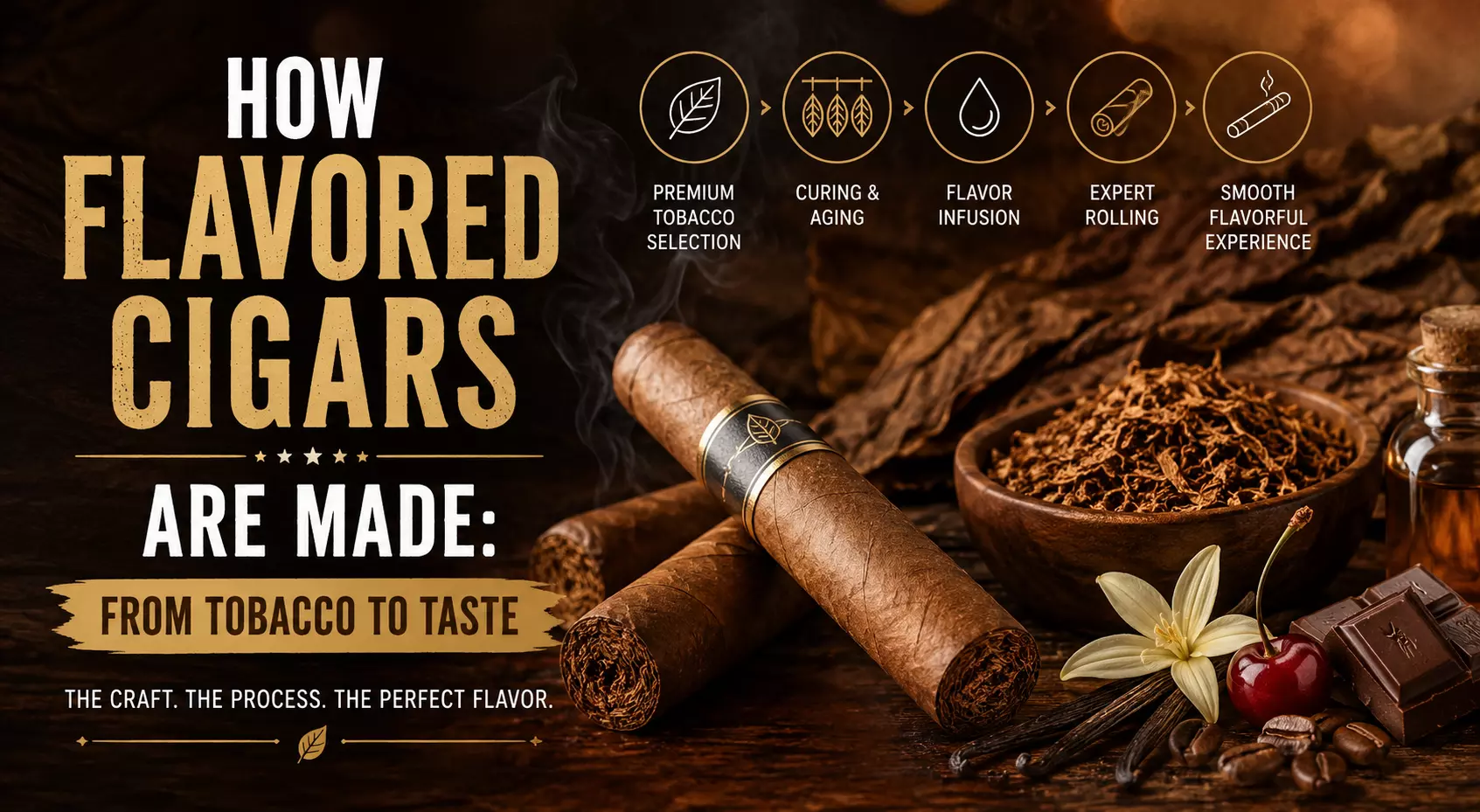
How Flavored Cigars Are Made: From Tobacco to Taste
Flavored cigars have become a popular choice for smokers looking to enjoy a smooth smoking experience with added notes of vanilla, cherry, coffee, chocolate, wine, or other distinctive flavors.
While many people enjoy flavored cigars, few understand how these products are actually made. From carefully selected tobacco leaves to the final flavor infusion, every step plays a role in creating a balanced and enjoyable smoke.
This guide explains how flavored cigars are produced, how flavors are added, and what makes one flavored cigar different from another.
What Are Flavored Cigars?
Flavored cigars are cigars or cigarillos made with premium or machine-made tobacco that has been enhanced with natural or artificial flavorings. The goal is not to overpower the tobacco but to complement its natural characteristics with subtle sweetness or aromatic notes.
Popular flavor profiles include:
- Vanilla
- Cherry
- Grape
- Wine
- Honey
- Chocolate
- Coffee
- Rum-inspired flavors
- Mint
- Tropical fruit blends
Many smokers choose flavored cigars because they offer a more approachable experience while still preserving the character of the tobacco.
It Starts with Quality Tobacco
Every flavored cigar begins with tobacco. Manufacturers select tobacco leaves based on the desired strength, aroma, and burn characteristics.
Most flavored cigarillos use a blend of:
- Burley tobacco
- Virginia tobacco
- Cavendish tobacco
- Air-cured and fire-cured tobaccos
The tobacco is first harvested, cured, and aged. During aging, excess moisture leaves the tobacco while its natural flavors continue to develop.
A well-aged tobacco blend provides a smooth foundation that pairs well with added flavoring.
Creating the Tobacco Blend
Before any flavor is introduced, tobacco experts create a blend using different leaf varieties.
The blend determines:
- Strength
- Body
- Aroma
- Burn consistency
- Draw quality
Some blends are naturally sweet, while others provide earthy, woody, or spicy notes that work well with fruit or dessert-inspired flavors.
Consistency is essential because every cigar in a production run should deliver a similar smoking experience.
How Flavor Is Added
One of the most common questions is how flavored cigars actually get their taste.
The answer depends on the manufacturer, but several methods are commonly used.
Flavor Casing
A casing is a light mixture of flavor ingredients applied directly to the tobacco before production.
It may include:
- Natural extracts
- Sweeteners
- Botanical ingredients
- Food-grade flavor compounds
The tobacco absorbs these flavors before being dried to achieve the proper moisture level.
Flavor Infusion
- Some manufacturers infuse finished tobacco with carefully measured flavor concentrates.
- This process allows the tobacco to absorb aromas without becoming overly moist or sticky.
- The infusion process helps maintain a balanced flavor throughout the smoking experience rather than producing a strong taste only at the beginning.
Sweetened Tips
- Many flavored cigarillos feature sweetened tips.
- Instead of flavoring the tobacco itself, manufacturers lightly coat the mouthpiece with a sweet finish that provides immediate flavor from the first draw.
- Sweet tips are especially popular on vanilla, honey, wine, and fruit-flavored cigarillos.
Wrapping and Rolling
Once the tobacco has been blended and flavored, it is rolled into cigars.
Depending on the product, manufacturers may use:
- Natural leaf wrappers
- Homogenized tobacco leaf wrappers
- Reconstituted tobacco wrappers
The wrapper contributes significantly to the cigar's final flavor and burn quality.
A darker wrapper often produces richer earthy notes, while lighter wrappers may create a milder smoking experience.
Aging After Production
Some flavored cigars undergo an additional resting or aging period after manufacturing.
This allows the tobacco and flavoring to marry together naturally.
During this stage:
- Moisture levels stabilize.
- Aromas become more balanced.
- The smoking experience becomes smoother.
Although not every manufacturer uses extended post-production aging, many premium products benefit from this additional step.
Quality Control Before Packaging
Before reaching retailers, flavored cigars undergo several quality checks.
Manufacturers inspect products for:
- Proper construction
- Consistent draw
- Even burn
- Correct moisture content
- Flavor consistency
- Packaging integrity
This process helps ensure smokers receive a consistent product every time they open a pack.
Popular Flavor Categories
Today's flavored cigar market offers a wide variety of options to suit different preferences.
Some of the most popular categories include:
Fruit Flavors
Fruit-flavored cigars often feature notes such as cherry, grape, peach, apple, mango, or berry. These blends tend to deliver a naturally sweet aroma.
Dessert Flavors
Vanilla, chocolate, caramel, and cream-inspired cigars are popular among smokers looking for a smooth and mellow profile.
Beverage-Inspired Flavors
Coffee, espresso, wine, and whiskey-inspired blends create rich aromatic experiences while complementing the tobacco rather than masking it.
Mint and Cooling Blends
Mint and menthol-inspired cigars provide a refreshing finish and are often chosen by smokers who enjoy a cooler draw.
Choosing the Right Flavored Cigar
The best flavored cigar depends on individual taste preferences.
When selecting one, consider:
- Flavor intensity
- Tobacco strength
- Size of the cigar
- Wrapper type
- Sweetened or natural tip
- Smoking time
Beginners often prefer mild vanilla, honey, or fruit-flavored cigarillos, while experienced smokers may enjoy coffee, wine, or darker tobacco blends with more complexity.
If you're exploring different flavor profiles before making a purchase, retailers such as Smokenza offer a wide selection of flavored cigarillos from well-known brands. Comparing flavor options, strength, and size can help you find a cigar that matches your preferences.
Final Thoughts
The process of making flavored cigars combines traditional tobacco craftsmanship with carefully controlled flavor development.
From selecting quality tobacco leaves to blending, flavor infusion, rolling, aging, and quality control, every step contributes to the final smoking experience.
Whether you prefer classic vanilla, rich coffee, sweet fruit, or wine-inspired blends, understanding how flavored cigars are made helps you appreciate the craftsmanship behind every cigar.
As the market continues to grow, manufacturers are introducing new flavor profiles while maintaining the balance between premium tobacco and carefully crafted aromas that smokers have come to expect.