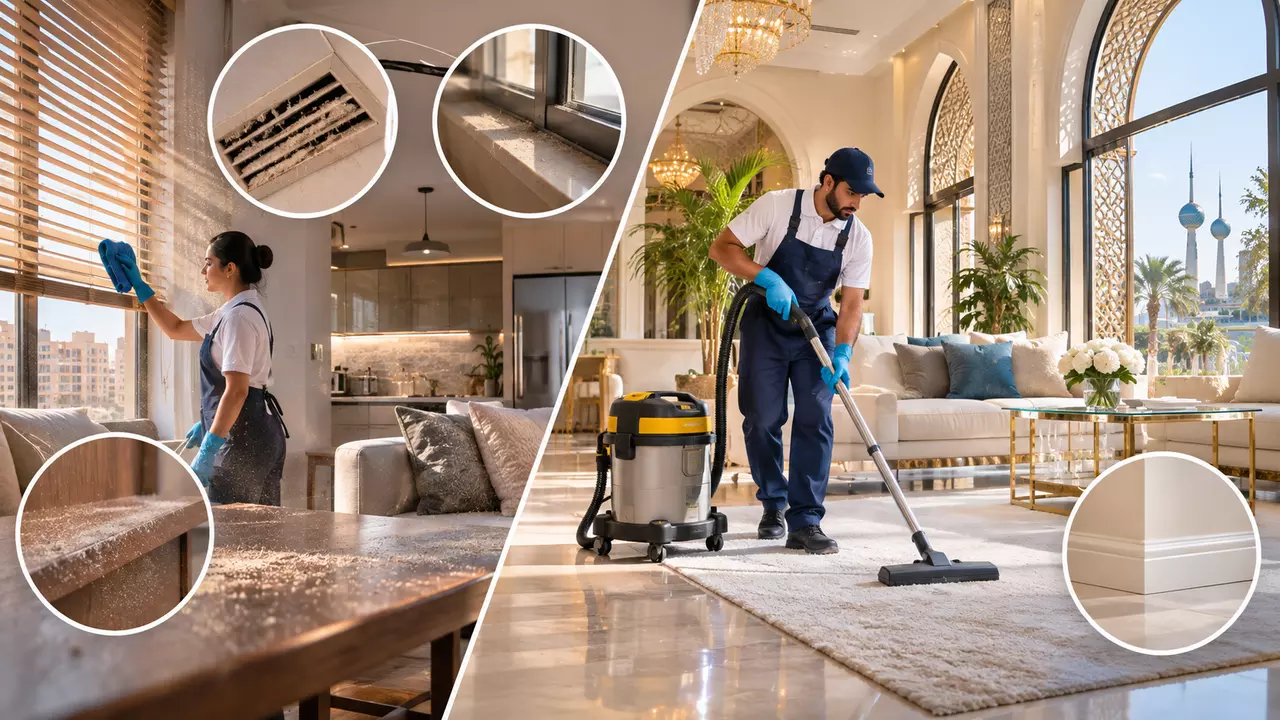
How Dust Accumulates in Apartments and Villas in Kuwait
Dust in Kuwait homes comes from outdoors and from everyday indoor activity. Wind can carry fine particles through openings, while shoes bring grit across the threshold. Bedding, clothes and other fabrics shed fibres indoors.
Once particles settle, footsteps or moving a blanket can stir some of them up again. Where dust collects depends on the home’s openings, the routes people use and which surfaces are easiest to overlook.
How does dust enter and settle in Kuwait homes?
Outdoor dust enters through open doors and windows, gaps around frames and, depending on the building, outdoor air intakes.
People can also carry particles inside on shoes, clothing and items brought in from outside. Indoors, lint from fabrics and small particles from skin add to the mix. US EPA overview of indoor particles and their sources
Kuwait’s Meteorological Center describes hot, dry northwesterly winds that can intensify into dust storms. After a windy spell, a resident may find grit in the track of a balcony door or along the inside of a window frame.
Air can move through small gaps around closed doors and windows, a process called infiltration. If dust repeatedly forms a narrow line beside a closed window, check how well the frame closes and compare that area with other windows.
The pattern gives you somewhere to look first. Kuwait Meteorological Center climate overview · US EPA explanation of infiltration
Once particles settle, walking over a dusty rug or shaking out a throw can lift some of them back into the air. This is called resuspension.
The particles can then settle again on nearby surfaces. A dusty bedside table, for example, may reflect normal activity around bedding as well as particles that entered from outdoors. US EPA guidance on settled dust
Which apartment and villa features influence dust accumulation?
The features that matter most are where the entrances and windows open, how the rooms connect and which routes people use. Floor level can change what an opening is exposed to, but it gives only part of the picture.
In an apartment, an entrance off a shared corridor may collect grit from shoes and deliveries. An upper-floor flat may have a balcony door that opens directly into the living room.
In that layout, check both the entry mat and the floor beside the balcony. If the windows stay shut but one sliding-door track collects dust after windy weather, inspect the track and how the door closes.
In a villa, a courtyard entrance, garage door and main entrance can each create a different route for tracked-in dirt. Follow the busiest route from the outside door into the house.
You may find most of the grit on the mat, along the hallway edges and on the first stair treads. A separate majlis, or guest reception room, might show a different pattern if people enter it from another door or use it only when guests visit.
Room connections also affect what you see. In an open-plan living and dining area, foot traffic can spread particles across a continuous floor, especially along the route from the entrance.
In a home with more doors between rooms, compare the entry area with a room farther inside. Dust that collects around furnishings or bedding may call for a different routine from grit concentrated near an outside door.
What routines reduce visible dust on accessible surfaces?
Pick up loose grit at entrances, wipe reachable surfaces with a lightly damp cloth where the finish allows and vacuum floors or furnishings using a suitable attachment.
Start with higher surfaces and finish with the floor so you can collect particles that fall as you work. US EPA guidance on damp dusting and vacuuming
- Manage the entrance first. Put a mat where people step inside and keep outdoor shoes together. Vacuum accumulated grit from the mat and floor edges as needed.
- Remove loose material from tracks. Use a suitable vacuum attachment on reachable window and sliding-door tracks. Check the manufacturer’s care guidance before using water or a cleaner on the frame.
- Wipe shelves and furniture with the finish in mind. Use a clean section of cloth as it picks up dust. Follow manufacturer instructions for electronics and surfaces that need a dry method.
- Check the usual collection points after dusty weather. Look at the sill, entrance and nearby floor before deciding whether more rooms need attention. In a home with carpets or rugs, check those along the busiest route as well.
These steps address visible particles on the areas you clean. To judge whether the routine is enough, observe which surfaces look dusty again first and adjust the order or frequency to suit the household.

When can recurrent dusting lead to professional cleaning needs?
Outside help may be useful when dust keeps collecting across more surfaces than residents can comfortably manage. If grit is mainly around one door, try adjusting the mat, shoe storage or cleaning routine for that entrance.
If several rooms need repeated attention, list the shelves, floor edges and other accessible surfaces that take the most time. That list helps you decide which work to delegate.
Can professional house cleaning help address dust on household surfaces?
Yes. Professional house cleaning can help remove settled dust from surfaces included in the agreed scope. Confirm whether the visit covers accessible window tracks, skirting boards or upholstered seating if those areas are a priority.
Routine cleaning tackles dust that has already settled. Outdoor entry routes and indoor sources such as fabric lint can continue to add particles after the visit.
Will a house cleaning service fix dust caused by HVAC faults?
No. A fault in the heating, ventilation and air-conditioning system, or HVAC, calls for technical inspection. Dust on a reachable grille can be wiped as part of surface cleaning if it is included in the visit.
If dust repeatedly returns around a grille soon after wiping, especially alongside weak airflow, tell building maintenance or an HVAC technician what you observed so they can check the system. A dusty grille alone gives little information about the cause.