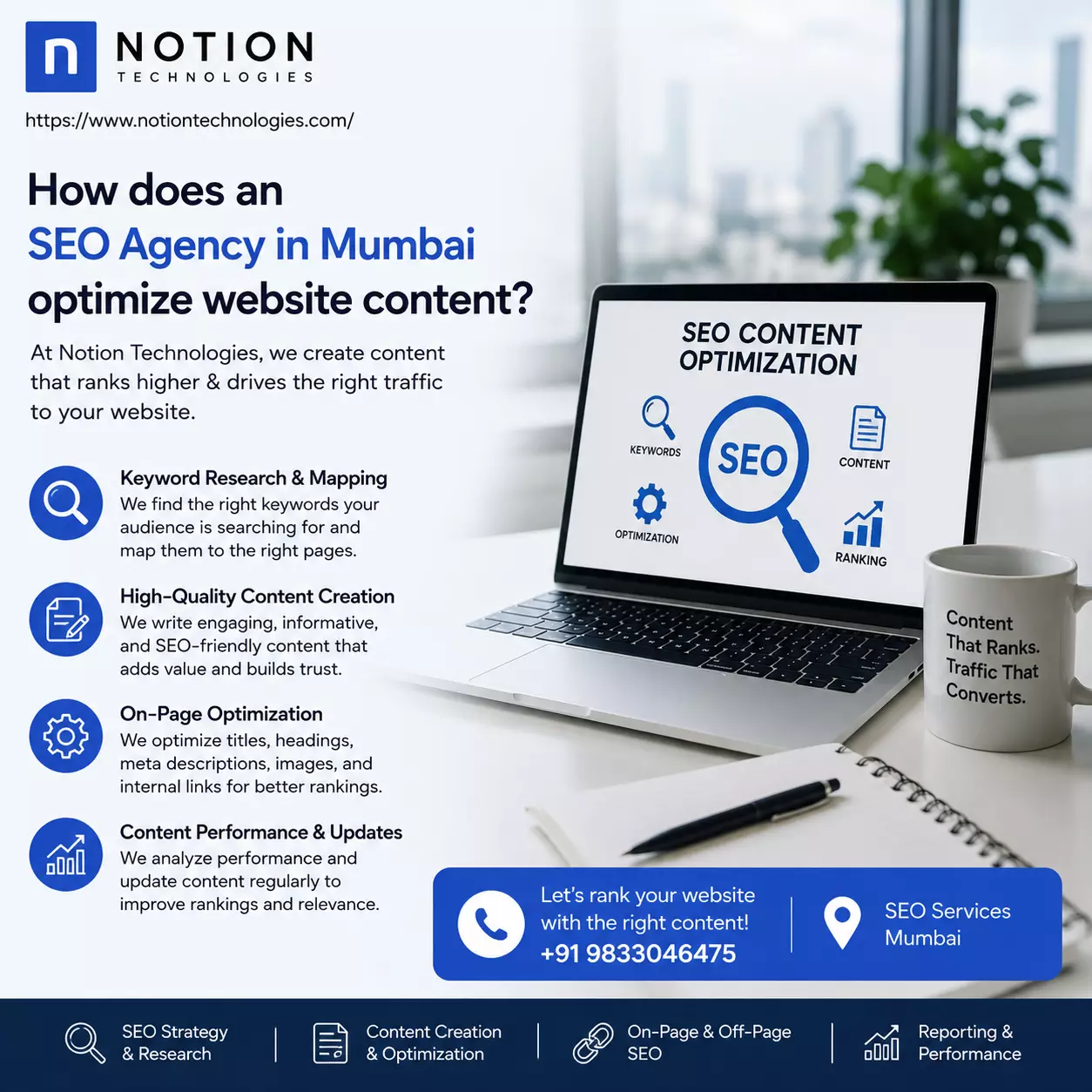
How Does an SEO Agency in Mumbai Optimize Website Content?
Content plays a vital role in determining how well a website performs in search engine results. Even a visually appealing website with excellent technical performance may struggle to rank if its content does not meet search engine and user expectations. This is why content optimization is one of the most important aspects of search engine optimization.
An SEO Agency in Mumbai helps businesses improve their online visibility by creating and optimizing website content that aligns with search intent, target keywords, and user needs. Effective content optimization not only improves rankings but also increases website traffic, engagement, and conversions.
Modern SEO is no longer about simply inserting keywords into webpages. Search engines now evaluate content quality, relevance, expertise, user experience, and overall value. Businesses that invest in professional content optimization are more likely to achieve sustainable growth in organic search results.
In this article, we will explore how an SEO Agency in Mumbai optimizes website content and why content optimization is essential for long-term digital success.
Understanding Content Optimization
Content optimization is the process of improving website content to make it more useful, relevant, and accessible for both users and search engines.
The process includes:
- Keyword research
- Content structuring
- Improving readability
- Updating existing content
- Optimizing headings
- Enhancing user engagement
- Adding internal links
- Improving metadata
The goal is to ensure content satisfies user intent while meeting SEO best practices.
Why Content Optimization Matters
Content optimization delivers multiple benefits for businesses.
Higher Search Rankings
Well-optimized content helps search engines understand page relevance.
Increased Organic Traffic
Better rankings result in more website visitors.
Improved User Experience
Clear and valuable content keeps users engaged.
Better Conversion Rates
Informative content encourages visitors to take action.
Stronger Brand Authority
High-quality content builds trust and credibility.
These benefits make content optimization a critical component of SEO.
Conducting Comprehensive Keyword Research
The first step in content optimization is keyword research.
An SEO Agency in Mumbai identifies the search terms potential customers use when looking for products or services.
Keyword research typically includes:
Primary Keywords
The main terms targeted by a webpage.
Secondary Keywords
Related search phrases that support the primary keyword.
Long-Tail Keywords
More specific phrases with strong user intent.
Semantic Keywords
Related terms that improve content relevance.
Strategic keyword selection helps create content that aligns with search behavior.
Understanding Search Intent
Search intent refers to the reason behind a user's search query.
Common types of intent include:
Informational Intent
Users seek information or answers.
Navigational Intent
Users want to reach a specific website.
Commercial Intent
Users compare products or services.
Transactional Intent
Users are ready to take action.
Understanding intent helps create content that satisfies user expectations and improves rankings.
Optimizing Content Structure
Content structure plays a major role in SEO and readability.
Professional SEO specialists organize content using:
Clear Headings
Helping users and search engines understand page topics.
Logical Sections
Improving content flow.
Short Paragraphs
Enhancing readability.
Bullet Points
Making information easier to consume.
Well-structured content improves user engagement and search visibility.
Creating High-Quality Content
Search engines prioritize content that provides value to users.
High-quality content should be:
Relevant
Addressing audience needs.
Accurate
Providing trustworthy information.
Comprehensive
Covering topics thoroughly.
Engaging
Keeping readers interested.
Quality content helps websites establish authority and improve rankings.
Optimizing Title Tags
Title tags are one of the most important on-page SEO elements.
Effective title tags should:
- Include target keywords
- Clearly describe content
- Encourage clicks
- Remain concise
Optimized titles improve search visibility and click-through rates.
Writing Effective Meta Descriptions
Meta descriptions influence user behavior in search results.
Good meta descriptions:
- Summarize page content
- Include relevant keywords
- Encourage engagement
- Match user intent
Although meta descriptions are not direct ranking factors, they can improve click-through rates.
Enhancing Content Readability
Readability affects how users interact with content.
SEO professionals improve readability by:
Using Simple Language
Making content accessible.
Breaking Up Text
Reducing visual clutter.
Adding Subheadings
Improving navigation.
Including Lists
Presenting information clearly.
Readable content encourages longer visits and greater engagement
Optimizing Images and Multimedia
Visual content enhances user experience and supports SEO.
Optimization techniques include:
Descriptive File Names
Helping search engines understand images.
Alt Text
Improving accessibility and relevance.
Image Compression
Improving page speed.
Multimedia Integration
Enhancing engagement.
Optimized visuals contribute to both user satisfaction and SEO performance.
Implementing Internal Linking
Internal links connect pages within a website.
Benefits include:
Improved Navigation
Helping users discover related content.
Better Crawlability
Assisting search engine bots.
Increased Engagement
Encouraging visitors to explore additional pages.
Distribution of Authority
Supporting overall SEO performance.
Internal linking strengthens website structure and usability.
Updating Existing Content
SEO is an ongoing process.
An SEO Agency in Mumbai regularly reviews and updates existing content to maintain relevance.
Content updates may include:
- Adding new information
- Improving keyword targeting
- Updating statistics
- Enhancing readability
- Fixing outdated references
Fresh content often performs better in search results.
Optimizing for Featured Snippets
Featured snippets provide enhanced visibility in search results.
SEO professionals optimize content by:
Answering Questions Clearly
Providing concise responses.
Using Structured Formats
Organizing information effectively.
Adding Lists and Tables
Improving snippet eligibility.
Targeting Question-Based Queries
Aligning with user searches.
Featured snippets can significantly increase organic traffic.
Read: Complete Technical SEO Checklist for Better Website
Improving Content Depth
Thin content often struggles to rank.
Content depth involves:
Comprehensive Coverage
Addressing topics thoroughly.
Supporting Details
Providing useful explanations.
Practical Insights
Offering actionable information.
Additional Resources
Enhancing user value.
Comprehensive content demonstrates expertise and authority.
Optimizing for User Engagement
Search engines consider user interaction signals when evaluating content.
SEO specialists improve engagement through:
Interactive Elements
Encouraging participation.
Clear Calls to Action
Guiding users toward next steps.
Relevant Content
Meeting user expectations.
Better Formatting
Improving readability.
Higher engagement often supports stronger SEO performance.
Supporting E-E-A-T Principles
Google emphasizes Experience, Expertise, Authoritativeness, and Trustworthiness.
Content optimization includes:
Demonstrating Expertise
Providing accurate information.
Building Authority
Creating valuable resources.
Establishing Trust
Maintaining transparency.
Showcasing Experience
Sharing practical insights.
Strong E-E-A-T signals improve content credibility.
Monitoring Content Performance
Content optimization requires ongoing analysis.
Professionals track:
Organic Traffic
Measuring visibility.
Rankings
Monitoring keyword performance.
User Behavior
Understanding engagement.
Conversion Rates
Evaluating business impact.
Performance monitoring helps refine future strategies.
Adapting to Search Engine Updates
Search engine algorithms evolve regularly.
SEO professionals stay updated with:
- Ranking changes
- Content guidelines
- User experience requirements
- Technical SEO standards
Adapting content strategies helps maintain strong performance.
Long-Term Benefits of Content Optimization
Consistent content optimization delivers lasting advantages.
Sustainable Traffic Growth
Generating visitors over time.
Better Brand Visibility
Increasing online presence.
Higher Lead Generation
Attracting qualified prospects.
Improved Customer Trust
Building credibility.
Greater Return on Investment
Supporting long-term business growth.
These benefits make content optimization a valuable investment.
Why Businesses Need Professional Content Optimization
Content optimization requires expertise in:
- Keyword research
- User behavior
- SEO best practices
- Content strategy
- Search engine algorithms
Professional support ensures content achieves maximum effectiveness and visibility.
Conclusion
Content optimization is one of the most important aspects of successful SEO. An SEO Agency in Mumbai helps businesses improve website content through keyword research, search intent analysis, content structuring, readability improvements, metadata optimization, internal linking, multimedia enhancements, and ongoing performance monitoring.
By creating valuable and search-friendly content, businesses can improve rankings, attract more organic traffic, engage visitors, and increase conversions. Investing in professional content optimization provides a strong foundation for long-term online growth and digital success.
FAQ Questions
1. How does an SEO Agency in Mumbai optimize website content?
An SEO Agency in Mumbai optimizes website content by conducting keyword research, analyzing search intent, improving content structure, enhancing readability, optimizing metadata, adding internal links, updating existing pages, and creating valuable content that aligns with search engine guidelines and user expectations.
2. Why is content optimization important for SEO?
Content optimization helps search engines understand webpage relevance, improves rankings, increases traffic, and enhances user engagement.
3. What is search intent in SEO?
Search intent refers to the purpose behind a user's search query, such as seeking information, comparing options, or making a purchase.
4. How often should website content be updated?
Content should be reviewed and updated regularly to maintain accuracy, relevance, and competitiveness in search results.
5. Can content optimization improve conversion rates?
Yes, optimized content provides valuable information, improves user experience, and encourages visitors to take desired actions, leading to higher conversion rates.