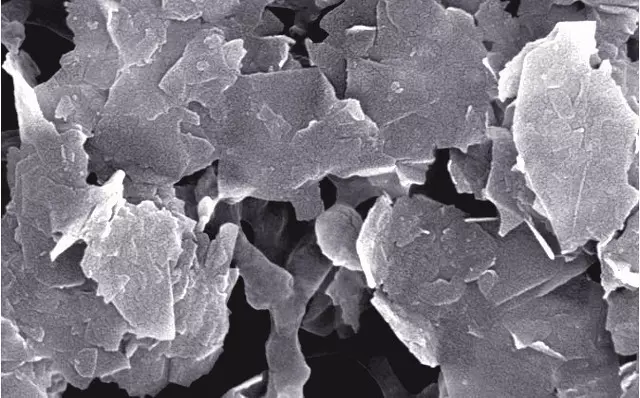
How Do Graphene Nanoplatelets (GNPs) Improve Strength?
Strong materials drive innovation. However, traditional methods often rely on adding bulk or increasing thickness. That approach raises weight, cost, and limitations.
Today, engineers choose smarter reinforcement strategies. This is where graphene nanoplatelets (GNPs) bring a real shift.
These ultra-thin carbon structures enhance strength at the microscopic level. Even a small addition can transform weak matrices into high-performance materials.
Instead of focusing on size, this approach focuses on structure, bonding, and stress control. So, let’s explore how this material directly improves strength through key mechanisms.
Structural Design That Maximizes Strength
Graphene nanoplatelets contain multiple layers of carbon atoms arranged in a tightly packed hexagonal lattice. This unique structure forms extremely strong covalent bonds, which give the material outstanding mechanical properties.
Because of this atomic arrangement, the sheets deliver both high strength and flexibility.
When you introduce these nano-sheets into a composite, they create a reinforced internal network. They do not just sit inside the material. Instead, they actively interact with the matrix and improve its response to stress. As a result:
- A fine internal support network forms throughout the structure
- Increased rigidity develops without adding extra weight
- Better pressure handling improves the matrix performance
Therefore, the material gains strength from its internal design rather than from added bulk, leading to better performance and long-term durability.
Enhanced Load Distribution Across the Matrix
Next, improved strength comes from better load handling. In weak materials, stress often concentrates in one area. This leads to cracks and early failure. However, GNPs solve this problem by distributing stress evenly.
Here’s what happens:
- Stress transfers from the matrix to the stronger sheets
- The sheets spread the load across a wider area
- This reduces pressure on weak points
Because of this mechanism, materials can handle higher loads without breaking. Moreover, uniform stress distribution prevents sudden failure.
For example, small additions can increase tensile strength by up to 40% simply by improving how the load moves through the material.
Crack Interruption and Growth Control
Strength also depends on how well a material handles damage. Cracks usually start small. However, they grow quickly under stress. That is where graphene nanoplatelets improve performance.
They act as obstacles inside the material. When a crack forms:
- It meets a graphene sheet and slows down
- It changes direction instead of moving straight
- It requires more energy to continue growing
As a result, cracks lose momentum and improve fracture resistance and extend the material’s lifespan. In simple terms, the material does not just resist force. It also controls damage more effectively.
Strong Interfacial Bonding for Better Reinforcement
Another major improvement comes from bonding.
In any composite, weak bonding leads to failure. If fillers detach easily, they cannot reinforce the structure. However, GNPs provide strong interaction with the matrix.
This happens due to:
- Their large surface area
- Their ability to bond with different materials
- Their compatibility with polymers and resins
As a result:
- The sheets stay firmly embedded
- Stress transfers efficiently between components
- The composite behaves as a single strong unit
Better bonding directly improves strength. Without it, even strong materials fail to perform.
Increased Resistance to Deformation
Strength is not only about breaking. It is also about resisting shape change. When materials face pressure, they often deform. However, GNPs increase stiffness and reduce deformation.
This leads to:
- Higher resistance to bending
- Improved dimensional stability
- Better performance under continuous stress
Because of this, materials maintain their shape even under heavy loads. This is especially important in structural and engineering applications.
Reinforcement Without Adding Excess Weight
Another key improvement comes from efficiency. Traditional strengthening methods increase weight. However, graphene nanoplatelets achieve better results with minimal addition. This means:
- You use less material overall
- You maintain lightweight properties
- You still achieve higher strength
Even low concentrations deliver noticeable improvements. Therefore, manufacturers achieve stronger products without compromising design.
Improved Energy Absorption Under Stress
Strength also involves how a material reacts to sudden force.
When impact occurs, weak materials fail quickly. However, graphene nanoplatelets improve energy absorption. They help by:
- Spreading impact energy across the structure
- Preventing sudden breakage
- Increasing toughness
Because of this, materials become more resilient. They handle both gradual and sudden stress effectively.
Better Dispersion Leads to Stronger Performance
However, strength improvement depends on proper dispersion. If graphene nanoplatelets cluster together, they lose effectiveness. Instead of reinforcing, they create weak zones.
Therefore, uniform distribution becomes essential. When dispersion is done correctly:
- Each sheet contributes to the strength
- Stress spreads evenly throughout the material
- Performance improves consistently
On the other hand, poor mixing reduces all benefits. So, dispersion plays a critical role in strength enhancement.
Read: Paint Protection Film Pune for Long-Lasting Shine
Synergistic Strength Through Multi-Mechanism Action
One of the most powerful aspects is how multiple mechanisms work together. GNPs do not improve strength in just one way. Instead, they combine several effects:
- Load transfer
- Crack control
- Strong bonding
- Energy absorption
- Structural reinforcement
Because of this synergy, the overall improvement is much greater than that of a single factor alone. This multi-layered enhancement explains why even small amounts produce significant results.
Optimization Strategies for Maximum Strength Gains
To fully unlock strength improvements, you need the right approach. Here are practical strategies:
- Use Controlled Loading Levels: Start with small percentages. Increase gradually to find the optimal balance.
- Focus on Dispersion Quality: Use advanced mixing techniques to avoid clustering.
- Enhance Surface Compatibility: Functional treatments improve bonding with the matrix.
- Maintain Processing Consistency: Stable temperature and curing conditions ensure reliable results.
- Test Mechanical Performance Regularly: Evaluate tensile strength, toughness, and stiffness during development.
By applying these strategies, you can achieve consistent, measurable strength gains.
Final Thoughts
Graphene Nanoplatelets improve strength through smart, multi-level reinforcement. They enhance load distribution, control crack growth, strengthen bonding, and increase resistance to deformation. A
t the same time, they maintain their lightweight properties while improving energy absorption.
Instead of relying on bulk, they improve strength from within the material structure. That is what makes them powerful and efficient.
If you want stronger materials without adding unnecessary weight or complexity, this advanced solution offers a clear advantage.