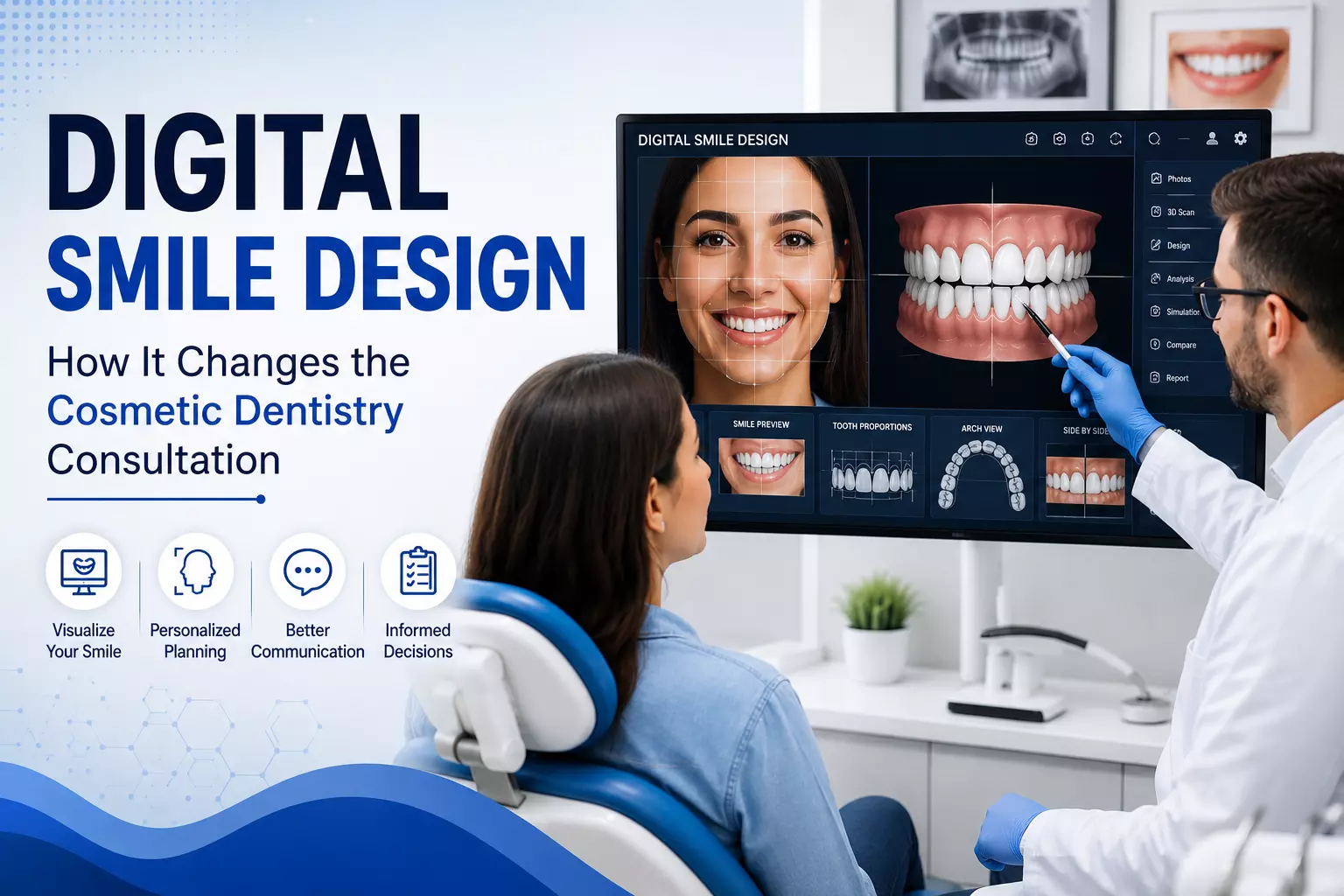
How Digital Smile Design Changes the Cosmetic Dentistry Consultation
Cosmetic dentistry consultations have traditionally relied on conversations, photographs, clinical examinations, and the dentist's professional experience.
While these methods remain important, digital technology has introduced new ways to make treatment discussions more visual and easier to understand.
Digital smile design is one such approach.
Instead of discussing cosmetic changes only through verbal descriptions, digital smile planning can bring photographs, measurements, scans, and visual simulations into the consultation. This can help dentists explain potential treatment approaches while giving patients a clearer understanding of what is being considered.
The technology does not replace clinical judgment. Instead, it can become an additional communication and planning tool within the cosmetic dental workflow.
What Happens During a Digital Smile Consultation?
The exact process varies between dental practices, but digital smile planning may begin with collecting detailed photographs and other digital records.
Depending on the case, the dentist may evaluate:
- Tooth shape and proportions
- Tooth alignment and spacing
- Smile symmetry
- Gum display
- Facial proportions
- Existing restorations
- Tooth color
- Bite and functional considerations
Digital scans may also be used to provide additional information about the patient's teeth and existing dental structures.
When these records are considered together, a digital smile design approach can help dentists develop a more complete understanding of the patient's smile rather than focusing on one tooth or one isolated concern.
Why Visual Communication Matters
Patients often use simple descriptions when explaining their cosmetic goals.
Someone may want a brighter smile, while another person may want teeth that appear more symmetrical or natural. These descriptions can be interpreted differently by different people.
Visual planning can help create a common reference point.
For example, a dentist may be able to demonstrate how changes in tooth proportions could influence the overall appearance of a smile. This gives the patient an opportunity to discuss preferences before treatment decisions are finalized.
Better visual communication can make the consultation more collaborative.
Read: The Relationship Between Facial Aesthetics, Smile Design, and
Digital Planning Can Help Organize Treatment Goals
A cosmetic dental treatment plan may involve several considerations at the same time.
Changing tooth length can influence the appearance of tooth proportions. Altering tooth shape can affect how neighboring teeth appear. Changes to the front teeth can also influence the overall balance of the smile.
Digital planning can help organize these considerations before physical treatment begins.
Rather than approaching cosmetic dentistry as a single procedure, the dentist can consider the patient's smile as a complete visual and functional system.
This may be particularly useful when multiple cosmetic treatments are being considered.
Can Patients See a Smile Preview?
Some digital workflows allow dentists to create a visual representation of a proposed smile.
A preview may illustrate possible changes in areas such as tooth shape, proportions, alignment, or symmetry.
For patients, this can make the consultation easier to understand because they have something visual to discuss with the dental team.
However, a digital preview should not be interpreted as an exact prediction of the final clinical result.
The final outcome can depend on existing tooth structure, oral health, materials, treatment techniques, soft tissues, bite relationships, and other clinical factors.
For this reason, digital visualization should support the conversation rather than replace professional assessment.
Digital Smile Design and Patient Expectations
One of the most important parts of cosmetic dentistry is managing expectations.
Patients may have photographs of smiles they like or specific ideas about how they want their teeth to look. A dentist must determine whether those expectations are realistic and clinically appropriate.
Digital planning can provide an opportunity to discuss these expectations before treatment begins.
Patients can ask questions such as:
- What changes are being proposed?
- Why are these changes recommended?
- Are there alternative treatments?
- What limitations should I understand?
- How much of the proposed result is predictable?
- What will the treatment involve?
These discussions can help patients make decisions based on realistic information rather than assumptions.
Digital Planning Does Not Mean Every Patient Needs Cosmetic Treatment
Technology can make treatment planning more detailed, but it should not automatically lead to treatment.
A digital simulation may show a possible aesthetic change, but the dentist still needs to evaluate whether treatment is appropriate.
Oral health, tooth structure, gum health, bite, previous dental work, and other clinical factors all matter.
If a patient has untreated dental problems, those concerns may need attention before cosmetic treatment is considered.
The purpose of digital smile design is therefore not simply to encourage cosmetic procedures. Its greater value can be in helping patients and dentists understand the available possibilities more clearly.
The Role of the Dental Laboratory
Digital planning can also improve communication between the dental practice and laboratory professionals when restorations are required.
Depending on the treatment, a laboratory may be involved in producing veneers, crowns, or other restorations.
Clear digital information can help communicate aspects such as tooth shape, dimensions, proportions, and the intended aesthetic direction.
Patients can also ask their dentist questions about the restoration being planned.
For example, they may want to know what material will be used, who will manufacture or fabricate the restoration, and what quality considerations apply to the selected material.
Understanding these details gives patients a more complete picture of their treatment.
What Should Patients Take Away From a Digital Consultation?
The main benefit of digital smile design is not simply being able to see a digital image.
A useful consultation should help patients understand:
- Their primary cosmetic concerns
- The treatment options available
- Why a particular approach may be recommended
- What changes are being considered
- The limitations of the proposed treatment
- The materials that may be involved
- Expected maintenance requirements
- What questions they should consider before treatment
This makes the consultation more educational and encourages patients to participate actively in treatment discussions.
Technology and Clinical Expertise Work Together
Digital smile design is most useful when technology and clinical expertise work together.
Software can organize information and create visual concepts, but it cannot independently determine whether a particular treatment is suitable for an individual patient.
The dentist remains responsible for evaluating oral health, function, treatment suitability, and clinical risks.
Digital tools simply provide another way to organize information and communicate treatment possibilities.
Conclusion
Digital smile design is changing the way cosmetic dental consultations can be conducted by bringing visual planning and digital information into the treatment discussion.
Patients can gain a clearer understanding of their smile concerns, potential treatment approaches, and realistic expectations before physical treatment begins.
The technology does not replace a dental examination or professional judgment. Instead, it can complement clinical expertise by making communication more visual, structured, and collaborative.
For anyone considering cosmetic dental treatment, the most valuable consultation is one where technology, clinical assessment, clear communication, and realistic expectations all work together.