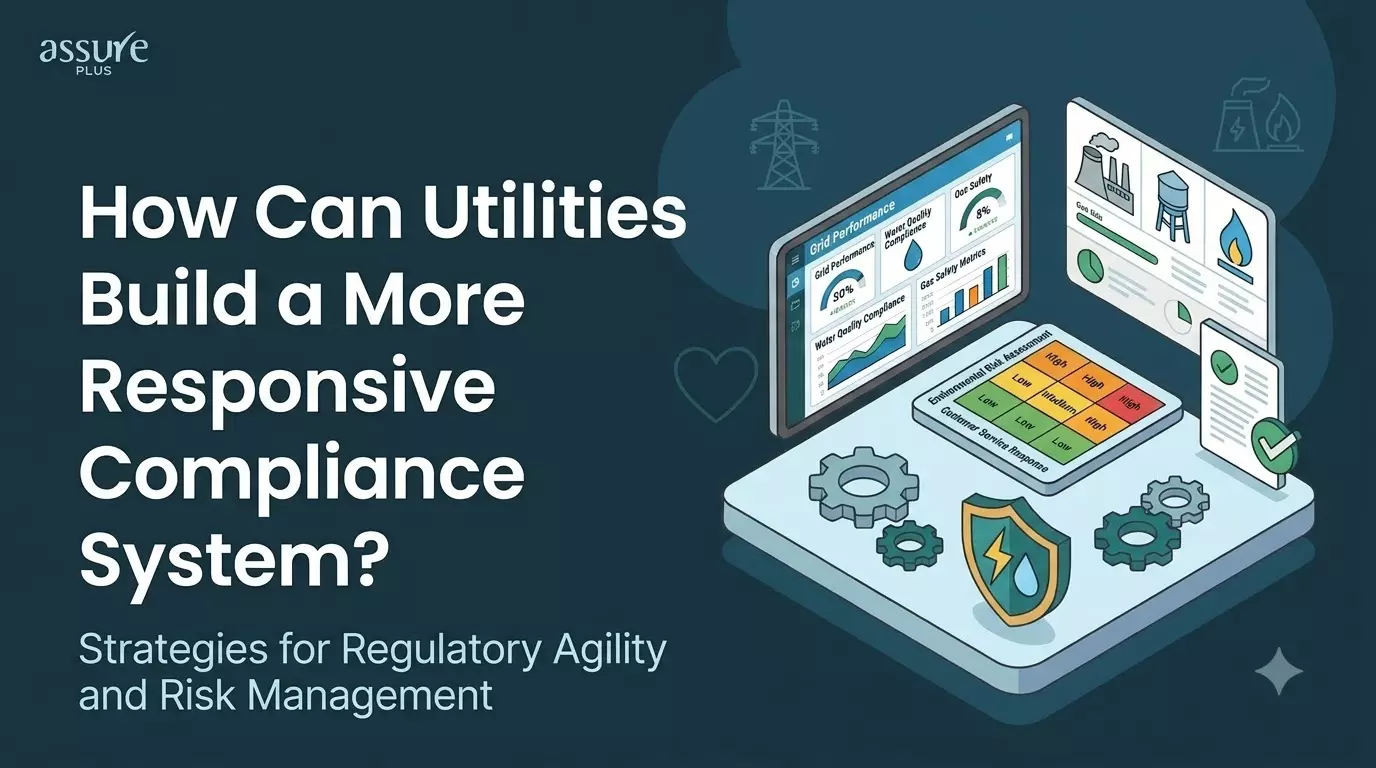
How Can Utilities Build a More Responsive Compliance System?
Utility compliance is becoming more demanding as energy organisations manage regulatory obligations alongside operational, safety, environmental and infrastructure risks.
The challenge is no longer simply knowing which rules apply. Organisations also need to demonstrate that requirements have been assigned, controls are operating and supporting evidence can be produced when required.
The Australian Energy Regulator's current compliance priorities show the breadth of this responsibility. Its 2026–27 priorities include power system security, network compliance, consumer vulnerability, smart meter rollout and gas market reporting.
Why do traditional compliance systems struggle with change?
Many organisations still rely on spreadsheets, shared folders and manual reminders to track regulatory requirements. These methods can work for smaller compliance programs, but become harder to maintain as obligations and responsible teams multiply.
A regulatory change may require a policy update, a control change, new evidence and communication with several stakeholders. If those connections are tracked separately, it becomes difficult to see whether the complete response has been carried out.
A structured approach to managing compliance obligations and controls can bring these activities into one environment. Instead of treating compliance as a collection of documents, organisations can create relationships between obligations, controls, evidence, responsibilities and actions.
This also supports the principle behind ISO 37301, which describes a compliance management system as something organisations establish, evaluate, maintain and continually improve rather than a static collection of policies.
What does a stronger utility compliance model look like?
A useful compliance system should make it easier to answer basic questions. What obligation applies? Who owns it? Which control addresses it? What evidence supports the control? Has anything changed? Is there an unresolved gap?
The answers become more difficult to maintain when compliance information is scattered across departments.
This is particularly relevant for utilities because compliance can involve energy market requirements, environmental standards, safety obligations, critical infrastructure protections and third-party relationships.
AssurePlus describes its energy and utilities GRC approach as bringing areas such as energy risk, compliance, operational safety and incident management into a connected environment.
The AER also expects regulated businesses to understand their obligations and implement robust systems and processes to achieve compliance. Its NEM Readiness Guide specifically emphasises preparedness for challenges affecting reliability and system security.
Read: Role of AVEVA SCADA Software in Modern Industrial
Can automation improve audit readiness?
Automation can help with the routine work that often makes compliance programs difficult to maintain. Scheduled control testing, reminders, evidence requests and escalation workflows can reduce the chance that important tasks are forgotten.
Real-time reporting can also change how compliance teams prepare for audits. Rather than spending weeks collecting documents and checking spreadsheets, teams can maintain evidence and status information as part of the normal compliance cycle.
That does not eliminate the need for internal reviews or professional judgment. It simply moves more of the administrative work into the regular operating process.
For utilities facing frequent regulatory developments, that distinction matters. A responsive compliance system should make it easier to absorb change without rebuilding the compliance process every time a new requirement appears.
The future of utility compliance is therefore likely to depend less on maintaining larger collections of documents and more on creating connected systems where obligations, controls, evidence and accountability remain visible.
That gives organisations a stronger foundation for both everyday compliance and unexpected regulatory or operational challenges.
Conclusion
A responsive utility compliance system needs more than a collection of policies and documents. It should connect obligations with controls, evidence, ownership and follow-up actions so that teams can see what requires attention as circumstances change.
By combining structured processes with appropriate automation, utilities can make compliance easier to maintain while remaining prepared for regulatory reviews and evolving operational requirements.