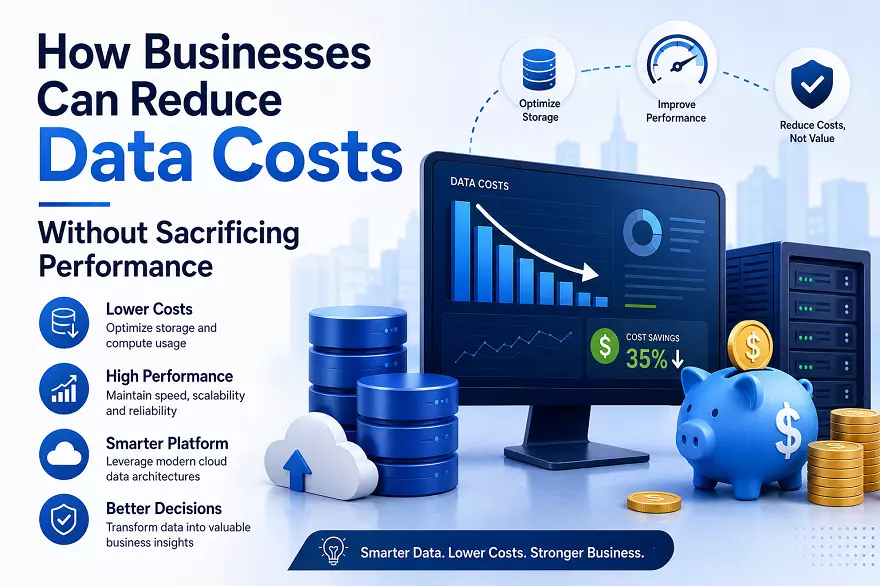
How Businesses Can Reduce Data Costs Without Sacrificing Performance
Businesses across the United States are generating more data than ever before. From customer interactions and IoT devices to financial transactions and AI applications, enterprise data volumes continue to grow at an unprecedented pace.
While data is a valuable business asset, managing and analyzing it efficiently has become increasingly expensive.
Many organizations assume that lowering data costs means compromising performance, slowing analytics, or limiting innovation. Fortunately, that doesn't have to be the case.
By adopting modern data architectures, intelligent storage strategies, and cloud-native technologies, companies can significantly rently reduce infrastructure expenses while maintaining high-performance analytics.
This is where Databricks consulting services play a crucial role. With the right implementation strategy, businesses can optimize storage, streamline data pipelines, improve resource utilization, and maximize their return on cloud investments.
esses can optimize storage, streamline data pipelines, improve resource utilization, and maximize their return on cloud investments.
In this guide, we'll explore practical strategies that help U.S. businesses reduce data costs without sacrificing performance or scalability.
Why Data Costs Continue to Rise
Many organizations in the U.S. migrate to the cloud expecting lower operational expenses. However, without proper planning, cloud costs can quickly exceed expectations.
Some of the biggest contributors include:
- Storing unnecessary or duplicate data
- Running oversized compute clusters
- Poor workload scheduling
- Legacy ETL processes
- Multiple disconnected data platforms
- Inefficient data governance
- Underutilized cloud resources
Industries such as healthcare, financial services, retail, manufacturing, and logistics often deal with petabytes of data, making cost optimization a business priority rather than just an IT concern.
The Hidden Cost of Legacy Data Platforms
Traditional data warehouses were designed when businesses handled significantly smaller datasets. Today's AI-driven applications require real-time processing, advanced analytics, and scalable storage capabilities that legacy systems struggle to provide.
Common challenges include:
Traditional Platform
Modern Lakehouse Platform
Expensive storage
Cost-efficient cloud storage
Separate analytics tools
Unified analytics platform
Limited scalability
Elastic scaling
Slow ETL processes
Faster data processing
High maintenance costs
Simplified operations
Moving toward a Lakehouse architecture enables organizations to eliminate unnecessary infrastructure while improving overall performance.
This is one of the primary reasons why many enterprises invest in Databricks implementation services and cloud data modernization initiatives.
1. Consolidate Data into a Single Lakehouse Platform
One of the fastest ways to reduce costs is eliminating fragmented data systems.
Many enterprises operate:
- Data warehouses
- Data lakes
- Reporting databases
- BI platforms
- Separate AI environments
Each system requires licensing, maintenance, storage, and operational support.
A unified Lakehouse architecture combines data engineering, analytics, machine learning, and governance into one platform.
Benefits include:
- Lower infrastructure costs
- Reduced licensing expenses
- Less data duplication
- Faster analytics
- Simplified management
Organizations using databricks consulting services can consolidate workloads while maintaining enterprise-grade performance.
2. Optimize Storage Instead of Buying More
Storage often becomes one of the largest cloud expenses.
Many companies continue storing:
- Duplicate datasets
- Outdated backups
- Temporary files
- Low-value historical records
- Unused development data
Rather than purchasing additional storage, businesses should implement intelligent lifecycle management.
Best practices include:
Archive Cold Data
Move rarely accessed information to lower-cost storage tiers.
Remove Duplicate Data
Deduplicate datasets to reduce unnecessary storage consumption.
Compress Data
Modern file formats significantly reduce storage requirements while improving query performance.
Automate Data Retention Policies
Automatically delete obsolete data based on compliance policies.
These practices can reduce storage costs substantially without affecting business operations.
3. Scale Compute Resources Dynamically
One common mistake organizations make is running large computing clusters 24/7—even when workloads are minimal.
Cloud environments offer elastic computing, allowing businesses to pay only for resources they actually use.
Dynamic scaling helps organizations:
- Reduce idle compute costs
- Handle peak workloads efficiently
- Improve resource utilization
- Increase processing speed
Instead of paying for maximum capacity all day, businesses only scale resources when needed.
Experienced Databricks consulting companies configure autoscaling environments that balance both performance and cost.
4. Modernize ETL Pipelines
Traditional ETL workflows are often slow, resource-intensive, and expensive to maintain.
Legacy systems frequently involve:
- Multiple transformation tools
- Manual scripting
- Batch processing delays
- Redundant data movement
Modern data engineering practices simplify these pipelines.
Benefits include:
- Faster ingestion
- Lower compute usage
- Reduced maintenance
- Better scalability
- Improved reliability
Organizations investing in data engineering services and Databricks migration services often see faster analytics while reducing operational expenses.
5. Eliminate Data Silos
Data silos force organizations to maintain multiple copies of the same information across different departments.
For example:
Marketing stores customer data.
Sales stores another version.
Finance maintains its own reporting database.
Operations keeps separate transactional records.
This duplication increases:
- Storage costs
- Synchronization complexity
- Governance challenges
- Reporting inconsistencies
A centralized platform enables every department to access trusted data without maintaining separate databases.
Besides reducing costs, it also improves collaboration and decision-making.
6. Improve Query Performance
Poorly optimized queries consume unnecessary computing power.
Businesses often spend thousands of dollars each month processing inefficient SQL workloads.
Optimization techniques include:
- Partitioning datasets
- Caching frequently accessed data
- Optimizing joins
- Using efficient file formats
- Eliminating unnecessary scans
These improvements reduce execution time while lowering compute expenses.
This is another area where databricks consulting services provide measurable business value by fine-tuning workloads for maximum efficiency.
7. Leverage Automation to Reduce Operational Costs
Manual data management is not only time-consuming but also expensive. Tasks like provisioning infrastructure, monitoring workloads, validating data quality, and scheduling pipelines can consume significant engineering resources.
Automation helps organizations reduce operational overhead while improving consistency and reliability.
Examples of automation include:
- Automatic cluster scaling
- Scheduled workload execution
- Self-healing data pipelines
- Automated alerts for performance issues
- Data quality validation
- Infrastructure provisioning through Infrastructure as Code (IaC)
By automating repetitive tasks, businesses can free their data teams to focus on innovation instead of routine maintenance.
Companies that invest in Databricks optimization services often implement automation strategies that lower operational costs while improving platform performance.
8. Strengthen Data Governance
Poor governance often leads to hidden costs.
Without proper governance, organizations may experience:
- Duplicate datasets
- Security risks
- Compliance violations
- Unnecessary storage growth
- Inaccurate reporting
For U.S. businesses operating in regulated industries such as healthcare, banking, insurance, and government, strong governance is essential for maintaining compliance with regulations like HIPAA, PCI DSS, and SOX.
A modern governance strategy should include:
- Role-based access control
- Data cataloging
- Metadata management
- Audit logging
- Data lineage
- Encryption and security policies
Strong governance not only reduces compliance risks but also eliminates unnecessary operational expenses caused by poor data management.
9. Continuously Monitor Cloud Spending
Cloud costs can quickly increase if businesses don't actively monitor resource usage.
Successful organizations establish FinOps (Cloud Financial Operations) practices to track spending and identify optimization opportunities.
Key metrics to monitor include:
- Compute utilization
- Storage growth
- Idle clusters
- Query execution costs
- Data pipeline performance
- Cost per workload
- Monthly cloud spend
Real-time monitoring helps businesses detect inefficiencies before they become costly problems.
Many enterprises work with a Databricks consulting company to implement dashboards that provide complete visibility into cloud spending and resource utilization.
Read: Why Businesses Need Databricks Consulting Services in 2026
How U.S. Businesses Benefit from Databricks Consulting Services
Organizations across the United States are accelerating their digital transformation initiatives by adopting modern data platforms.
Industries benefiting the most include:
Financial Services
Banks and financial institutions process millions of transactions every day. A modern data platform helps reduce infrastructure costs while enabling real-time fraud detection and customer analytics.
Healthcare
Healthcare providers manage enormous volumes of patient records, imaging data, and operational information. Optimized data platforms improve analytics while supporting regulatory compliance.
Retail & E-commerce
Retailers analyze customer behavior, inventory, pricing, and supply chain performance. Efficient data management helps reduce operational costs while improving customer experiences.
Manufacturing
Manufacturers leverage IoT sensors and predictive maintenance analytics to reduce downtime and optimize production.
Technology & SaaS
Technology companies rely on scalable data infrastructure to support AI, machine learning, customer analytics, and product intelligence without overspending on cloud resources.
With expert databricks consulting services, these organizations can modernize their data ecosystems while maintaining cost efficiency and high performance.
Best Practices for Reducing Data Costs
Best Practice
Business Benefit
Consolidate data platforms
Lower infrastructure costs
Implement Lakehouse architecture
Better scalability and analytics
Optimize storage lifecycle
Reduced storage expenses
Enable autoscaling
Lower compute costs
Modernize ETL pipelines
Faster data processing
Remove data silos
Improved collaboration
Optimize SQL queries
Better performance with lower compute usage
Automate workflows
Reduced operational overhead
Strengthen governance
Better compliance and security
Monitor cloud spending
Continuous cost optimization
Why Partner with a Databricks Consulting Company?
While Databricks offers powerful capabilities, achieving maximum ROI requires the right implementation strategy.
An experienced consulting partner can help organizations:
- Design scalable Lakehouse architectures
- Migrate legacy data warehouses
- Build high-performance data pipelines
- Optimize cloud infrastructure
- Improve security and governance
- Integrate AI and machine learning workflows
- Reduce ongoing operational costs
Whether you're planning a migration, modernizing analytics, or scaling AI initiatives, working with experienced professionals helps minimize risk and accelerate business outcomes.
Conclusion
As enterprise data continues to grow, controlling cloud expenses has become a strategic priority for businesses across the United States.
Reducing costs no longer means sacrificing analytics performance or limiting innovation. By consolidating data platforms, optimizing storage, modernizing
ETL pipelines, automating operations, and implementing strong governance, organizations can significantly lower operational expenses while building a scalable foundation for AI and advanced analytics.
Partnering with experienced providers of databricks consulting services ensures these initiatives are implemented efficiently and aligned with long-term business goals.
From migration and architecture design to performance tuning and cloud cost optimization, expert guidance helps organizations maximize the value of their data investments.
If your business is looking to modernize its data infrastructure while reducing costs, Melonleaf offers end-to-end Databricks consulting, implementation, migration, and optimization services tailored to the needs of U.S. enterprises.
With the right strategy and expertise, you can build a future-ready data platform that delivers both performance and measurable ROI.
Frequently Asked Questions (FAQs)
1. How do Databricks consulting services help reduce data costs?
They help businesses optimize storage, improve compute efficiency, modernize data pipelines, and eliminate unnecessary infrastructure, leading to lower cloud spending without compromising performance.
2. Is Databricks suitable for small and mid-sized businesses?
Yes. Databricks supports organizations of all sizes by providing scalable infrastructure that grows with business needs while helping control costs through pay-as-you-use cloud resources.
3. What industries benefit the most from Databricks?
Industries such as healthcare, finance, retail, manufacturing, logistics, telecommunications, and SaaS commonly use Databricks for analytics, AI, and large-scale data processing.
4. How long does a Databricks migration project take?
The timeline depends on data volume, existing infrastructure, integrations, and business requirements. Smaller migrations may take a few weeks, while enterprise-scale projects can take several months.
5. Can Databricks improve both performance and cost efficiency?
Yes. By leveraging cloud-native architecture, autoscaling, optimized storage, and efficient data processing, Databricks enables organizations to improve performance while reducing infrastructure and operational costs.